

Forget Pavers — This Simple Driveway Edging Idea Looks Much More Unique
We may receive a commission on purchases made from links.
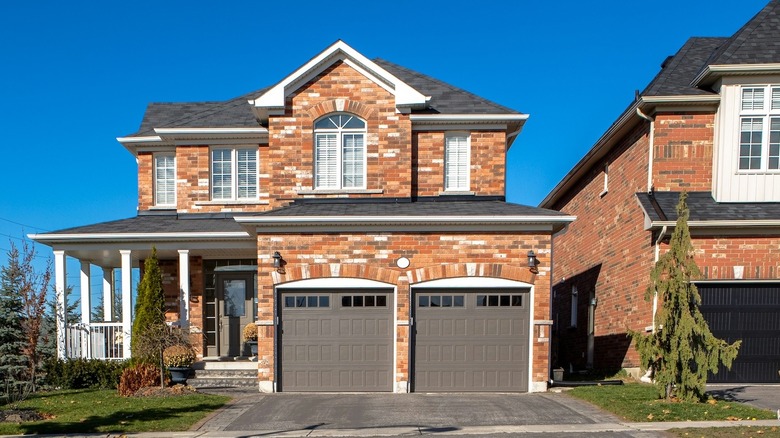
Contrary to what some homeowners might believe, small details can have a big impact on your abode's curb appeal. Case in point: driveway edging. While it might pale in comparison to other clever landscaping ideas, like eye-catching walkways and lush trees, this finishing touch ties the whole aesthetic of your front yard together and serves a few important purposes to boot. Brick edging can be costly and steel or aluminum edging might feel sterile, but there is another option to explore. If you're looking for a visual divide that's both practical and striking, try a combination of gravel and stone — a surefire way to get your neighbors' attention and keep your outdoor space functioning properly.
After paving a driveway, choosing the proper edging material will ensure that weeds won't sprout, drainage issues won't occur, and tire damage won't ruin the overall look of the space. After all, gravel is already an alternative to traditional mulch. Plus, it acts as a transition between your driveway surface and lawn in a way that an aluminum divider won't. Gravel-and-stone edging provides an organic, bucolic ambiance and offers an easy, wallet-friendly DIY that only takes an afternoon to accomplish.
How to make a stone and gravel driveway edge
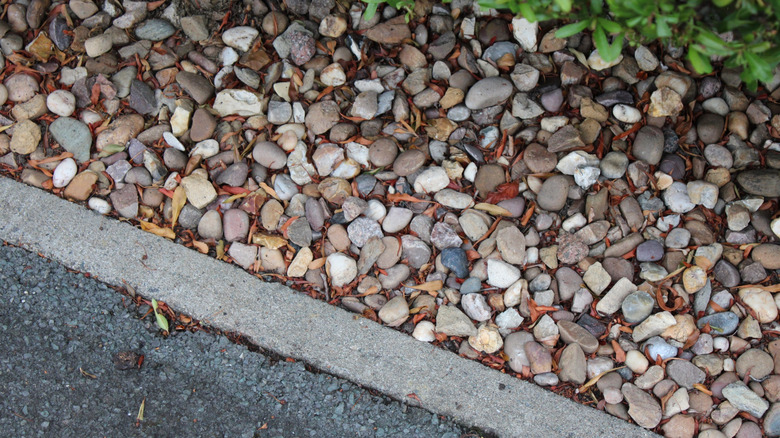
Before you begin, assess the area you're going to work on and cordon it off with marking paint if necessary (If, for example, you wanted to deviate from the norm with a unique or curved shape). You can also use a garden hose to delineate curves. Dig a trench roughly 3 to 4 inches deep, keeping some dirt aside. You'll need a base for the stones you're going to install, like Amazon Basics landscape fabric (which will help prevent weeds also) or Kolor Scape leveling sand. Then, it's just a matter of filling the trench with gravel, raking it out so it's level and even. Top the gravel with small or large stones of your choosing, and leveling the final product, using excess dirt to fill in any major gaps.
If you're going to put affordable landscaping technique into motion, there are a few more things to consider. Creating a slight slope away from your driveway on each side will send water to the appropriate drainage areas reducing the risk of damaging the margins of your driveway with standing water. You might be required to touch up your work every two or three years, especially after a harsh winter, just as you'd regrade a gravel driveway. And if you're living in an area prone to a lot of snow fall, clean-up might not be terribly easy. However, looks and maintenance purposes will make the project worthwhile.