

Goodbye To Traditional Mulch: The Natural Landscaping Trend That's Taking Over
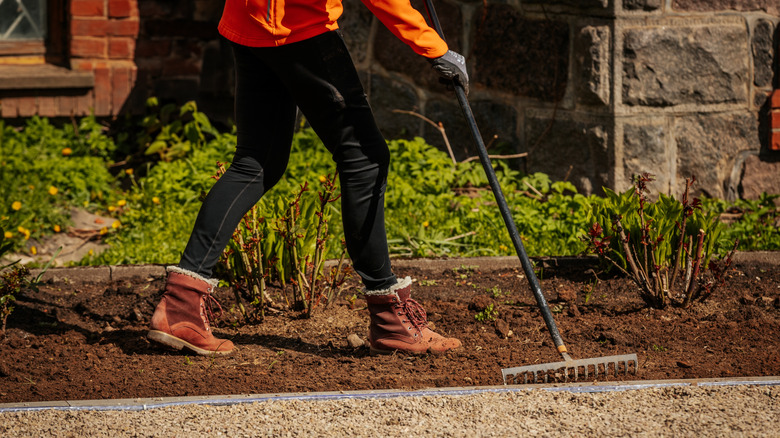
Traditional wood mulch has its place, but many gardeners are ready for something different. Before getting started, it's important to consider all your options so you can choose the best type of mulch for your project. Wood mulch is a great way to add nutrients to your soil while also suppressing weeds, and it suits many garden aesthetics very well. However, it also needs to be replaced regularly, and it can start to look sparse and worn out as it biodegrades. Wood mulch is also often made from recycled construction debris that can be filled with chemicals that then leach into your soil.
"There is definitely a movement towards native, sustainable, and more drought-tolerant, less maintenance plants in landscaping," said Parisa Afkhami, a Coldwell Banker Warburg real estate agent, in an exclusive interview for Hunker. "Environmentally conscious seems to be the impetus for this. Using less water, chemicals, pesticides, and more organic products." The use of natural materials, like stone, as groundcover is a popular way to embrace this trend, according to Afkhami.
Crushed stone and gravel can give your tired mulch a much-needed facelift. These materials feel modern and upscale when done right. "The use of small or medium-sized pebbles or crushed stone as ground cover, whether white, grey or mixed, to prevent weed growth is a trend outside the city, in both suburbia, and beyond," said Gerard Splendore, a real estate broker at Coldwell Banker Warburg, in an exclusive interview for Hunker. Natural stone doesn't break down the way wood mulch does, which eliminates the need to constantly replace it. Stone mulch is also pest-resistant, helps decrease erosion and improve drainage, and won't blow away in the wind.
Implementing this trend in your own space
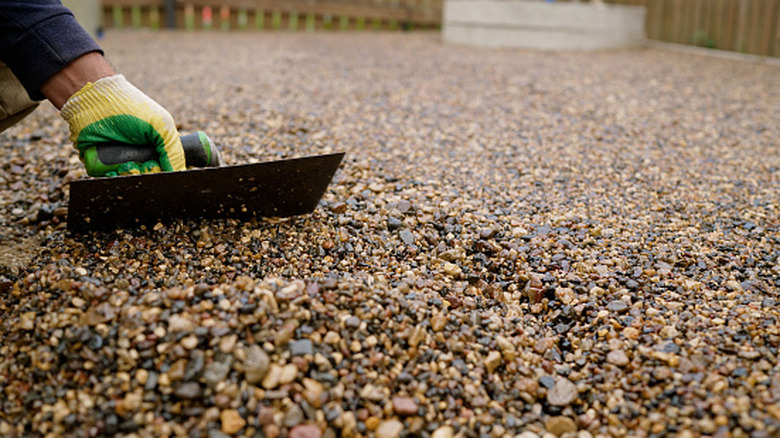
Natural stone is a little trickier to install than mulch, given its heavier weight. "Covering existing grass or bare ground with landscape fabric with gravel or crushed stone on top is easy to achieve in a small yard," Splendore told Hunker. "Larger yards will require truckloads of stone, and perhaps excavation equipment." According to Splendore, it might be necessary to level any spots in your yard where you plan to lay natural stone. This helps the stone to look "smooth and settled," Splendore said. Though it is more difficult than mulch, landscaping with gravel can be DIY-friendly with the right tools.
It is important to remember that stone ground cover may not eliminate all weeds, Splendore said. As with any ground cover, crushed stone is great for preventing or reducing new weed growth, but some persistent stragglers may still break through. Crushed stone and gravel are low-maintenance options, but they aren't completely maintenance-free. Fortunately, there are plenty of ways to keep pesky weeds from growing in your gravel. This is an important note, especially if you are planning on selling your home any time soon. "Landscaping is one of the first aspects of curb appeal that a home buyer encounters," said Splendore. "While landscaping need not be elaborate or exotic, it must be neatly trimmed and maintained."