

9 Pretty Hanging Basket Flowers That Attract Hummingbirds All Summer & Fall Long
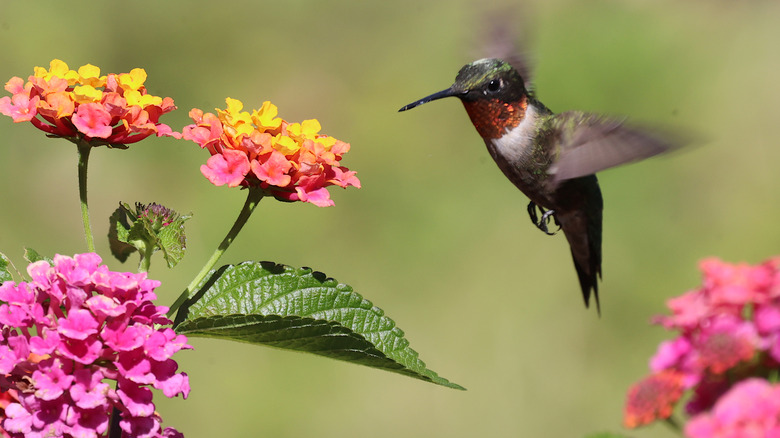
Tiny, high-speed hummingbirds flit and float from flower to flower, in search of nectar, which gives them the energy they need to fly at high speeds, stay suspended in mid-air, and even fly upside down. Along with being fascinating to watch, hummingbirds play an important role as pollinators, helping spread pollen from flower to flower as they move about. Planting the right flowers in hanging baskets is a surefire way to attract hummingbirds to your garden, even if you don't have a lot of space.
The trick is to choose the right flowers — plants that look gorgeous in a hanging basket, bloom through summer and fall, and attract hummingbirds. Go for nectar-rich flowers sporting bright colors, like red, pink, or orange — colors that are hummingbird favorites — and have a tubular shape. Mix and match the flowers you plant for a bit of variety or stick with a single variety in each basket. The more plants and varieties you have, the more likely it will convince hummingbirds to stick around.
Verbena
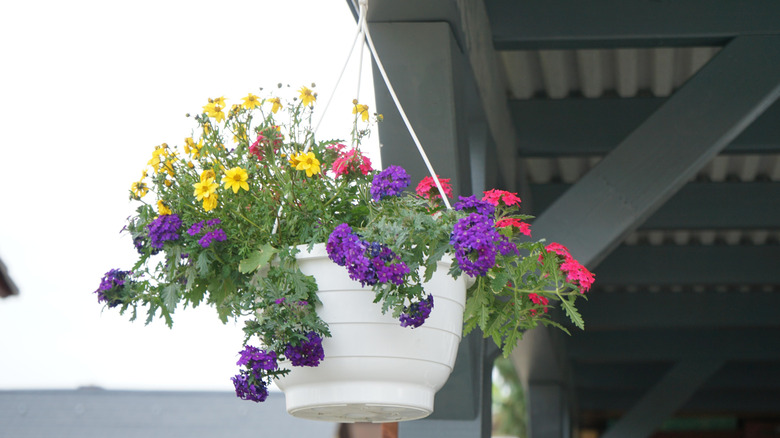
Verbena (Verbena x hybrida) is a hanging basket flower that attracts hummingbirds from summer through fall, thanks to its rich nectar content and long bloom time. From May through October, they'll bloom continuously, putting out clusters of star-shaped flowers in a range of colors. Verbena thrives in the heat of summer and loves the sun. Water to keep the soil moist, but not soggy, as verbena needs well-drained soil. Several varieties and cultivars are particularly mildew-resistant, encouraging many seasons of flowers. Those with a trailing growth pattern are ideal for hanging baskets, as they'll spill over the sides.
Petunia
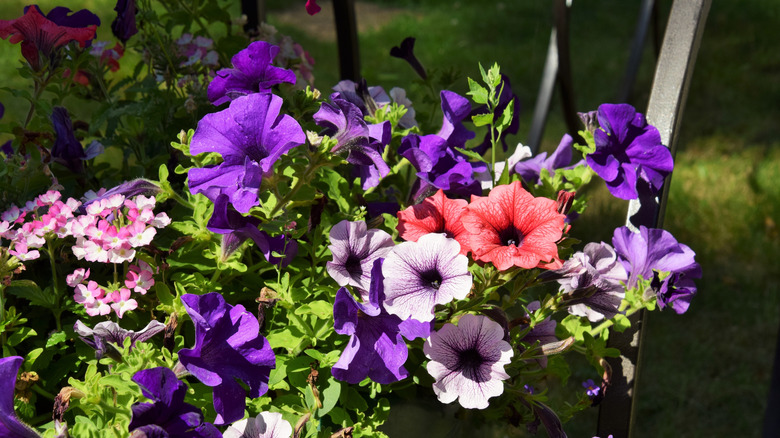
Petunias (Petunia x hybrida) are popular for a reason. They're colorful, pretty easy to grow, and hummingbirds love them. They have the ideal flower shape for the little pollinators and come in a wide range of bright colors, including magenta, bright red, and deep purple. Trailing types will spill over the side of a hanging basket while those with a mounded growth pattern are ideal for planting in the center. Planted in full sun, they'll bloom from spring until frost. Note that some cultivars are bred for looks, but aren't nectar-rich enough to attract hummingbirds.
Lantana
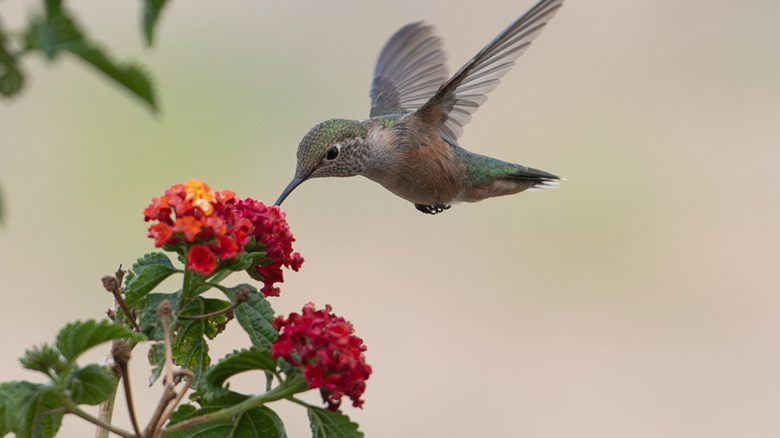
With clusters of small, tubular flowers, tropical lantana (Lantana camara) is a hummingbird magnet. The plant's long-lasting, colorful blooms keep hummingbirds coming back all summer. The plant typically blooms from mid-summer until frost. Bloom colors depend on the variety, but are often bi-colored, such as orange and pink. A low-maintenance plant, lantana thrives in the heat, doesn't mind a bit of drought, and actually does better in containers or hanging baskets compared to in the ground. Note that it is toxic to humans and pets, and is considered invasive in some subtropical coastal states, including Texas and Hawaii.
Salvia
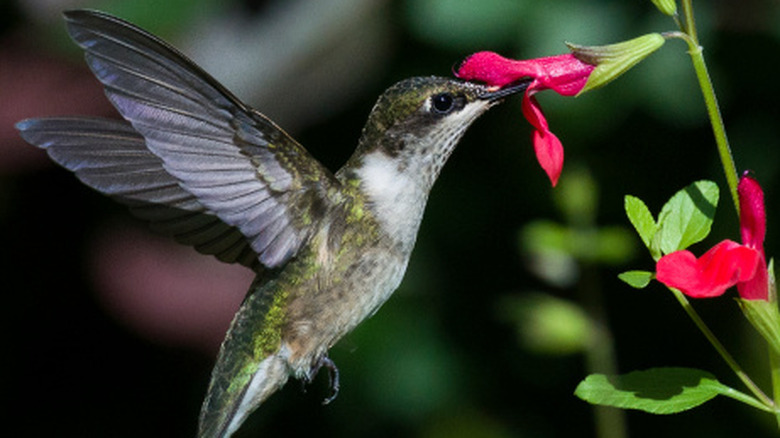
Salvia is another flower that hummingbirds love. The long, tubular flowers offer up plenty of nectar (particularly native varieties). While salvia is typically planted in garden beds, one variety — Salvia BODACIOUS® Hummingbird Falls (Salvia x guaranitica) — is bred specifically for growing in containers and hanging baskets. Available with either purple or blue flowers, the salvia cultivar blooms from summer to fall and does best in full sun, with well-drained soil. If you can't find Hummingbird Falls, look for smaller varieties of salvia to grow in a hanging basket.
Nasturtium
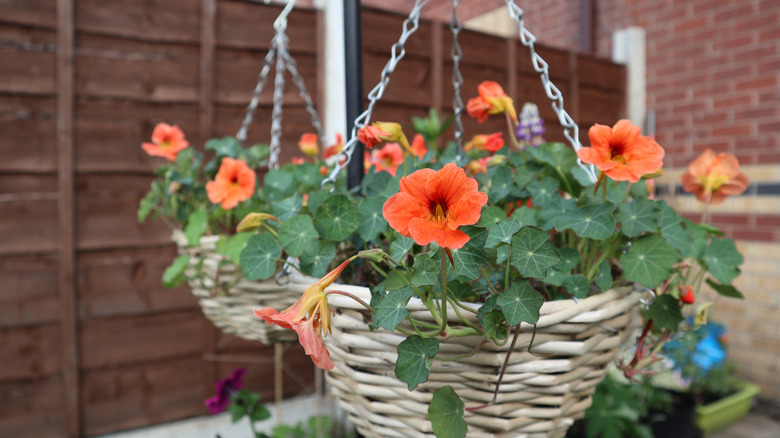
Some things just go together, like hummingbirds and nasturtiums (Tropaeolum majus). Apparently, the birds and flowers evolved together, with the long tongue of the hummingbird being just the right size for the nectar-rich spur of the nasturtium flower. Some birders note that hummingbirds even prefer nasturtiums over petunias. Nasturtiums bloom from spring through fall, but aren't as heat tolerant as other long-blooming flowers. If you live in an area with cooler summers, they may be the ideal pick for your hanging basket. In hotter areas, the flowers will need sun protection during the hottest part of the day.
Fuchsia
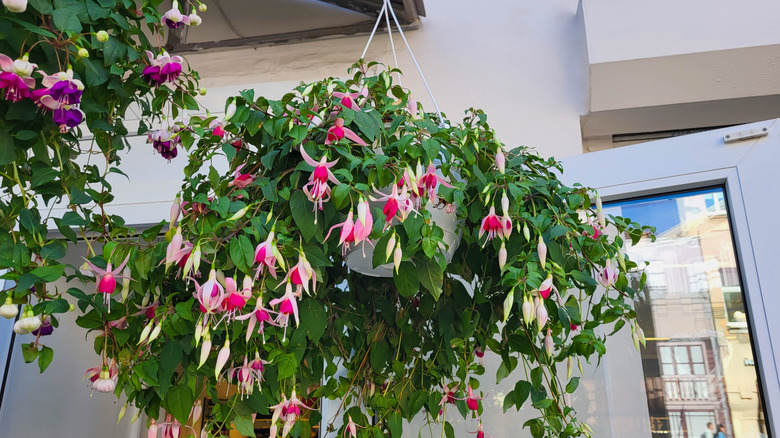
If all you've got is a shady spot for a hanging basket, fuchsia (Fuchsia x hybrida) is the flower to plant to bring hummingbirds to your garden. Another evolutionary match, hummingbirds love the high nectar output of these blooms. Although it can stand some morning sun, fuchsia prefers the shade. It also does best with moist, not waterlogged, soil. The plant will produce unique, showy blooms in colors including pink, red, and white from early spring until mid-fall. Since it has a trailing habit, it's perfect for hanging baskets, where leaves and blooms can spill over the sides.
Calibrachoa
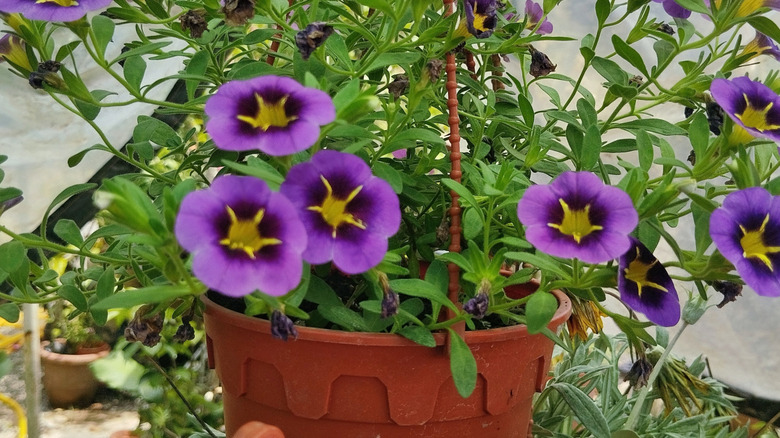
What looks like petunia but isn't? Calibrachoa (Calibrachoa x hybrida), aka trailing petunia or million bells. The long-blooming plants will happily trail down the sides of a hanging basket, ideal for hovering hummingbirds. Their tubular flower shape and bright colors, such as yellow, red, purple, and pink, make them a hummingbird magnet as well. Calibrachoa blooms best in full sun but can take a bit of shade. They are hardy in zones 9 to 11, but are most often grown as annuals, blooming up until the first frost.
Begonia
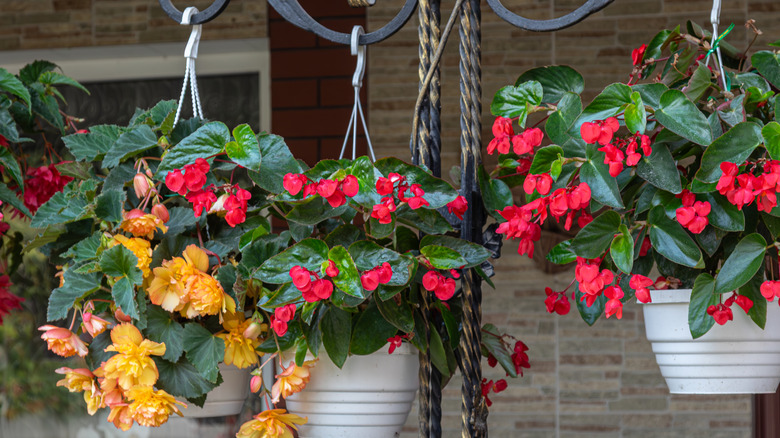
Begonias (Begonia sp) are another example of hummingbird-attracting flowers that do best in shady conditions. Varieties such as Begonia boliviensis grow with a trailing habit and work well in hanging baskets. Most begonias feature perfectly shaped red or orange flowers that also help draw in hummingbirds. While the plant blooms best in the shade, it can tolerate a bit of sun in the early morning. It absolutely can't stand wet soil, so make sure hanging baskets drain well. You'll also want to bring potted begonias inside for the winter, as they can't survive freezing temperatures.
Vermillionaire cuphea
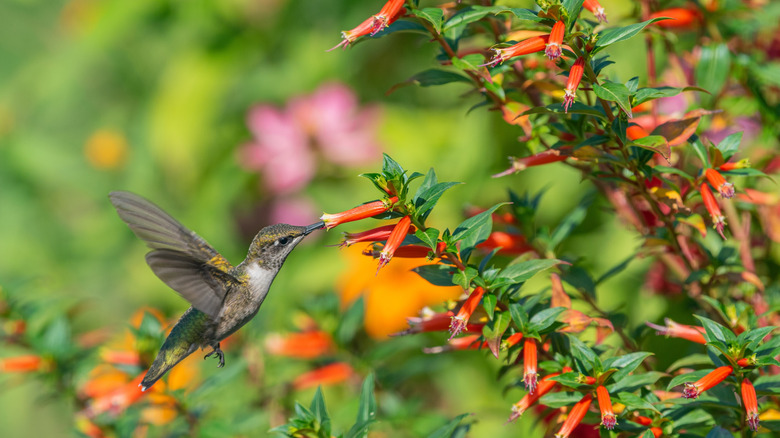
Also called the firecracker or cigar plant, vermillionaire cuphea (Cuphea ignea) is a long-blooming, showy plant that loves the heat and sun. It produces long, bright red flowers from spring through to first frost. The blooms are full of nectar and draw in hummingbirds with their color, shape, and easy access. While vermillionaire cuphea is hardy in zones 8 through 11, in the rest of the U.S., it's grown as an annual. It has a more upright habit than other hanging basket flowers, so try pairing it with a trailing plant for a dramatic look.