

Deter Carpenter Bees From Your Deck With A Natural Scent They Hate
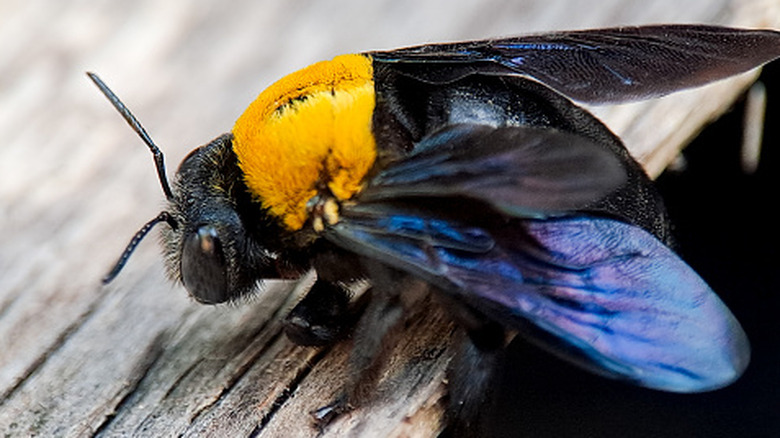
Carpenter bees are notorious for causing widespread damage to properties. While these buzzing builders are excellent pollinators, they make their homes in decks, eaves, and siding by chewing perfectly round holes into the wood. Once inside, they create a series of tunnels along the grain of the wood, where the female bees lay their eggs. A single tunnel won't cause a structure to collapse, but multiple tunnels eventually hollow out the wood to the point where structural beams and railings will weaken and splinter. That's why you need to know what to do if you find a carpenter bee nest in your yard. Instead of rushing to your local home improvement store for toxic chemical sprays, you should seek out a simple solution to send these massive hovering insects packing. Citrus oil smells good to us, but carpenter bees despise this sweet, fruity aroma. Sweet almond oil may also keep carpenter bees from drilling into your deck.
Like other bees, carpenter bees don't smell the same way humans do, but they do use olfactory cues from their antennae to locate their hives and to sense unpleasant odors. Because these bees are excellent pollinators and are generally non-aggressive, it's better to deter them from causing damage than to eradicate them from the area. A citrus oil spray also won't harm other types of bees, such as honeybees and bumblebees.
The citrus hack to deter carpenter bees
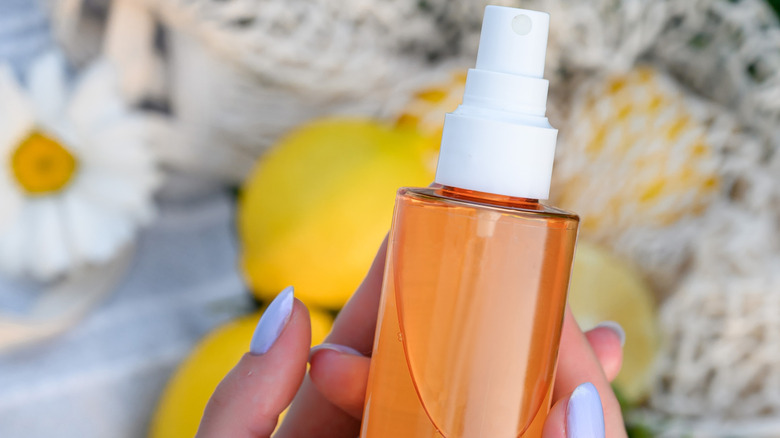
Citrus fruits, like lemons and oranges, contain a naturally occurring chemical compound called d-limonene, which is found primarily in the peel. Unlike harsh insecticides, citrus oil is environmentally friendly, non-toxic to pets, and acts as a natural insecticide, preventing insects from building nests and causing damage to wood. Moreover, citrus scents can help deter snakes from your yard.
To make your own spray, slice a few citrus fruits and place them in a small pot filled with just enough water to cover the fruit. Bring it to a boil and let it cook for 10 to 15 minutes. This will help bring out the natural oil in the peel. Remove the solution from the heat and strain out any remaining fruit. Set it aside and let it cool completely. Pour the water into a spray bottle and spray it around your home. If you spot any nests, be sure to spray them directly. Store the remaining solution in a cool location, and be sure to shake well before each use to incorporate the oils.
Sweet almond oil is an alternative to citrus oil (though peppermint and tea tree oils may also be effective). Prepare the solution the same way you mix the citrus oil and apply it to wooden structures liberally. Keep in mind that carpenter bees prefer untreated and unpainted wood sections, especially on the undersides of handrails, so coat these vulnerable spots during the peak spring mating season every few days or at least once a week.