

Your Yard May Be Attracting Ground Wasps. Here's How
We may receive a commission on purchases made from links.
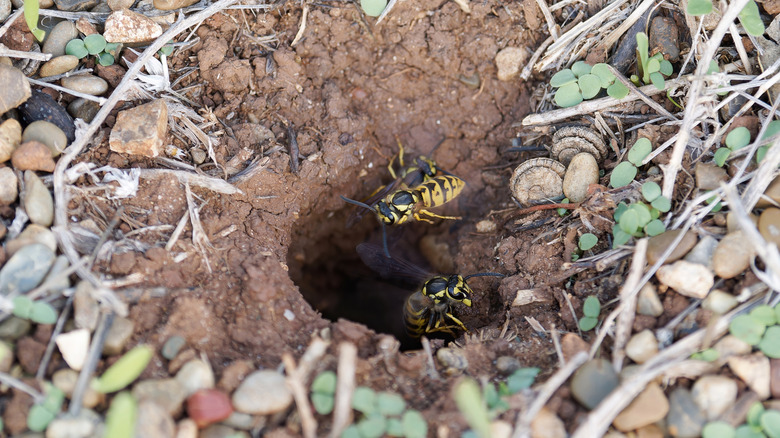
Gardening season has officially commenced. As you start planting and pruning, you'll inevitably encounter multi-legged critters who plan to reside in your outdoor oasis for the foreseeable future. While most are harmless and necessary for the garden's ecosystem, there are more aggressive insects you'll want to avoid, like yellow jackets, and other members of the ground wasp clan. Finding a ground wasp nest will set any gardener into reaction mode, but unfortunately, a rather common yard feature is causing a buzz amongst the insect: dry soil.
Not to be the bearer of bad news, but ground wasps prefer using dry soil verses moisture-rich soil because it's easier for them to dig and construct their nests. You'll likely stumble upon the ground wasp nest under trees, near shrubs, and within fence poles, as they're a source of protection from animals, inclement weather, and neighboring critters competing for garden real estate. Look around the soil for other culprits that can signal garden vacancy to the buzzing bugs — garbage bins provide a food source when not covered correctly, and bright colors signify nectar, both of which make your backyard all the more appealing to a wasp.
How to avoid ground wasp nests — and what to do just in case
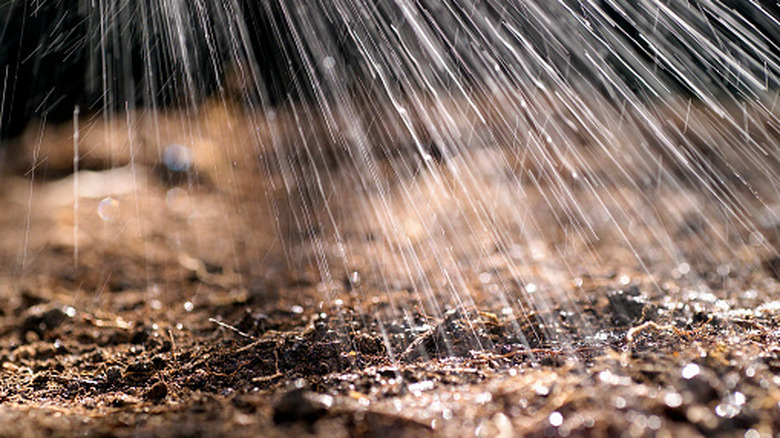
Any type of wasp nest is unlikely to be welcome in the garden, particularly when their territorial inhabitants are ready to sting when you get close. In late spring and early summer, when the bugs are ready to set up shop, it's important to keep the soil as moist as possible to deter them from digging nests in the ground. Thorough watering jobs, using the proper mulch and compost, and experimenting with accessories like the PUUKU Flat Soaker Hose are good ways to ensure you're working with a garden that has more moisture than not, which will likely leave the wasps in search of another home.
It should be noted that many ground wasps are beneficial to your garden and you should avoid killing them, but certain varieties, like the aforementioned yellow jackets, are highly resilient and their ground nests could, quite literally, sneak up on you — no matter your efforts. Should you find yourself having to get rid of wasps like these, utilize Diatomaceous Earth for a natural method, or find an aerosol wasp spray. (Both options might take a few days to work). When you're using a spray, venture out at night, when the bugs are tuckered out for the day, and spray directly into the nest about 10 feet away. Use gardening accessories like gloves and protective face gear, should you have a very serious situation on your hands. If the bugs get out of control — or you're dealing with someone who is allergic to the wasps' stings — seek professional removal.