

Goodbye, Ticks: Consumer Reports Just Ranked The Best Tick Repellents For 2026
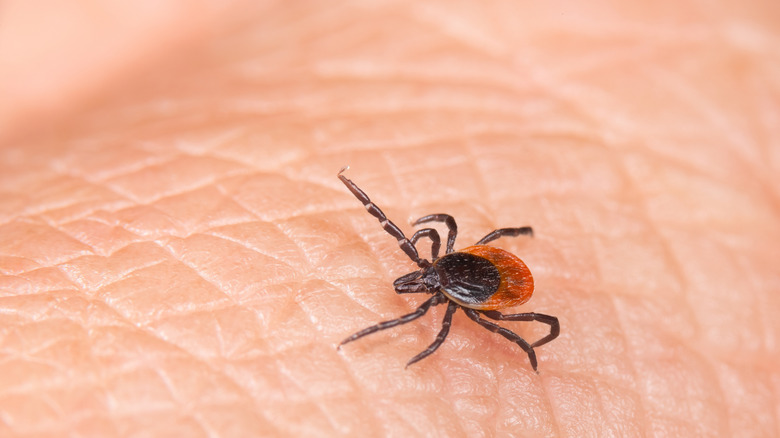
Ticks are known spreaders of harmful diseases. According to a recent CDC report, over 89,000 cases of Lyme disease were reported to the CDC in 2023, the most common ailment spread by ticks, and the actual numbers of Americans diagnosed and treated each year could be much higher. Those who love exploring the outdoors during the summer need to make sure they are protecting themselves to prevent tick bites. And while you could always make your own DIY tick repellent, choosing a product that has been clinically tested to keep ticks away is going to yield better results. But which one should you choose?
While people might know Consumer Reports (CR) more for their reviews on cars and riding lawn mowers, the 90-year-old independent product review company also provides expert analysis on smaller packaged goods, including insect repellent. In their report on the five best insect repellents of 2026, Ben's 30 Tick and Insect Repellent Wipes topped the list. Closely following were Ben's 30 Tick and Insect Repellent Pump Spray Wilderness Formula and Off Sportsmen Deep Woods Insect Repellent III.
The lab testing was conducted by placing an EPA-regulated standard dose of repellent on a participant's arm and having them placed in cages with 200 disease-free mosquitoes of different species for five minutes for each species. The mosquitoes are observed closely to see if they would bite and draw blood. The participants also walked around for 10 minutes to simulate the sweating and exercise one might do outside. These tests were repeated every hour for eight hours or until the repellent failed due to multiple confirmed bites. While mosquitoes aren't ticks, CR reports that, based on previous research, results are similar for the two pests.
CR: Ben's 30 Repellent Wipes effectively deal with ticks

While permethrin is considered the best pesticide for killing ticks, the common factor across all of the successful insect repellents tested by Consumer Reports was that they contained DEET, a chemical mixture developed by the U.S. Army in 1946. It's the most common chemical used for repelling insects, and the Environmental Protection Agency states that DEET is effective against ticks. A deeper dive into the CR's top-ranking Ben's 30 Tick and Insect Repellent Wipes showed that the product contained 30% DEET as the primary ingredient. The report explains that this percentage is why the product earned an excellent rating for repelling both mosquitoes and ticks.
While CR made it clear that the wipes were primarily tested for repelling mosquitoes, they also explained that "products effective against mosquitoes should also be effective against other arthropods, like ticks." My own experience with these wipes have been positive — I've used them many times while hiking and have never come home with a tick bite.
The one flaw the report noted with Ben's 30 wipes was that the product had an average score in terms of damaging materials. While it did not cause major damage to common outdoor clothing materials like cotton or polyester, it did leave stains on nail polish, car paint, and vinyl. So, just be careful while you're using the wipes to your skin or clothes, and consider testing a wipe on a hidden part of your clothing, then wash it, before heading out to the woods.