

Plant This Herb Next To Basil To Fill Your Garden With Birds And Butterflies
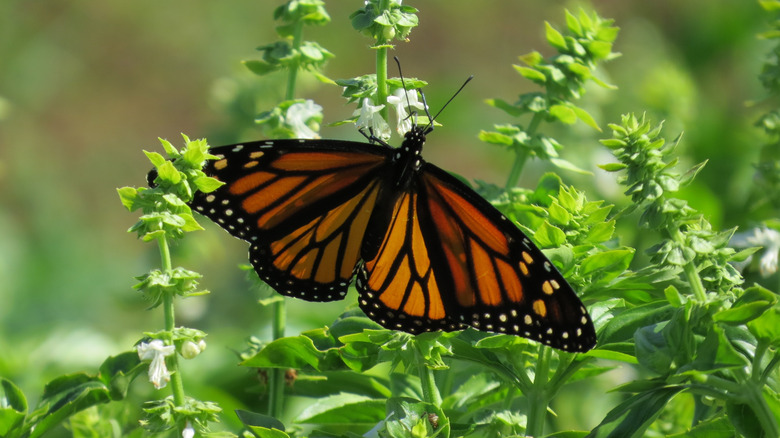
Butterflies and birds are crucial to the environment and by attracting more of them, you'll make your garden look more lively and colorful. If you've been wanting to make your garden a pollinator paradise, adding another herb beside your basil is a great way to support birds and butterflies. Parsley is a common herb that grows well when planted with basil, and both of these herbs are beneficial to pollinator gardens for different reasons. Parsley is extremely attractive to black swallowtail butterflies specifically, because it acts as a host plant for their larvae. Black swallowtail caterpillars will munch on the parsley leaves, allowing your garden to feed future butterflies. Without a host plant, caterpillars die off. Other pollinators are also attracted to the flowers parsley produces.
On the other hand, basil grows gorgeous groups of flowers that are attractive to pollinators like bees. These flowers could catch the eye of hummingbirds as well. Once the basil plant goes to seed, goldfinches and other birds will stop by your yard for this delicious snack. By planting your basil and parsley beside each other, you'll add a little garden diversity to attract beautiful birds and butterflies to your outdoor space. These companion plants will also make your pollinator garden look attractive, as basil and parsley are often grown together for ornamental displays. Not only will basil and parsley produce delicious herbs to spice up your kitchen, but they'll also ensure that butterflies, birds, and other pollinators have something to eat.
Conditions for planting parsley and basil together
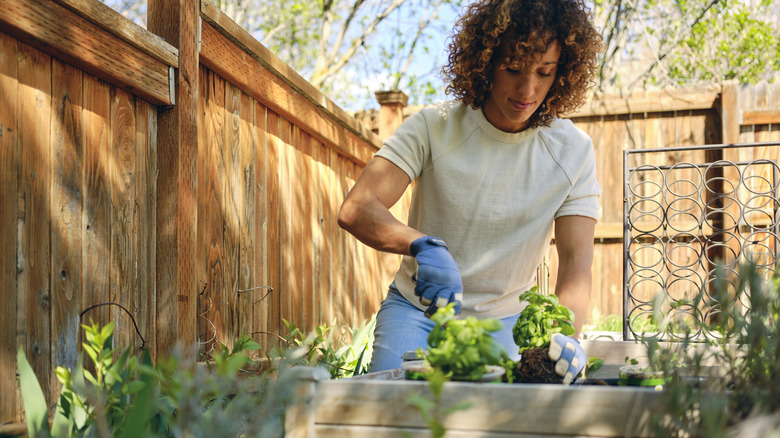
One of the main reasons parsley is an easy-to-grow basil companion plant is because these herbs like similar environments and soil conditions, allowing you to grow them successfully side by side. Both parsley and basil prefer soil that's rather fertile and drains well. Besides ensuring the soil is rich, you'll also want the dirt in your garden to have a pH between 6 and 7 to keep both basil and parsley happy. Additionally, these herbs both require full, direct sunlight for about six to eight hours a day. Because of this, basil and parsley are able to thrive in the same spot in your garden.
Once spring is in full swing and the threat of frost is gone, you can start these herbs from seed in your garden. Alternatively, basil and parsley seeds can begin indoors and be moved outside once warmer weather has arrived. Because parsley is a host plant for black swallowtail caterpillars, these plants will sustain damage by feeding the young pollinators. This will affect the appearance of your plants, and if you find the bite marks unsightly, situate the parsley in the back of your pollinator garden behind other plants. Additionally, if you'd like to harvest your basil for a little longer before allowing the plants to flower, you can pick off any buds until you're ready for flowers and seeds to attract pollinators.