

Not Miracle-Gro, Not Coffee Grounds: This Natural Fertilizer Makes Peonies Thrive
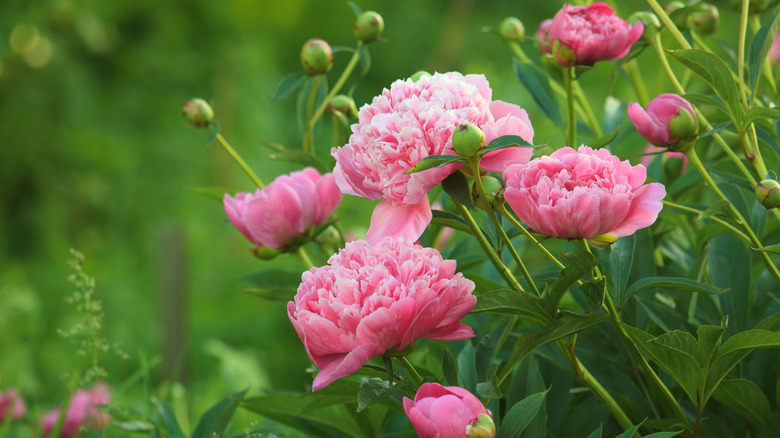
Peonies (Paeonia sp.) are some of the most beautiful flowers to grow in your springtime garden. Like any flower, peonies have certain fertilization requirements that help them thrive. While some gardeners might opt for a chemical-based fertilizer like Miracle-Gro, others prefer using more nitrogen-rich natural fertilizers like coffee grounds. However, if you really want your peonies to thrive, it's not Miracle-Gro or coffee grounds that are going to help the most: It's bone meal.
Bone meal is a time-honored natural fertilizer made by pulverizing animal bones, which contain essential nutrients like phosphorus, nitrogen, and calcium. For peonies in particular, bone meal encourages root development and bulb growth, which gives the plant strength to produce bigger blooms. One of the reasons a peony might not bloom is if the soil is deficient in phosphorus and other nutrients.
Bone meal is exceptionally easy to find at most garden centers or online. Brands like Espoma and Burpee offer bags of granular bone meal that can be applied to flower beds and vegetable patches. You can also make your own bone meal fertilizer by saving the leftover bones when cooking, and then boiling them, drying them, and pulverizing them into a powder. It's a really cost-effective and eco-friendly way to help your peonies thrive this spring.
How to use bone meal fertilizer on your peonies
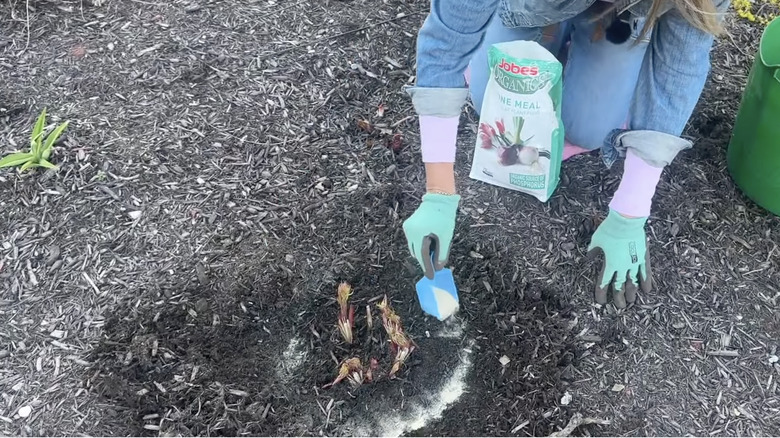
When using bone meal to fertilize your peonies, timing is incredibly important. Before the growing season kicks off, either in late winter or early spring depending on your climate zone, you can add some bone meal directly to the soil surrounding the plants. As they grow, they'll absorb the nutrients for stronger stems and blooms. You can also repurpose a tomato cage for additional stem support.
To apply the bone meal fertilizer, spread it in a ring around the bulbs. It's important to read the instructions on the fertilizer bag in order to make sure you are providing the flower with the correct ratio of fertilizer. This will depend on the type of peony plant you have. Herbaceous peonies, the ones that grow closer to the ground, only require about ¼ cup of fertilizer per plant, while larger tree peonies can take up to ½ cup.
It is important not to apply too much fertilizer, as an overabundance of phosphorus and calcium can actually disrupt the nutrient balance and prevent the flowers from blooming. It's also worth noting that peonies don't need to be fertilized very often. Around once every two to three years is sufficient. Peonies will store nutrients in their stems and use them for the following year's growth.