

Not Eggshells, Not Banana Peels: The Natural Fertilizer That Makes Peppers Thrive
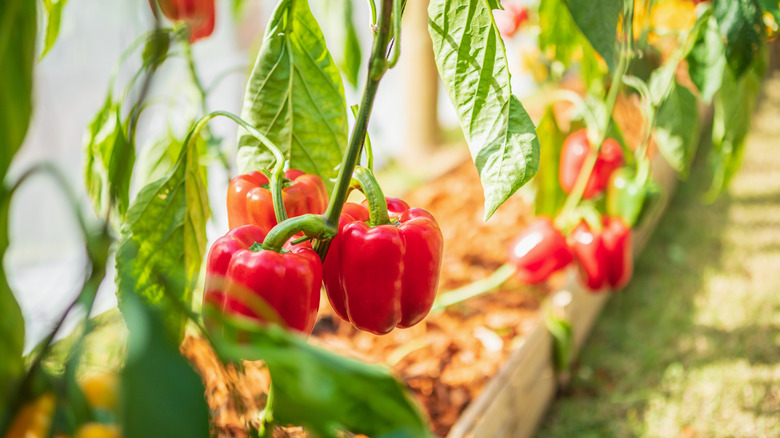
As a home gardener, you're probably on the lookout for ways to fertilize your favorite plants, leading to higher yields without breaking the bank. Maybe you've tried crushing eggshells to use a mulch and fertilizer and using bananas as a plant food. But there's another everyday food item that your plants, particularly peppers, will love: coffee. But before you toss a handful of fresh grounds on the soil or water your peppers with a cup of coffee, here's what you need to know.
Contrary to popular belief, the reason to add coffee grounds to your garden is not to lower the soil pH. Spent grounds won't effectively reduce the soil's pH level. That's actually good news for peppers, which prefer a relatively neutral soil, with a pH between 6.0 and 6.8.
What coffee grounds can do is add a bit of nitrogen to your soil, since composted grounds have about 2% available nitrogen. Pepper plants need a moderate amount of nitrogen to get lush, green leaves. However, too much nitrogen can reduce the pepper yield, so the modest amount available from coffee grounds may be ideal. Coffee grounds also contain small amounts of phosphorus and potassium, which peppers need to make fruit. Beyond nutrition, coffee grounds may provide some protection against certain fungal diseases, such as Fusarium. Your pepper plants can enjoy coffee's benefits in a few ways: added directly to the soil, composted, or made into a compost tea.
How to use coffee on your pepper plants
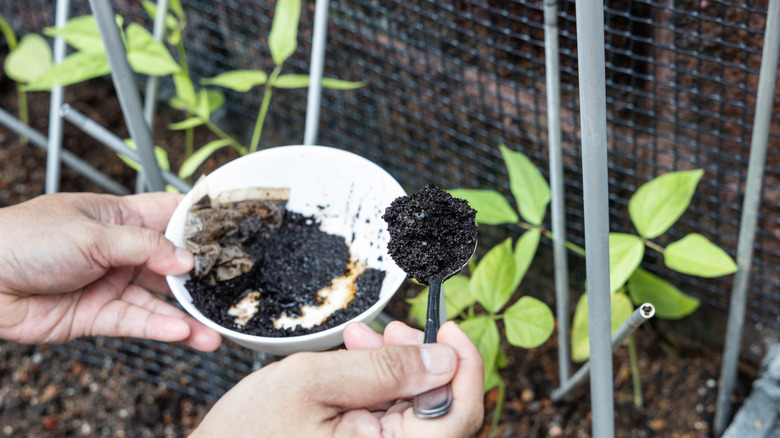
Every time you brew a pot of coffee, save the grounds to use in your garden in one of three ways. Only use spent coffee grounds — not fresh — in your garden, as fresh grounds can interfere with plant growth and harm soil microbes. In the spring, when you're getting ready to grow peppers, add about a half-inch of coffee grounds to the top of the soil. Be careful not to add too much coffee, as the grounds can become compacted, blocking drainage.
Composting coffee grounds requires more planning and patience than adding the leftovers from a freshly brewed pot to your garden. To make your own coffee-based compost, combine one part grounds and one part carbon-rich material, such as old leaves in a covered bin or a five-gallon bucket with lid. Stir the material each week, adding moisture to keep it from drying out, and let it compost for a few months. When it looks and smells like the earth, the compost is ready to use. Spread the finished compost over the soil around your pepper plants.
A quick and relatively simple way to use coffee around your peppers is to brew a sort of "tea" with the spent grounds. Place about two cups of used coffee grounds in a fine mesh bag. Set the bag in the bottom of a five-gallon bucket and fill with water. Let the coffee steep overnight, then pour it on the soil as a liquid fertilizer.