

Forget Boring Concrete: The Durable Patio Alternative That Looks So Upscale
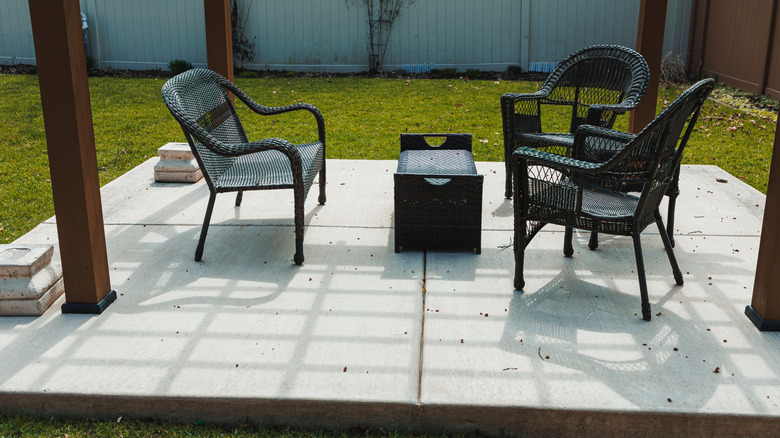
Concrete patios are a go-to option for a reason. Concrete is low maintenance, durable, easy to install, and affordable. It's also — let's face it — boring. Additionally, concrete comes with a whole slew of downsides. It is prone to cracking, gets slippery when wet, and can be extremely hot under the summer sun. Poured concrete has the added downside of being difficult to repair. Concrete cracks can be patched if you avoid some common mistakes, but the results aren't seamless. So, if you want that like-new look again, you will need to tear the whole thing out. Concrete pavers are easier to repair (just remove the broken one, pop in a new paver, and you are good to go), but they have a similar set of downsides. On top of that, they are also more expensive than plain poured concrete.
Fortunately, there are better options out there, enabling you to skip concrete entirely. If you have the room in your budget and are tired of cracked concrete, porcelain pavers are a wonderful alternative. These pavers are an easy way to upgrade your patio, giving it an instant luxe feel. Made from natural materials such as clay and fired under extreme heat, porcelain pavers are extremely durable and can last for decades. They are also slip-resistant and frost-proof because they have exceptionally low porosity (fewer microscopic holes for water to sink into). And did we mention that they are beautiful?
So, you want porcelain pavers in your yard. Now what?
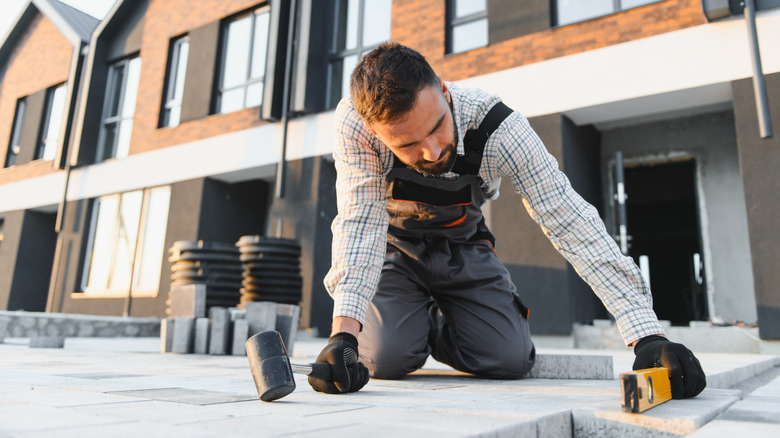
As with anything, it's important to go in with your eyes wide open, aware of not only the pros but also any potential cons. Perhaps one of the biggest downsides to porcelain pavers is the cost. These pavers are significantly more expensive than concrete, as well as some types of natural stone pavers (like sandstone). They are also much more difficult to drill and cut because they are made of such hard material. The sleek, luxury aesthetic of porcelain also doesn't match every design style. So, a rugged or cottage garden setting may be better off with a different material.
All that kiln-fired durability also comes with a serious downside — porcelain is extremely brittle and can crack if it is installed improperly. To that effect, it is also trickier to install than concrete or natural stone because porcelain pavers must be placed on a surface that has been carefully leveled and prepped so the pavers will be supported properly. Because of this, porcelain pavers are challenging to DIY. In other words, if you are ready to transform your worn-out concrete patio, this project is one that is better left to the professionals.