

Transform A Worn-Out Concrete Patio With A Durable, Eco-Friendly Solution
A concrete patio can last over 30 years, but that's not forever, and in adverse conditions, it could develop cracks, discoloration, and other signs of aging well before then. A great way to squeeze several extra years of life from your patio area is to resurface the concrete slab, and cementitious resurfacing products on the market make this easy to do. If you're going to go to that trouble, however, why not use a product that will enhance the patio's looks and make it more comfortable — and safer — for walking? An eco-friendly rubber patio overlay will do just that.
You can find paintable rubberized coatings as well as hardier, more granular products that you apply with a trowel. The latter consists of rubber pellets suspended in a polyurethane binder, and the fact that the rubber is usually derived from old car tires is what makes these products eco-friendly. Besides putting a portion of the 280 million or so car tires that Americans discard each year to good use, these overlays produce a long-lasting surface that flexes with changing temperatures, doesn't get as hot as concrete in the sun, and isn't affected by minor cracking in the concrete underneath. The granules make the surface slip resistant, which is especially important for a pool deck but also desirable for a patio that gets wet in the rain and icy in cold weather. They provide texture to the old, worn concrete as well, while an array of colors and color combinations offer plenty of opportunity to define an attractive look.
Is rubber resurfacing the right choice for my worn patio?
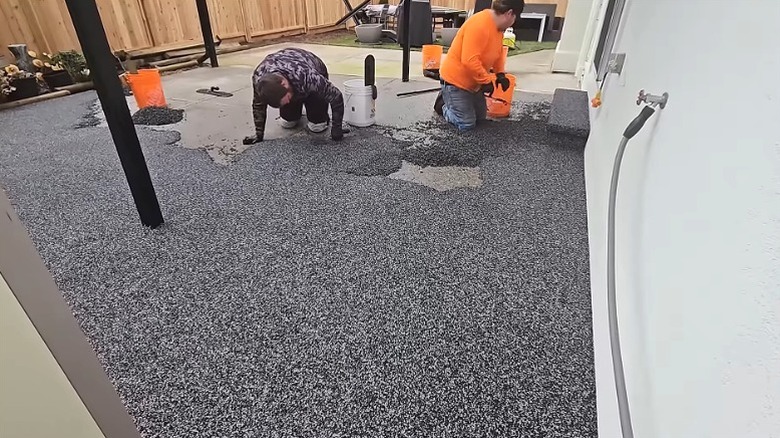
Rubberized deck and patio overlays are generally more expensive than many conventional concrete repair products and techniques, costing around $10 to $15 per square foot. But the application can last upwards of 20 years, withstanding harsh weather and impacts with little issue. A product like Rubber Stone is even designed for use over pavers, so it's often a suitable option for a severely cracked concrete patio.
The tradeoff for the extra stability and protection the granular product offers is that poured in place rubber isn't the best DIY patio material — professional installation is highly recommended. It doesn't flow out as easily as mortar or concrete, and without professional expertise in the preparation and installation processes, you could leave lumps and other irregularities in the surface. Proper prep typically involves sweeping and washing the old concrete and applying a primer, and if the concrete is painted, you may need to remove the paint with a pressure washer to ensure proper adhesion of the rubberized coating. Maintenance after application is minimal, but you'll want to clean it regularly, reseal it every three to five years, and keep an eye out for cracks and other damage so you can address them promptly to prevent them from spreading.