

Don't Make This Common Mistake After Removing A Tree Stump From Your Yard
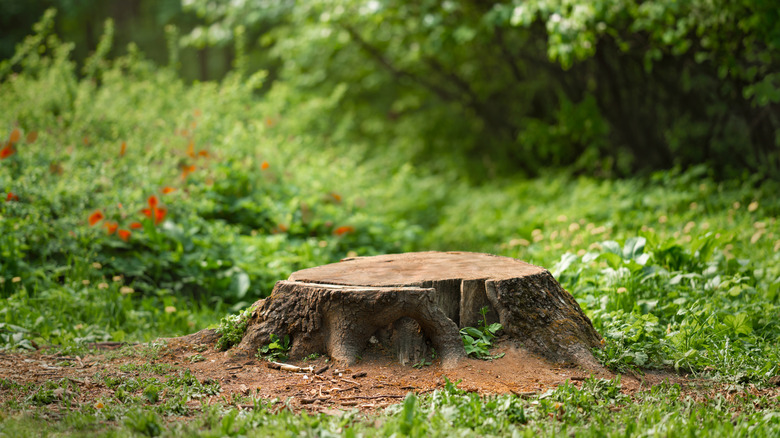
You might think that your tree stump removal project ends after the stump itself has been carted away — but unfortunately, your work isn't over just yet. Whether you hire professionals to help remove tree stumps from your yard or decide to tackle the chore yourself, you'll likely be left with a lot of debris from the stumps. You'll need to clean up all of this extra clutter before you call it a day and then fill the hole; not doing so is a common mistake people make and it's one that can lead to soil erosion and pests, who are attracted to the debris.
Small tree stumps can be removed by digging them out of the ground (or, if you're feeling adventurous, using urine to remove the tree stump). One of the fastest ways to remove a tree stump from your yard is with a grinder; larger stumps will need to be ground down. The latter method will leave behind the most debris, though you'll see bits of sawdust and scattered wood chips after either type of removal. If you want to replant the area the stump was in, you'll need to remove the leftover wood chips before doing so.
Cleaning up after a tree stump removal is especially important if you want to prevent pests from swarming to the extra debris. Wood-loving pests — like ants, termites, and beetles — would appreciate a chance to munch on your leftover wood chips. This will eventually lead them to destroy your other, living trees and infiltrate your home's foundation. Leftover wood also makes a great home for fungus, mold, and disease, all of which can quickly spread to the rest of your yard.
How to clean up after a tree stump removal and fill in the hole
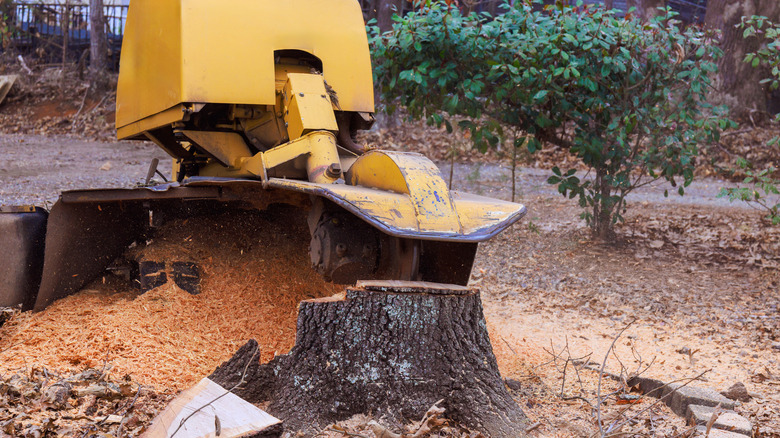
Before filling the hole, gather the leftover debris by raking around your former tree stump, then putting the wood chips into a bag. There's no need to toss your leftover wood chips into the landfill. Instead, you can use them as garden mulch or compost material. Disperse the chips throughout your yard to help insulate your plants (you can also do this alongside this money-saving cardboard hack) and give them extra nutrients, or add small amounts of chips to your compost to give it more carbon and aeration.
If you're primarily dealing with sawdust, you'll likely be left with a large pile of the stuff. Shovel it into a bag to use as mulch or compost (however, you'll need to add extra nitrogen to the mulch to prevent nitrogen loss). For thin, leftover layers of sawdust that are hard to pick up, use a leaf blower to create piles of sawdust that you can easily bag up. Always wear protective gear to prevent the dust from getting into your lungs or eyes — and keep your surroundings in mind, so you're not accidentally filling your neighbors' property with dust. Lastly, be sure to fill the hole in your yard once the debris is removed.
You should get rid of your wood chips entirely if the tree you removed was diseased. In order to prevent the infection from spreading to your other plants and trees, you'll need to thoroughly clean up all leftover debris, then either burn it or drop it off at a landfill (you can contact a professional for more information on which option is best for you). Don't feel bad about getting rid of wood from a diseased tree — reusing it is never worth risking your yard.