

Why There's Simply No Need For A Dish Rack Anymore
We may receive a commission on purchases made from links.
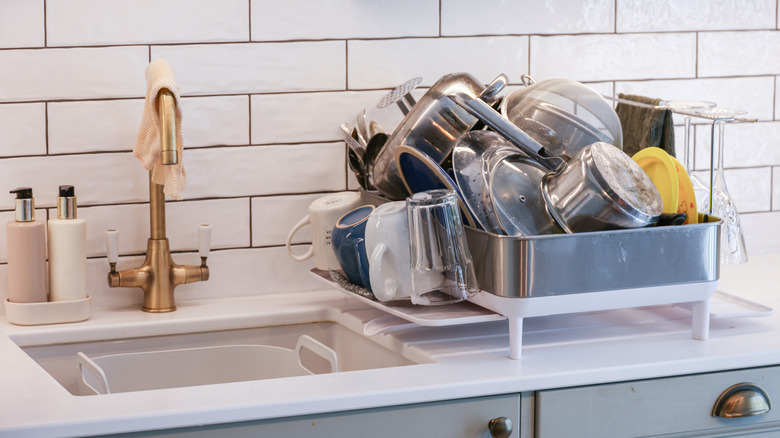
If your dish rack is constantly cluttered with dripping dishes, it may be time for a change. Maybe a wall-mounted dish drainer is the dish rack alternative you need to save space, but if you want a solution with a little bit of style and versatility, a stone drying mat could be the eco-friendly option you've been waiting for. These firm, porous dish mats offer a clean, minimalist look for your counter — and they're also one of the best choices for drying dishes, as they rapidly absorb water, reduce water pooling, and resist bacterial growth.
Hearing that a stone drying mat can somehow soak up more water than a regular dish mat might seem suspect at first. After all, how is stone supposed to be superior to, say, an absorbent dish cloth? The answer lies in the type of stone that these dish mats use. They're actually comprised of diatomaceous earth, an extremely absorbent powder made from fossilized algae called diatoms. (It's the same stuff you might use to keep ants out of your home!)
A typical stone dish mat will pair compressed diatomaceous earth pads with food-grade silicone for a sturdy, nonslip surface. Options like the SOKINCLR Large Stone Dish Drying Mat are not only easy to roll up and store, but they also provide airflow under the dishes to help them dry. Because diatomaceous earth is biodegradable, a stone drying mat is a sustainable kitchen choice. They're also non-toxic — look for BPA-free mats made with food-grade materials. But the biggest benefit of a stone drying mat is that it can absorb excess water completely and dry much faster than fabric alternatives, which means no more puddles on your countertop from a dripping dish rack.
Other pros (and cons) of a stone drying mat
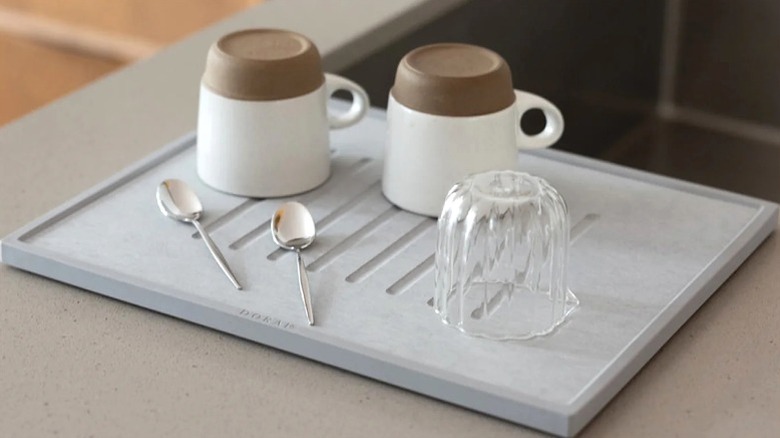
Besides being faster to dry, a stone drying mat can also be more hygienic than a dish rack or drying cloth. A diatomaceous earth mat is efficient at trapping and drawing moisture from bacteria to prevent it from spreading. Your average stone mat will dry so quickly that there won't be much time for mold and mildew to grow in the first place.
Unlike a dish cloth or fabric dish mat, a dish mat only takes a few seconds to clean. Just give the surface a quick wipe. Your stone drying mat will likely be able to last for years without much care, though you may need to occasionally sand down the surface of the mat. Plus, it's easy to store when not in use, meaning it won't be one of the many things making your kitchen look cluttered.
The main downside of a stone drying mat is that it doesn't offer as much vertical storage space as a dish drying rack. If you're working with limited counter space, a drying rack that has multiple tiers for your dishes will be more effective than a mat, which can only hold so many dishes at once. While the stone replaces the need for a dish rack, you may find the best solution is to combine the two. This will stop water from pooling on your countertop and bacteria from developing under your dishes, and you can still take advantage of the extra space a dish rack offers.