

The Stunning Fast-Growing Flower That Fills Garden Spots Where Little Else Will Grow
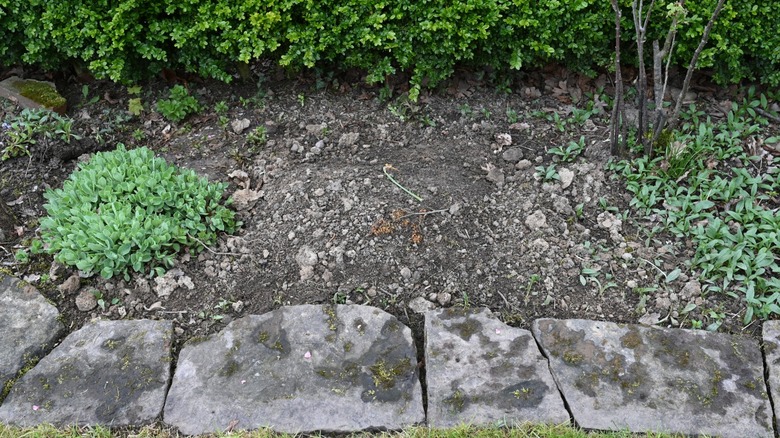
No matter how full your garden is, there are always going to be bare patches where nothing seems to grow. It could be that nothing grows there because it's too dark. These areas of deep shade can be tricky places to grow flowers, thanks to a lack of light and competition from tree roots. Thankfully, not all is lost. One stunning and fast-growing ground cover plant that will sprout in these bald spots is foamflower (Tiarella spp.).
There are two primary species of foamflower common in North America: heart-leaf foamflower (Tiarella cordifolia) and three-leaf foamflower (Tiarella trifoliata). Heart-leaf is native to the woodlands of the Eastern United States and has spindly stems that grow foamy white or pinkish flowers. Their broad green foliage can look heart shaped, hence the name. Three-leaf foamflower is native to the Western U.S. and bears similar flowers, but the prominent three leaflet foliage makes it distinctive from its heart-leaf cousin. Both are hardy between USDA zones 3 through 9.
Both types of foamflower can grow in areas where very little light is able to penetrate. If you have an area that gets a little morning sun but lots of afternoon shade, planting either of these foamflowers there is ideal. Areas of dappled sunlight and partial shade are best if you want to get more color out of the foliage, though the foamflowers can't tolerate much direct sunlight.
Foamflowers will thrive in your yard's shady areas
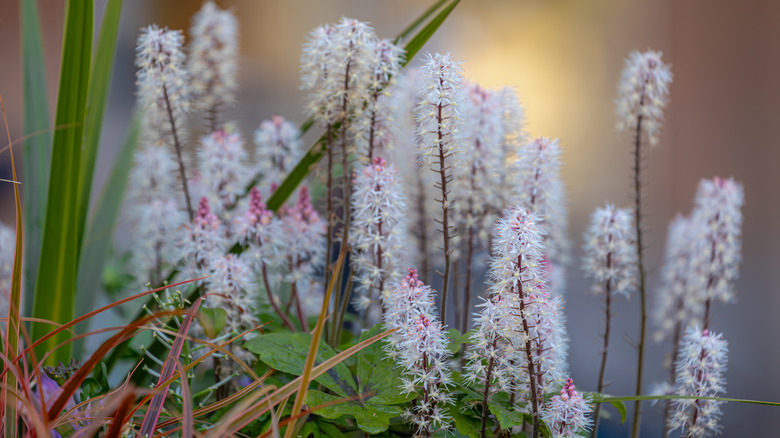
The shadier areas of your yard won't necessarily include dense forests. The north-facing side of your house is going to be a very shady place where it is difficult for plants to grow – but not for heart-leaf or three-leaf foamflowers. The shade preferences of both make them ideal candidates for northern gardens or borders along shady parts of your garden.
Though they do grow well in the shade, both foamflowers are a little particular when it comes to soil. They generally require loose, loamy soil of a moderate pH, somewhere between 5.5 and 6.5. If you have heavier, clay soil, it's better to plant foamflowers in containers. In pots, as well as in the ground, foamflowers need well-draining soil. Too much standing water can cause the roots to become waterlogged and rotted.
Another important thing to know about foamflowers is that they are excellent at reducing weeds and creating a living mulch ground cover. When planted in dense clusters 12 to 18 inches apart, foamflowers will spread via stolons over a period of time. As such, they are perfect for use as a flowering ground cover to place around trees or in that bare patch you've long had trouble growing things in. After planting, the area will soon be covered in deep-green foliage and beautiful white blossoms. It'll be so pretty that foamflowers may become your favorite plants in the garden.