

Think Twice Before Reaching For Vinegar To Kill Crabgrass - Here's Why
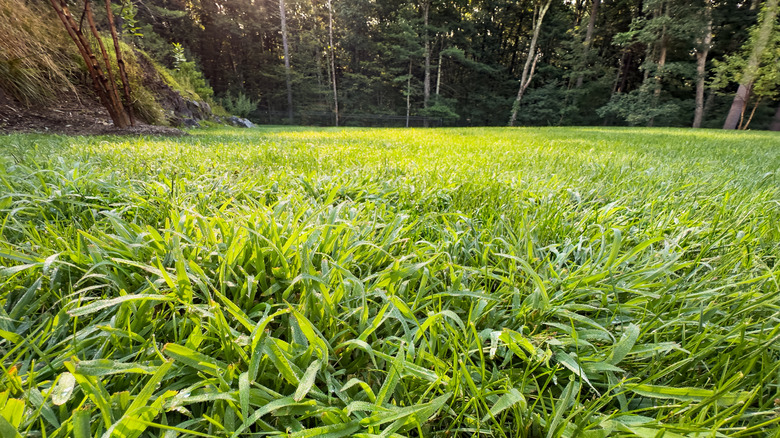
Crabgrass is a weed that's hard to fight off. It thrives among various types of grass, taking over thanks to its ability to grow in high heat and bright sunlight. This annual weed also reproduces easily, with a single crabgrass plant able to produce as many as 150,000 seeds. DIY crabgrass elimination methods are often recommended — including boiling the weed and trying to kill it with vinegar. However, you may want to think twice before breaking out your regular ol' household vinegar as an easy way to kill the crabgrass that's popping up in your pavement cracks or on your lawn.
Speaking exclusively to Hunker, Assistant Extension Professor of Horticulture and Ornamental Horticulture Specialist at the University of Maine Cooperative Extension Dr. Manjot Sidhu explains why vinegar doesn't work to eliminate crabgrass. "Average household vinegar has a low concentration of acetic acid ... which is only effective in killing the upper green part of the crabgrass, while the deep root system still survives," Dr. Sidhu explains. "The plant is able to regrow from that root system."
Thinking about reaching for a stronger or more specialized kind of vinegar for your DIY homemade vinegar weed killer? Unfortunately, Dr. Sidhu tells us that even this type won't kill crabgrass. "Horticultural vinegar has higher concentration ... of acetic acid as compared to regular vinegar," she explains. But, like regular vinegar, "horticulture grade vinegar works on controlling young, small plants of crabgrass ... In mature plants, it also acts as a contact herbicide only on the foliage, but is unable to affect the root system, leading to regrowth."
Other effective ways to get rid of crabgrass
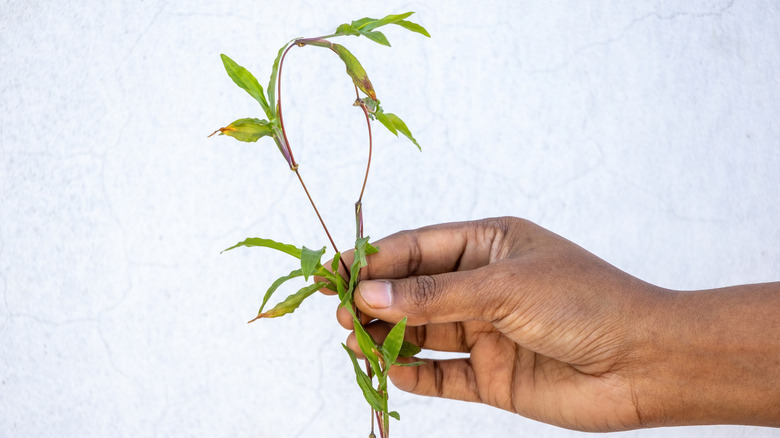
Instead of turning to vinegar to stop crabgrass from taking over your yard, you'll want to try another method — one that's actually effective at eliminating the plant. If you're searching for a natural or DIY way of removing it at the roots, don't overlook your tried-and-true weeding tools.
Speaking exclusively to Hunker, Dr. Manjot Sidhu notes that there are plenty of options that will get the job done. "Manual removal is most effective," Dr. Sidhu explains, "[but] make sure to pull out the whole root system." Alternatively, she recommends mulching, as this suppresses the weed's ability to germinate. She also tells us: "Solarization with a clear plastic sheet during hot weeks in summer can help to kill the crabgrass plants." While solarization can take time, this process — which involves heating soil up to temperatures as high as 140 degrees Fahrenheit – comes with other benefits for your lawn as a whole, like controlling pests and potentially improving soil health.
Overall, Dr. Sidhu explains, if you're looking to stop crabgrass in its tracks and ensure it doesn't continue to grow, there are a few steps you can take regularly. "Start with a healthy lawn [or] garden," she says. "Follow non-chemical methods of control including mulching and hand weeding. Control the weeds before they mature and reach the seeding stage." Then, you'll want to "keep the lawn thick, which helps to shade out dormant [or] germinating crabgrass. Water deeply and less frequently. [This] promotes the growth of desirable plants."