

The One Flooring Trend HGTV's Christina Haack Is Ready To Retire

When you're planning a large renovation project, there are few questions more important than what you're going to do about your flooring. After all, this element of your interior takes up quite a bit of visual space. And beyond aesthetics, the functional benefits and drawbacks of specific flooring materials are also worth considering, especially in relation to kids, pets, and potential upkeep requirements. If you ask interior design expert and HGTV star Christina Haack, though, there's one kind of flooring you should pretty much always try to avoid — travertine. In an interview with Realtor, Haack claims that the "heavy Tuscan" style that comes with putting travertine down everywhere is something that she used to experiment with back in the 2000s, but doesn't like anymore. In a separate conversation with Parade, Haack notes that "...travertine's a hard material to get rid of", and says she thinks that it's not always popular with potential buyers because of how dated and dark it can look. In other words, it's one of those dreaded flooring materials that can lower the value of your home.
Though travertine, which is a luxury limestone, is reasonably durable, it also comes with a notable drawback that Haack doesn't mention in her discussions about the material, and that's how much it can cost. Travertine comes with a higher price tag per square foot than ceramic tile, porcelain tile, and luxury vinyl flooring. Installing travertine can also be expensive; thanks to the material's weight, you'll usually need to hire professionals to get the job done. It would seem that travertine is ultimately becoming just another outdated flooring option that it's time to ditch.
More drawbacks of travertine that are worth knowing about
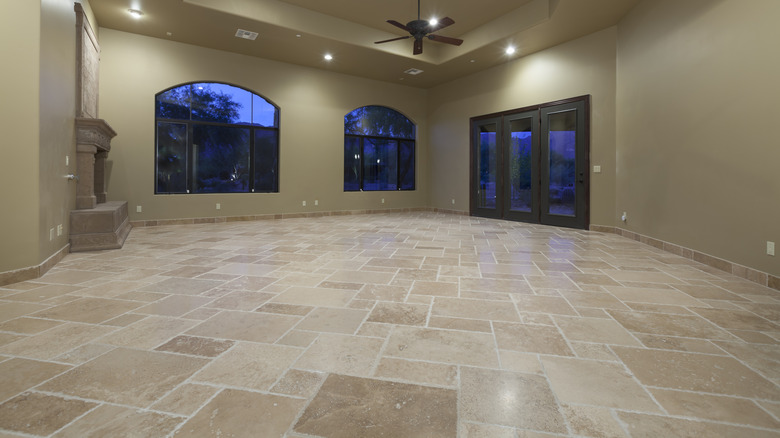
Travertine is a trendy flooring material in 2026 thanks to its warm, earthy tones and rustic aesthetic. However, there are actually several reasons why you might want to follow Christina Haack's lead and skip using this popular material. Travertine is natural stone, and as a result, it has a relatively porous surface. That means you'll need to seal it regularly to protect it from moisture. Unfortunately, the limestone is also quite vulnerable to etching, scratches, and discoloration. Liquid spills need to be cleaned up right away, even if you've sealed the stone. An excess of water can be enough to leave marks or spots on a travertine floor. Acidic substances, such as wine, lemon juice, and vinegar, can be especially damaging for the stone. As a result, cleaning travertine can be tricky. You'll need a neutral-PH cleaning product that's specifically designed for stone, and you'll have to limit the amount of water you're using.
Travertine, like many other forms of natural stone, is a surface that doesn't hold much heat in, and as a result, it can feel quite cold underfoot, especially during the winter. Of course, adding rugs to your space or putting some slippers and socks on will make this less of an issue. You can also use floor heating below travertine tiles; however, this can be a relatively expensive add-on to a remodeling project. In addition, there are other types of natural stone that offer slightly better heat transfer, such as granite. Also, make sure you're familiar with the most common issues with radiant floor heating before you opt for such an installation.