

What To Do If You Find Algae In Your Birdbath
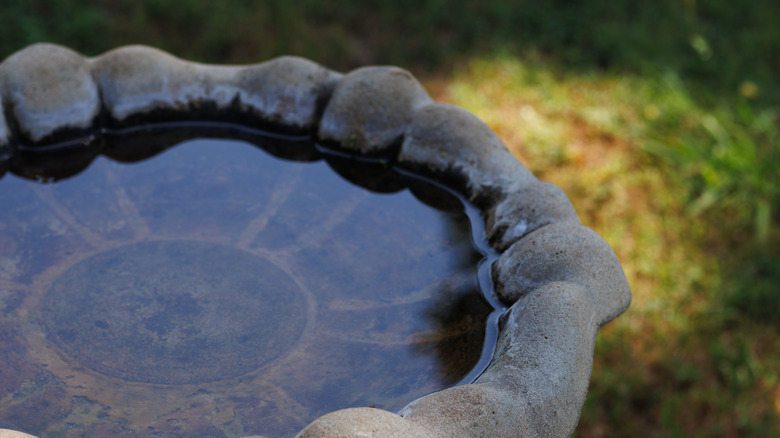
Backyard bird enthusiasts know the importance of offering a clean source of water for birds to drink from and bathe in. Setting up a birdbath in your yard or garden is a rewarding way to help birds find water — it's also fun to watch them splash around. But if you notice fewer birds are visiting, and the birdbath basin is turning green, reddish, or black, you could have an algae problem. While there are some legitimate reasons people think twice before putting a birdbath in the yard, occasional algae isn't necessarily one of them, as it can be fixed and even prevented. The best thing you can do is to get rid of the algae right away and try to prevent future growth. At the same time, there is a right and wrong way to clean a birdbath, and you certainly don't want to take shortcuts or use household chemicals that could potentially harm avian visitors.
Algae build-up in a birdbath can certainly become an eyesore in an otherwise luscious garden or well-maintained backyard. But the issue goes beyond aesthetics. Like any other species, wild birds rely on clean sources of water for drinking, as well as bathing. A potential algae disruption of this nature not only makes the birdbath less appealing, but it can possibly make your feathered friends sick and transmit diseases to one another if they do try to drink water from it. Getting rid of algae really takes two simple ingredients, along with some elbow grease on your part.
Safely remove birdbath algae and prevent its recurrence
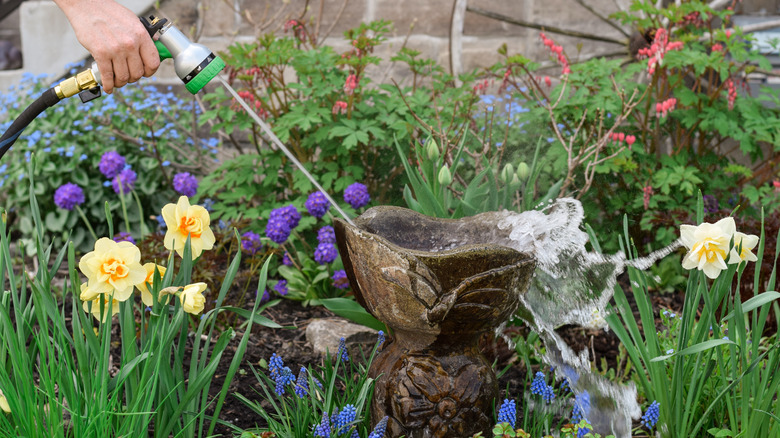
For the sake of the birds, you should remove birdbath algae ASAP. Hold off on using bleach, soaps, and commercial cleaners, though, as they can cause unintentional harm, such as drying out natural oils in their feathers. All it takes to get rid of algae from a birdbath is a garden hose with a nozzle, a small scouring brush, and a solution of 1 part white vinegar to 9 parts water, per Audubon. Empty the basin, scrub it with the vinegar-water solution, and rinse it off. Repeat as necessary until it's completely clean. Use this cleaning strategy at least once a week to keep algae at bay.
While it might seem obvious that algae thrive in wet environments like birdbaths, other factors also influence chronic algae growth in these avian spaces. You're more likely to see algae problems during hotter months, and also if the birdbath is in the wrong spot, such as one that gets no shade during the day. Keeping the water under a shadier spot not only provides birds with reprieve from the sweltering sun, but it also deprives algae of some of the photosynthesis and heat they need to grow.
Finally, don't underestimate the importance of regular water refreshes. Doing so can help remove small amounts of algae before they become issues, as well as dirt, pollen, and other debris that will inevitably contaminate the water. To keep your birdbath in tip-top shape, refresh the water at least every other day — perhaps even once a day in the summer. As a bonus, this can also help control mosquito issues.