

Forget Paint: There's An Easier Way To Give Dated Countertops A Chic Refresh
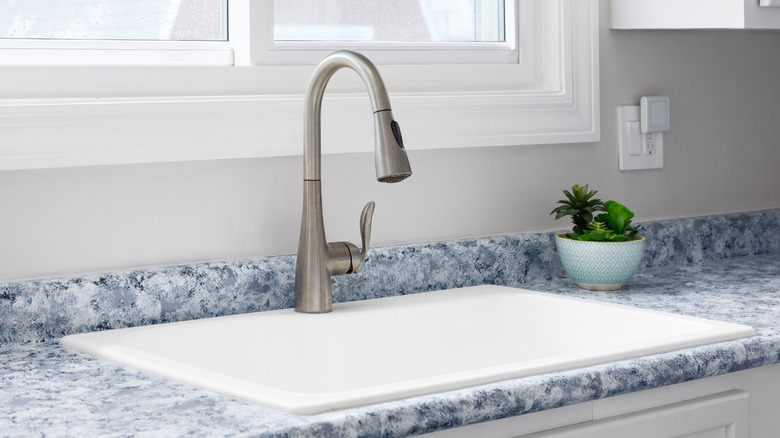
The average price for completely replacing your kitchen countertops hovers between $40 to $150 per square foot, depending on materials and the size of the project. That's a cost that can easily make you reconsider whether you want to tear out your dated countertops. You might think about painting over them as a budget friendly option, but this comes with a lot of set up and a curing period that makes the kitchen unusable for several days. A better choice would be to forget the paint and use vinyl wrap to give your countertops a chic refresh.
Similar to a skim coat – another way to refresh your countertops without replacing them – vinyl wraps are thin coatings that can be placed over the existing countertops and completely cover them with a new material. Made out of durable PVC, the vinyl wraps can be customized to mimic common countertop materials including butcher block, marble, and the Property Brothers favorite countertop material: quartz.
Once covered, you'll essentially have completely new countertops without the expense of replacing them with different materials. "It's truly the lowest effort and probably lowest cost avenue to a countertop that looks brand new and fresh," says Rick Berres, Contractor and Owner of Honey-Doers told The Spruce. While it is not a permanent solution, it is a great method for those on a tight budget to give their kitchen a refresh while saving for better renovations down the line.
How to vinyl wrap your countertops
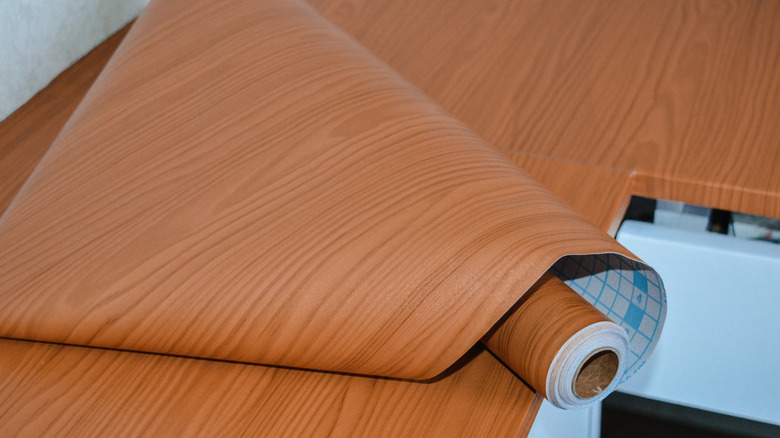
Depending on the brand and the type of finish you want, you could pay anywhere from $15 to $100 for a roll of vinyl wrap. Look for wraps that have good heat resistance and waterproofing so they can withstand general kitchen conditions. A matte finish is also preferable as they are less likely to show finger prints and hold up better to minor scratches.
Before you lay down your vinyl wrap, make sure the countertops are completely clean of any debris or grease, which will affect adhesion if not removed. Next, measure your countertops in sections and cut the vinyl to size. Remove the backing to expose the adhesive, and carefully lay it over your countertop, using a squeegee to make sure there is full adhesion and no air pockets or bubbles.
The trickiest part of the application is going to be around the sink and on the corners. You can roughly cut out an opening for your sink, lay the wrap over the countertop, then use an utility knife to cut a clean edge around your sink. The one specialty tool you will need for installation will be a heat gun. This helps stretch the vinyl around corners to make a secure fit. The process should not take you more than an afternoon and, unlike with paint, the countertops can be used immediately. With the ease of installation, durability, and cost effectiveness, choosing this countertop material is a no brainer.