

Make A Beat-Up Driveway Look Fresh Again With These Affordable Fixes
We may receive a commission on purchases made from links.
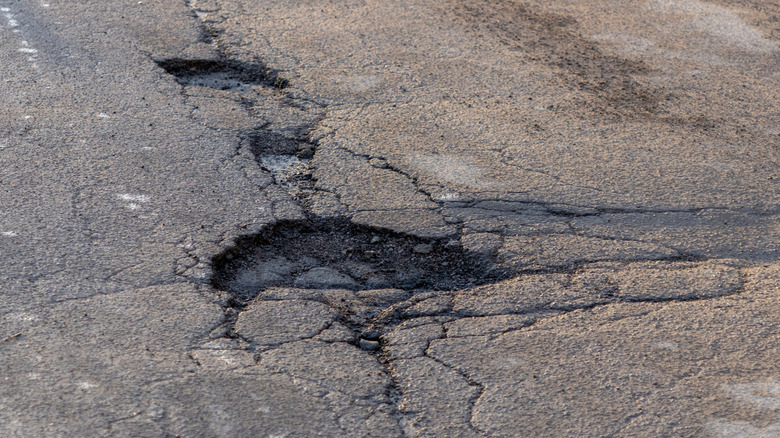
Our driveway is often one of the first things a visitor sees when arriving at our home. Sadly, it is not uncommon for driveways to be cracked, pitted, or otherwise in need of repair. Hiring professionals to do that repair can be expensive, sometimes prohibitively so. (Which is one reason repairs go unattended.) But don't despair, unless your driveway is extremely deteriorated, there are DIY solutions that can improve and sometimes completely repair the surface without breaking the bank. Asphalt driveways are more forgiving of DIY common asphalt repairs, but even concrete driveways can be improved and resealed with a bit of effort and modern products. These fixes are not practical for the new, eco-friendly recycled asphalt driveways.
One huge change in recent years comes from products like Aquaphalt 6.0 and 4.0. Before those products, if you did a DIY patch on your driveway in preparation for applying a sealcoat, you needed to use a cold patch product and then allow it 30 to 90 days to cure. Three months is a long time. Now with Aquaphalt-type products, you can make the patch and sealcoat the next day. Much more manageable. The font of all knowledge, YouTube, is a good place to learn the sequential steps of asphalt repair.
The concrete conundrum
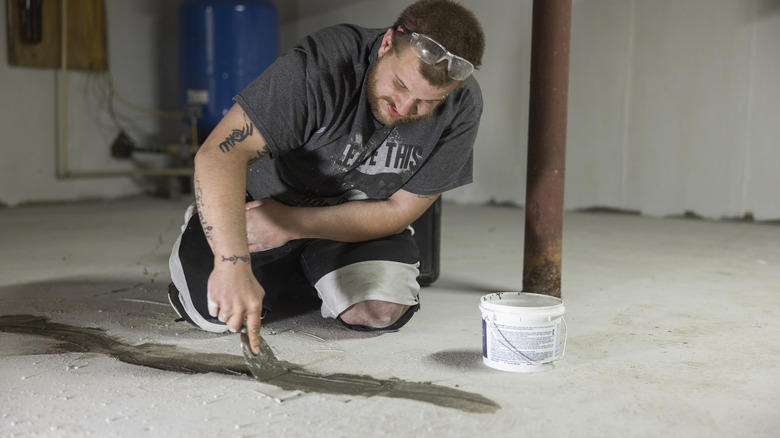
In a similar way, resin-enhanced repair products for concrete slabs (driveways, patios, basement floors, etc.) have made concrete repair and updating your driveway more practical for DIY folks. Concrete is a bit trickier because, unlike asphalt, repairing large fractures or holes in a concrete driveway is a very large job. Cracks and common surface flaws, called spalling, can be addressed with resin-based (epoxy) products you can find at big box home improvement stores. These are two-part products, like this GE-P version, that you mix together and apply in various manners, which then bond to the concrete and harden via chemical reaction. The resulting repair is likely stronger than the original concrete.
It is best to limit your DIY concrete repair to minor problems like cracks and spalling. Full-thickness fractures, uneven slab displacement, large holes or chunks that are loose or missing – those are jobs for concrete professionals. With concrete, there are many common mistakes that DIY folks often make because concrete construction is surprisingly technical and requires specialized tools and equipment.
The repair processes for concrete, even minor repairs, require proper preparation. Once again, the "University of YouTube" can be very helpful in supplying those sequential steps needed for success. But the good news is that with today's new products, both asphalt and concrete driveway repair is much easier.