

This '70s And '80s Wall Decor Favorite Is Now A Hidden Gem At Thrift Stores

The '70s and '80s called, and they want their cuckoo clocks back. However, thrifters aren't willing to shirk these unique pieces so quickly. As the defining interior traits of decades past return to the forefront — including an uptick in natural materials, handmade objects, and the familiarity of a lived-in ambiance — these valuable antique finds are returning as in-demand decor for some, though they're well worth anyone's time for the resale potential alone. Some of these ornate timekeepers "clock in" at upwards of $1,000, yet others pop up in second-hand shops in the double digits. Collectors, consider this your sign to put these vintage accessories on your watch list.
Although cuckoo clocks were a must-have 50 years ago due to their intricate wooden handiwork, the time-telling gems date all the way back to the 17th century in Germany's Black Forest. Specifics about their founding are not entirely clear and still debated, but clockmaker Franz Anton Ketterer is often credited with the invention. The most recognized types of cuckoo clocks are the Bahnhäusleuhr (railroad house clocks) and Jagdstück (hunt piece clocks with forest animals).
The cuckoo clock's resurgence in the '70s and '80s wasn't permanent, and as the '90s moved towards styles like minimalism and monochrome and the digital era questioned the necessity of wall clocks entirely, its popularity waned. But now, we can breathe new life into old finds and embrace grandma chic trends to create the feeling of a comforting hug that so many interior designers are craving. Speaking on this current pursuit of nostalgia in our decor, Kerith Flynn, founder of Margali & Flynn Designs, told Better Homes & Gardens, "There's a romanticism about the 'good old days' that the style evokes, even [if you're part of a generation] that didn't experience it firsthand."
Make your thrifted cuckoo clock work with your decor
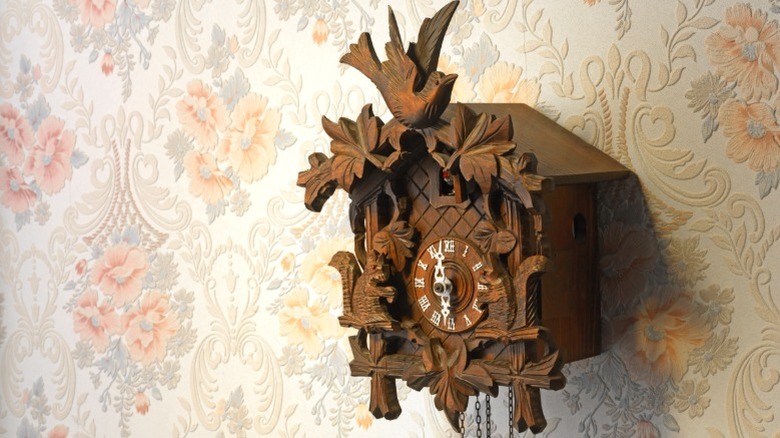
Styling cuckoo clocks is a fun undertaking with plenty of options. To recreate some of the most iconic trademarks of the '70s, like warm tones and patterned wallpaper, put your gorgeous accent wall ideas into motion and accessorize with the timepiece you just thrifted. If the '80s maximalism and pattern-mixing is more your jam, why not try planning and styling a gallery wall with a blend of photographs, artwork, decor, and of course, your clock? When in doubt, place your clock near indoor greenery and succulents. According to The Sill, retro-inspired finds are also making a comeback in the world of plants and florals in 2026, including rare plant varieties and throwback planters and accessories.
Regardless of how you plan to mix modern and antique furniture and decor, keep a few basics in mind before selecting a home for your cuckoo clock: Be loyal to the color palette of your choosing, mix and match without designating a single piece as the primary focus, and touch up those throwback finds by cleaning or painting if needed. No matter what style idea strikes your fancy, you must level the clock with the wall and fasten it into a stud to ensure an elegant look and a secure hold.
What to know before reselling your cuckoo clock
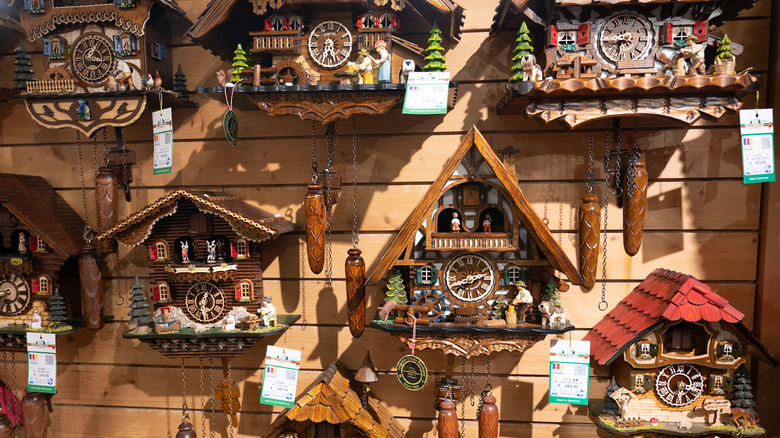
Shopping for a vintage cuckoo clock online could run you hundreds or even thousands of dollars, particularly if you've acquired one from Germany (look for "Made in Germany" on the back or clock face) and it's still working. High-quality, ornate, and genuine pieces can run a few thousand dollars, with some costing well beyond $10,000. A variety of factors contribute to the clock's value: the detailed wood carvings, working interior mechanisms (no digital assistance), and a Black Forest certification (Verein – die Schwarzwalduhr VdS) indicating its authenticity. But even if you spot one that doesn't meet all the quality criteria during an afternoon of antiquing, scoop it up anyways. TikToker @thriftingtreasure uncovered a small cuckoo clock that fit in the palm of his hand for less than $2. Once he cleaned it up and ensured all the parts were working properly, he was able to sell it for $99.
Of course, finding and reselling an old-school time-teller like this will require some TLC. If you've uncovered a mechanical movement cuckoo clock, you'll need to ensure all the parts are working smoothly: Weights at the bottom of the clock's pendulum, which are hanging from a chain, descend as time trudges on. The chains — three in a musical cuckoo clock (which tend to be more valuable), and two in a non-musical clock — are wrapped around internal mechanisms that keep the timer moving and bellows emitting the "cuckoo" sound. Whether you're selling, styling, or receiving a cuckoo clock as a hand-me-down, one thing is for certain: It's a valuable collectible item you should never overlook during your thrifting adventures.