

Swap This Invasive Tree For A Native Alternative — Homeowners May Get An Incentive
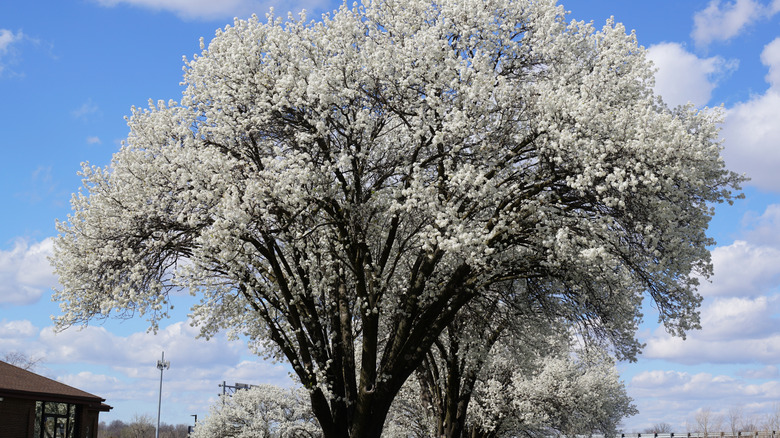
Callery pear (Pyrus calleryana) trees, also known as Bradford pear trees, are popular decorative trees that line the sides of suburban roads across the county. Due to their bright, white blooms in the spring and adorable shape, this species has become a staple in outdoor decoration. Unfortunately, planting this tree should be against the law. Callery pear trees are invasive, as their fruit can spread by bird droppings and cross-pollinate into viable seeds. Once spread, Callery pear trees can outcompete native plants and provide less nutritious food for native wildlife. Luckily, due to its invasive nature, many local and state governments offer incentive and replacement programs to get rid of them.
As the Callery pear is widespread across the U.S., anyone with one of these common trees you should never plant next to your house can easily find out if they qualify for an incentive or replacement. Simply search on the internet for your state and Bradford pear replacement. While there may be a statewide effort, like in Pennsylvania, Virginia, or South Carolina, there also might be more local, independent efforts, like the Pollinator Pathway program in Licking County, Ohio. Most programs will simply offer a replacement, but some, like in New Albany, Ohio, can offer hundreds of dollars to replace the invasive tree. Whether you get a new tree to replace the old one, get some cash back, or just get rid of an invasive tree, it is worth trying to find a program in your area.
Identifying and removing Callery pear trees
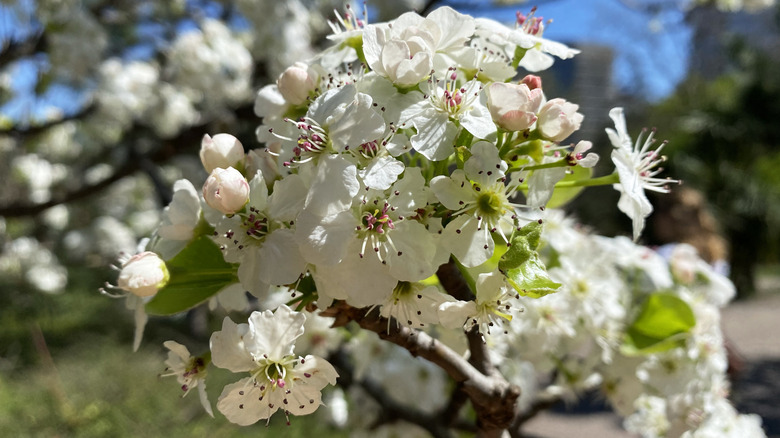
Before pulling out the axe and taking chunks out of your tree, you should first ensure that the pretty white tree in your yard is, in fact, a Callery pear. While technically the same species as the Bradford pear, which is why they count for the same removal programs, the trees are identical except for the large thorns on the Callery pear. Overall, the trees are less than 40 feet tall with a thin trunk, carry thick, teardrop-shaped leaves, and bloom white, five-petaled flowers in the spring. The tell-tale identifier for these Asian trees is the horrible smell they produce once they start to flower. Once you have all the signs, you can start removing it.
There are several ways to remove Callery pear trees from your yard, several of which will involve a herbicide of some sort. For small trees, you can apply a foliar herbicide to kill trees. If you can access green bark, you can scratch away and apply a small amount of herbicide there. If the tree is older, with thicker bark, you can use a hatchet to make several cuts around the trunk and apply herbicide to the trunk at the cuts. Lastly, you can cut down the tree to a stump and apply herbicide to the stump. At that point, you just need the best tools for the job to remove stubborn stumps like a pro.