

HGTV's Mike Holmes Reveals The Trendy Flooring Choice He Won't Install In A Kitchen

There are plenty of reasons why vinyl flooring is the hardwood alternative that's dominating kitchen flooring trends. Made from PVC, plasticizers, and calcium carbonate, vinyl flooring comes in different styles, is surprisingly affordable, easy to clean, and tough against common kitchen accidents. Another positive you should know about vinyl kitchen flooring is that it comes in sheets that stick to the floor with adhesive or individual tiles that lock in place, so you've got some installation options. However, despite these upsides, HGTV's Mike Holmes isn't convinced that vinyl is the right flooring choice for the kitchen.
Holmes is an all-around pro at home renovations, and he's adamant that homeowners get kitchen flooring right. Along with other trendy but impractical materials like concrete, Holmes reveals in his Make It Right blog that vinyl might not be as durable as it seems, writing: "Vinyl flooring is not damage resistant. Drop a couple of sharp objects on the floor, and you will likely see dents."
While Holmes notes that the extent of vinyl flooring damage depends heavily on the grade of the planks, he would choose several other flooring options over it. Ceramic and porcelain tiles are Holmes' top choice for kitchen flooring thanks to their durability, attractiveness, and ease of cleaning. He also notes that stone or slate floors could be good options, provided the homeowner is willing to tackle the expense and upkeep.
Vinyl flooring is prone to mold and other air quality issues
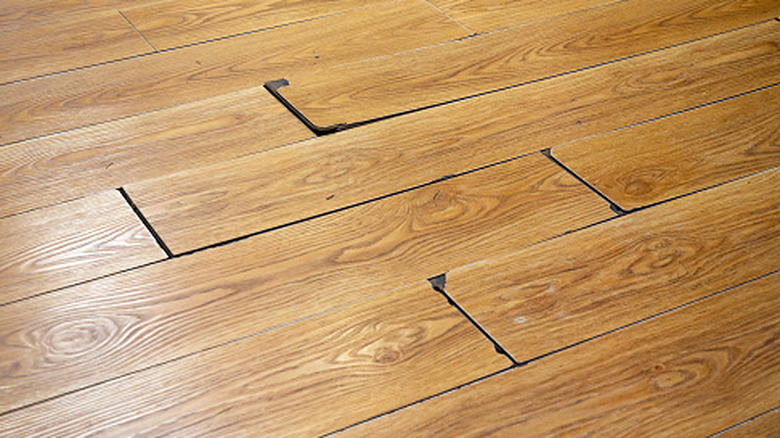
While durability should be a top concern for homeowners when choosing kitchen floor materials, they also need to be aware of the hidden downsides of vinyl flooring. While the vinyl itself is moisture-resistant, that doesn't necessarily mean that there won't be a moisture issue. Moisture and mold can build up underneath the vinyl, and, as Holmes notes, the mastics glue that adheres vinyl to the subfloor can be prone to mold if not installed correctly. Then, there are the environmental concerns.
"The manufacturing process is not environmentally friendly ... Vinyl is basically made from PVC. That's why it is suspected of causing some health issues. When installing the floor, be aware that you will be living with fumes for a period of time," Holmes writes on Make It Right. The fumes he's referring to are the off-gassing of the chemicals used in the manufacturing process. According to a study by the Center for Environmental Health, high levels of PFA's, mercury, and asbestos were found in the vinyl manufacturing process, supporting Holmes's claim that the flooring causes health issues.
Thankfully, there are eco-friendly vinyl flooring producers that do not contain the aforementioned chemicals and are manufactured in a more sustainable way. Still, unless your budget is exceptionally tight, Holmes would strongly recommend against using vinyl flooring in your kitchen.