

These 12 Container Plants Will Transform Your Garden Into A Hummingbird Paradise
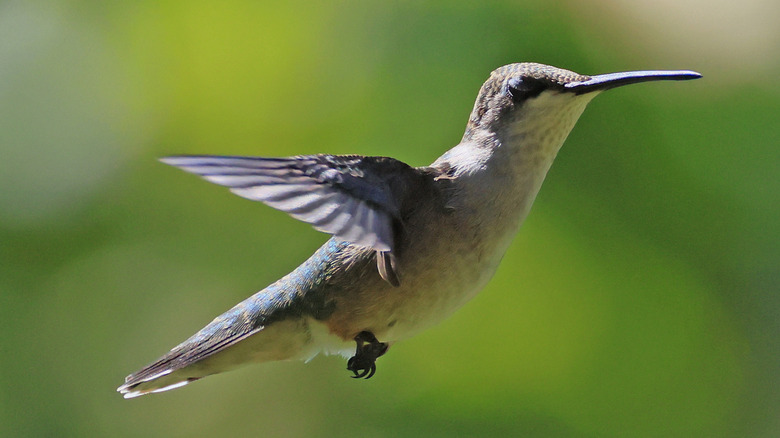
Hummingbirds, with their unique character and zippy flight patterns, are popular among casual backyard gardeners and serious bird-watchers alike. As a result, avian enthusiasts set out countless nectar feeders each year, often timing these efforts with migration patterns. However, there are ways to attract hummingbirds to your yard without a feeder. One of the most successful ways to do so is to grow a selection of plants and flowers that have been proven to draw in hummers. If you don't have room for a full hummingbird garden – or you just want to accent other areas of your yard with bird-attracting blooms – you can successfully grow many of these flowering plants in containers.
To be sure, there is no shortage of flowers that attract hummingbirds. Some of them grow well in containers, while others do not. Choosing plants that can be grown in pots and containers will allow you to move them throughout your yard and outdoor living space. The selection of hummingbird-attracting plants that thrive in containers is broad enough that you will have ample choices regarding the size and shape of the plant, as well as the color and timing of the blooms.
While available space and aesthetics will certainly play a role in your decision-making, it's also important to choose plants that are native to your region. Even though they are growing in containers, as opposed to a ground garden, native plants will more sufficiently meet hummingbird nectar needs. Additionally, you don't have to pass on a feeder just because you grow these plants. In fact, plants are great complements for feeders and create a hummingbird-friendly zone in your yard.
Agapanthus
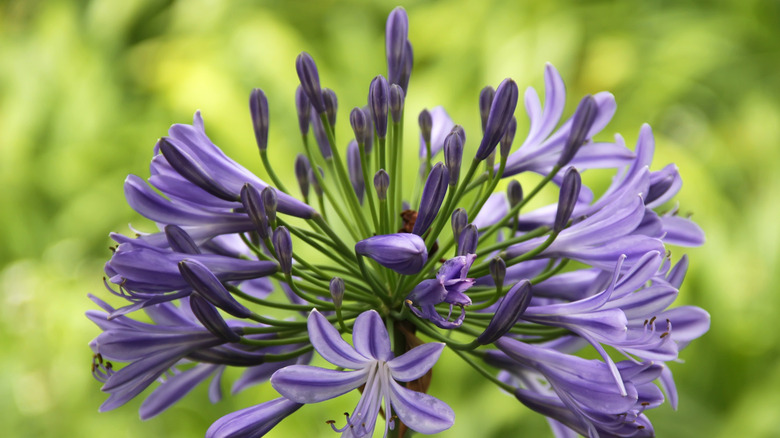
Hummingbirds are attracted to agapanthus or African lily (Agapanthus africanus) due to its color, flower shape, and ample nectar. As in-ground plants, agapanthus are best suited for USDA Hardiness Zones 7 through 10. However, growing them in a container allows them to be grown in a much wider range, as they can be moved indoors during colder weather. It also allows them to be moved to areas in the yard that receive about six hours of sunlight, but a bit of shade in the afternoon, which they prefer. They also like well-drained soil and will bloom better if they are rootbound.
Bee balm
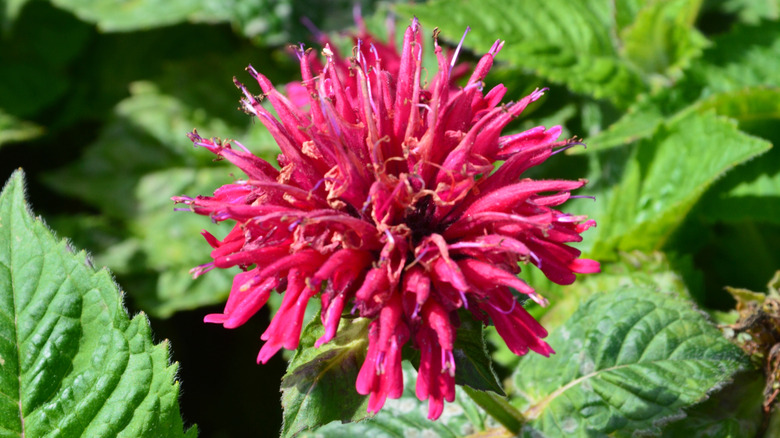
Bee balm (Monarda didyma) is one of those plants that help pollinators do their job, attracting both hummingbirds and butterflies. Bee balm grows well in zones 4 through 9 and typically blooms from July through August. Those blooms — which are tube-shaped and come in shades of red, pink, and purple — are among hummingbirds' favorites. Bee balm is native to the wooded areas of the Eastern U.S. and has a preference for moist soil. It also requires a moderate amount of care and, due to the moist soil it relishes, powdery mildew can be an issue. So, be sure to place your container in an area with ample air flow. Since it spreads aggressively, growing in a container is ideal to restrict its range.
Cardinal flower
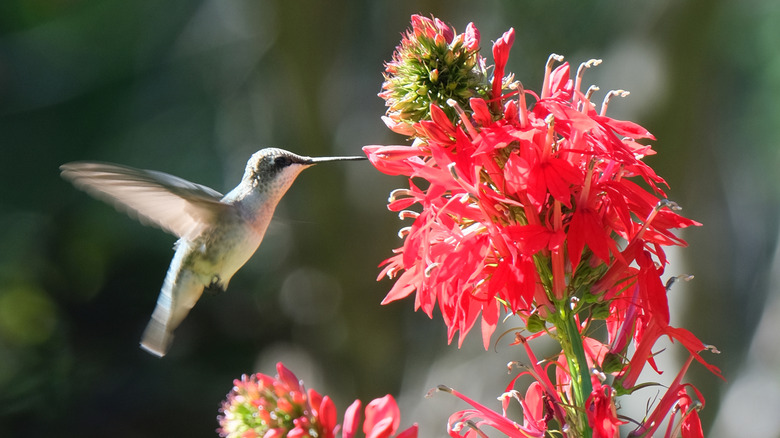
With its bunches of bright red, tube-shaped blooms, cardinal flower (Lobelia cardinalis) is irresistible to hummingbirds. Cardinal flower can be grown throughout zones 3 through 9 and, depending on the region, will bloom from July through September or even as late as October. This makes it an ideal source of fuel for hummingbirds during their fall migration. Cardinal flower likes wet soil, so while it should be well-draining, it needs to remain moist. It's also a good idea to use a slightly larger container to allow space for its clump-forming tendency.
Coral Bells
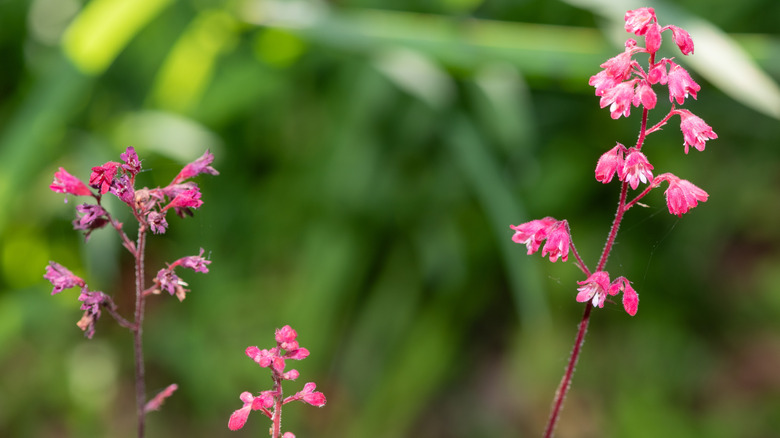
Coral bells (Heuchera sanguinea) are attractive to hummingbirds thanks to their colorful blooms that produce plenty of nectar. Coral bells are perennials that are clump-forming in nature, and their size makes them perfect for containers. They hail from the Western United States and are hardy throughout zones 3 through 8. They begin to bloom in late spring and will continue to do so into early or mid-summer. They do best in rich, well-drained soil that is kept moderately moist and can be kept in full sun or areas with partial shade.
Eastern Red Columbine
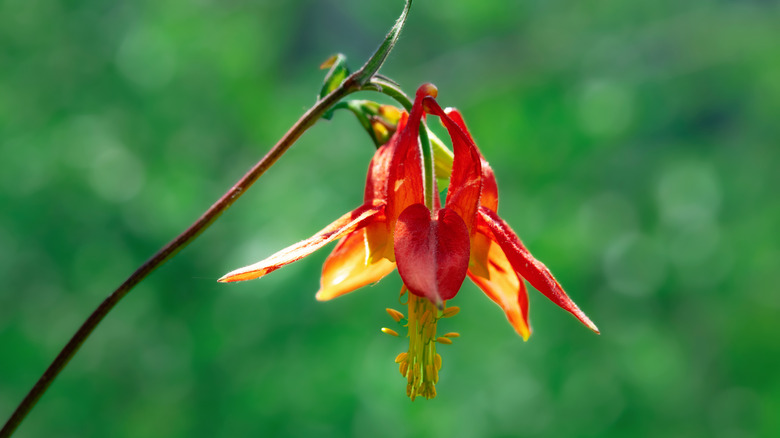
Eastern red columbine (Aquilegia canadensis) is among the best flowers for attracting hummingbirds. This is thanks to their tube-shaped, red and orange, nectar-producing flowers, as well as the timing of their blooms. Typically, this plant, which grows well in zones 3 through 8, begins to show its blooms as early as February. It will continue to bloom well into summer. This makes it an ideal and much-needed source of nectar for hummers early in the year. Given that it only reaches a height of 1 or 2 feet, it is also easily grown in a container.
Firecracker plant
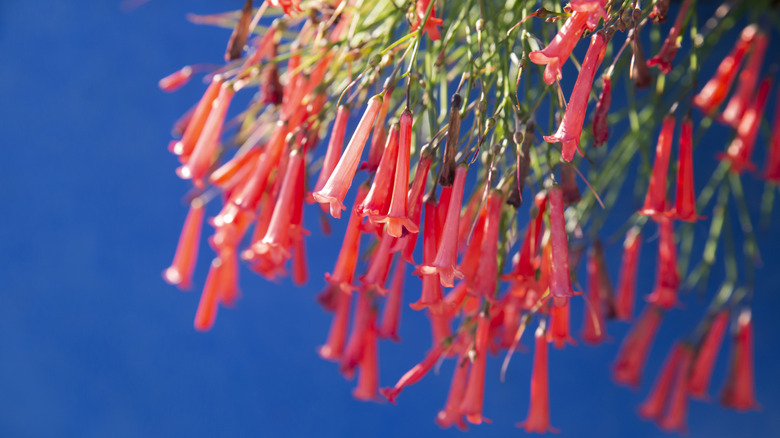
In many ways, the firecracker plant (Russelia equisetiformis) is the quintessential hummingbird plant. It has showy blooms and features bright, tube-shaped flowers that are full of nectar. They also have a long blooming period, which generally runs from spring until the first frost. This means they can provide nectar to hummingbirds during both spring and fall migrations, as well as throughout the summer. Although it has a more limited hardiness range – zones 9 through 11 – when grown in ground containers or hanging pots, they can be moved indoors during winter and, thus, can be grown over a wider range.
Flowering tobacco
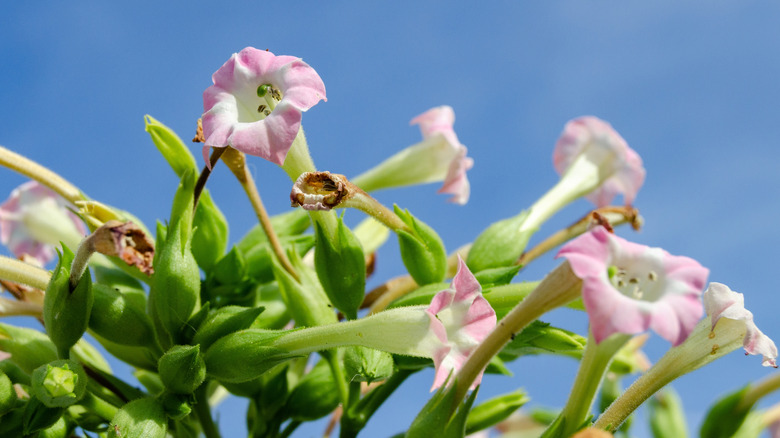
Another hummingbird favorite that grows well in containers is flowering tobacco (Nicotiana spp). There is a wide variety of types of nicotiana, with fragrant flowers ranging from white to hues of red and purple. The different variations range in height from 3 to 6 feet. Every type of nicotiana, which is best suited for zones 10 through 11, can be grown in containers, although the larger versions require an ample-sized pot. Flowering tobacco does best in full sun, so take that into consideration when choosing the space for your container, especially the larger containers, which may not be easily moved. Do keep in mind that all parts of flowering tobacco plants are toxic, so use caution if you have children or pets.
Hostas
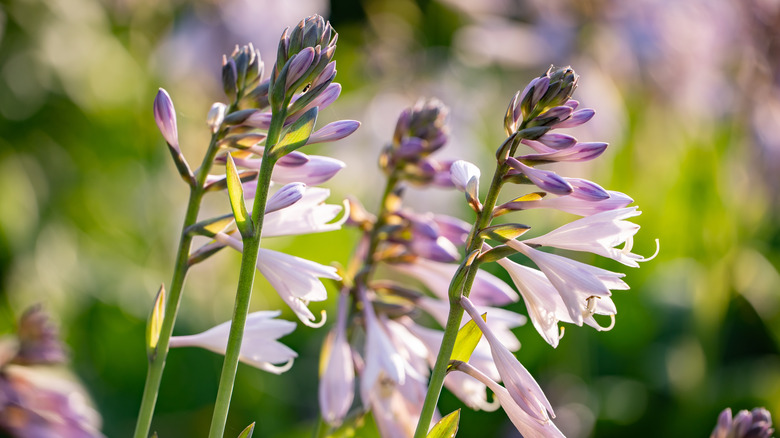
Hosta (Hosta) is another plant that comes in many varieties, each of which will have hummingbirds flocking to your yard. They can be grown in zones 3 through 9 and are classified based on size, ranging from dwarf to giant. However, even the giant only reaches a few feet tall. As a result, all varieties of hostas are well-suited for containers. Given that they do well in shade, they are an excellent option for the portions of your backyard space that don't get quite enough sun for other hummingbird-attracting plants. Additionally, since the majority of hostas bloom in mid- to late summer, they are a great source of nectar leading up to the fall migration.
Penstemon
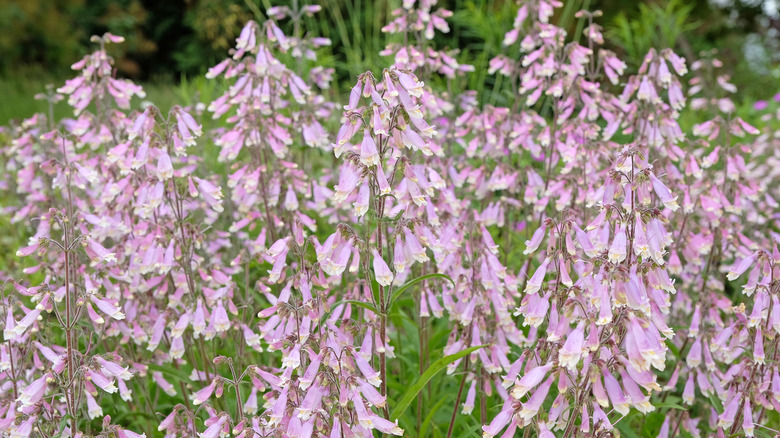
The many varieties of penstemon (Penstemon) are known for having good nectar-producing flowers that attract a variety of pollinators. Sometimes referred to as bearded tongue, penstemon is a great choice for a container plant to attract hummingbirds. Varieties range in height from 1 to 4 feet, and all thrive in the right size container, so long as they are watered frequently and fertilized each year. Penstemon is hardy in zones 5 through 8, prefers full sun, and blooms throughout spring and summer, making it a great source of nectar during and just after the spring migration.
Red salvia
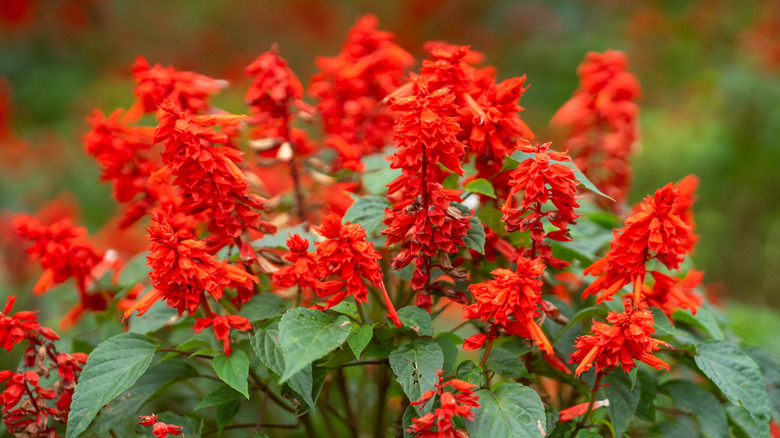
Red salvia (Salvia splendens), also known as scarlet sage, combines a few of hummingbirds' favorite things: the color red, nectar, and tube flowers. So, not surprisingly, it is very attractive to these zippy little birds. The plant does best in zones 10 and 11 and prefers full sun. Those flowers that hummingbirds love so much typically begin showing in June. The plant will continue blooming until the first frost, providing hummingbirds with a source of late-season nectar. It is also a low-maintenance plant that does quite well in containers.
Trumpet honeysuckle
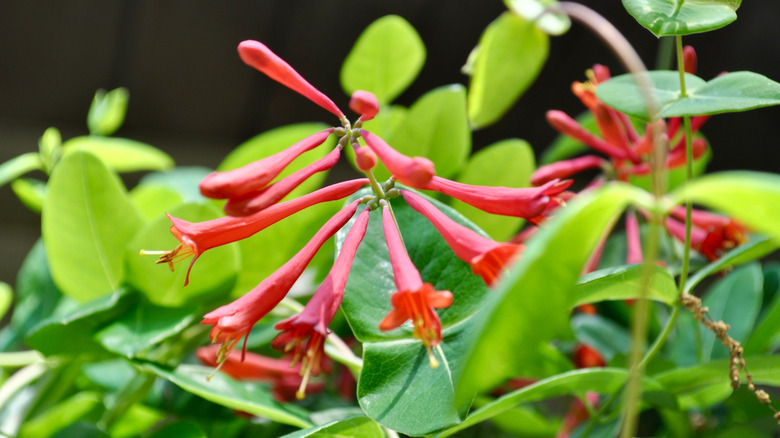
Trumpet honeysuckle (Lonicera sempervirens), which is sometimes called coral honeysuckle, features tube-shaped flowers in colors ranging from red to gold that hummingbirds find irresistible. These nectar-producing plants do best in zones 4 through 9 and can thrive in containers, so long as they are adequately watered and given a trellis or wire support on which to climb. The colorful flowers of the trumpet honeysuckle attract a variety of pollinators and are on full display during spring and summer. Although it can grow over 10 feet when planted in the ground or if you place your container next to a wall or fence, it can also be pruned to maintain the desired height.
Zinnias
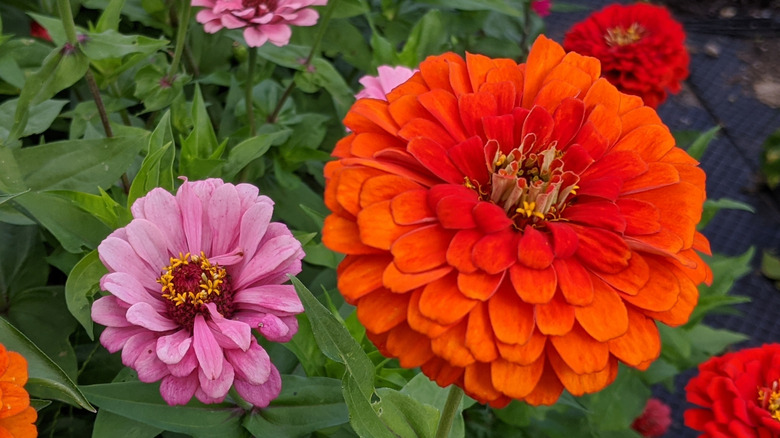
A good choice for those hoping to provide some late-season nectar for hummers is zinnias (Zinnia elegans). Given they can be grown throughout zones 2 through 11, they are an option throughout the country. They flower in summer and fall, with blooms in various colors, including white, red, purple, gold, and orange. Although some zinnia varieties can reach 4 feet in height, the majority are much shorter. That, along with their rapid growth and moderate requirements, makes them ideal container plants. Zinnias do best in full sun and well-draining soil. In addition to hummingbirds, zinnias are ideal for attracting butterflies.