

The Hidden Downside To Putting A Bird Feeder In Your Yard
We may receive a commission on purchases made from links.
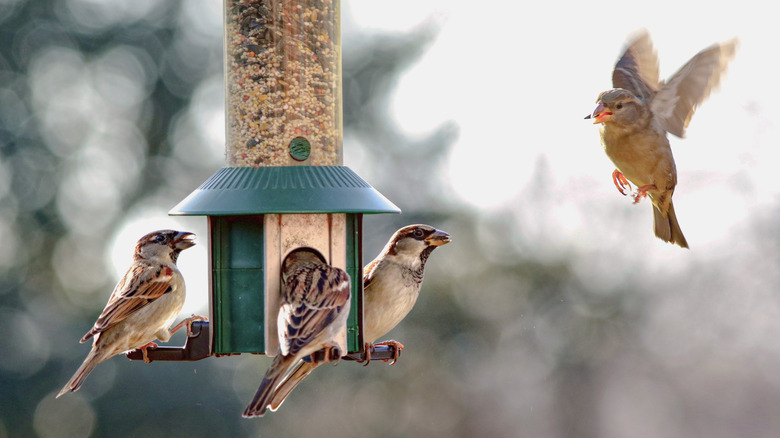
For those who wish to see a variety of birds flitting through their backyard, hanging a bird feeder is typically one of the first steps they take to attract avians. After all, providing birds with a consistent source of food is one of the best ways to ensure they hang out in your yard. However, while there are certainly benefits of putting a bird feeder in your yard or garden, there are also downsides, some of which may not be so obvious. One hidden downside is that they attract more than just birds; they can also draw in a variety of other animals, including rodents.
Some of the creatures that may be drawn to your bird feeder, such as mice and rats, are likely visitors you would rather not have in your backyard. Others, like squirrels and raccoons, can wreak havoc not only on your feeders, but also on your house, electrical wiring, garage, and yard. Additionally, they are all capable of spreading disease, potentially posing a health risk to both your family and pets.
Attracting rodents is an issue that can occur with store-bought models or simple DIY bird feeders. This is because the seeds themselves are drawing them, as they represent an easy, high-calorie meal. Fortunately, there are certain types of feeders that are better at dissuading rodents, as well as some modifications that can be made to limit their appeal to unwanted pests. Additionally, regular cleaning and maintenance of your feeder can go a long way towards ensuring your bird feeder doesn't turn your backyard into a dining hall for rodents.
Limiting your bird feeder's attractiveness to rodents
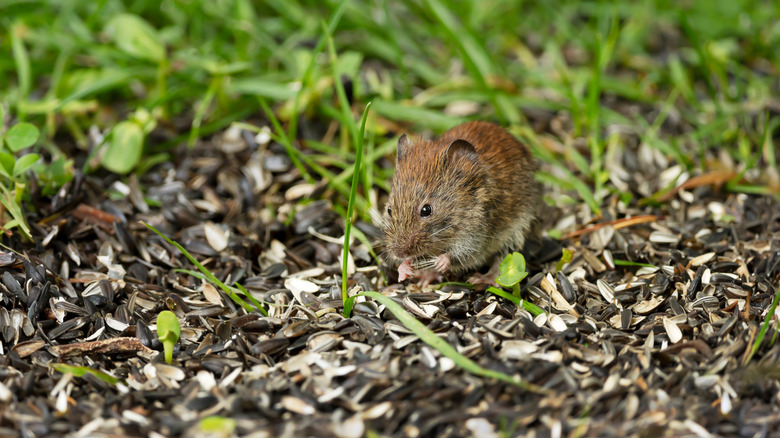
One of the easiest ways to deter rodents from your bird feeder is to choose the right type of feeder. Avoid open feeders that give rodents easy access to the birdseed, such as tray or platform-style feeders. Instead, opt for a tube-style feeder that is both covered and fitted with a seed tray. The cover will prevent mice, squirrels, and other rodents from climbing onto the feeder, while the seed tray will lessen the mess on the ground beneath the feeder by catching seeds and seed particles that fall while birds are feeding.
If your feeder does not have either of these items, they can be added. Covers or squirrel baffles can be purchased, or you can DIY one from a pie pan or mixing bowl. Seed catcher trays can also be purchased or made to be hung beneath almost any type of bird feeder, with the intent of preventing seeds and shells from dropping to the ground, where they are easily accessed by mice and other rodents. You can also reduce the amount of birdseed that falls to the ground by not overfilling your feeders, as can utilizing straight birdseed with no filler or shells.
However, even when taking those precautions, there will still be some mess that makes its way to the ground. So, to keep rodents away, it is necessary to routinely clean bird feeders and the area around them. The feeders themselves should be thoroughly cleaned at least once a month, while the ground below them should be swept or raked as often as possible to prevent any accumulation.