

Transform Spider Plant Cuttings Into Thriving, Statement-Making Houseplants
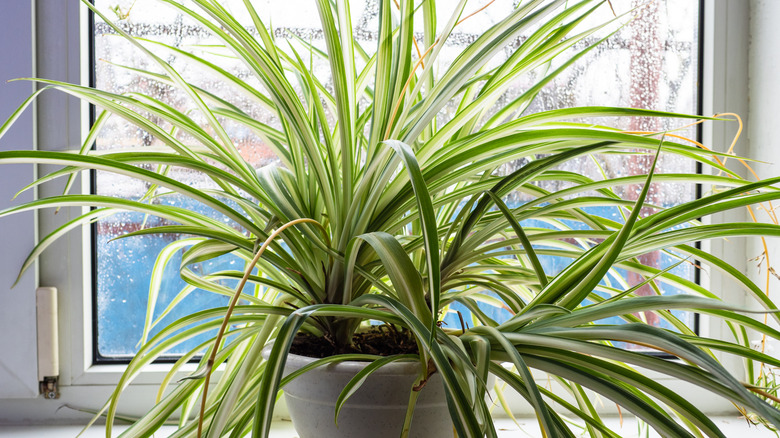
There are plenty of gorgeously green houseplants that look stunning indoors, from the popular, statement-making fiddle leaf fig to the easy-growing monstera that commands attention with its standout leaves. But if you're looking for a houseplant that'll look great in any room, thrive indoors, and allow you to use its trimmings to grow even more greenery, a spider plant (Chlorophytum comosum) just might be the perfect pick. Easily recognizable thanks to its variegated green leaves and long, hanging shoots that resemble little spiders, this aptly-named houseplant produces many new plants, making it an excellent candidate to propagate.
The very same thin, ribbon-like leaves and plantlets that make spider plants popular are also what make it easy to propagate from cuttings, as these will continue to grow when transferred to another container. And no matter which variation you choose (from the traditional C. comosum Variegatum with its striped leaves to the curly, fast-growing C. comosum or Bonnie), a spider plant will make a visual statement.
Even better? These plants are generally one of the easiest to grow indoors. Though they're primarily houseplants, spider plants can handle outdoor life in USDA hardiness zones 9B to 11. Once thriving — an easy feat to achieve, thanks to the plant's fast-growing nature — spider plants can reach up to 2½ feet wide and 3 feet tall (when placed in hanging baskets) as they mature.
How to start a new houseplant from spider plant cuttings
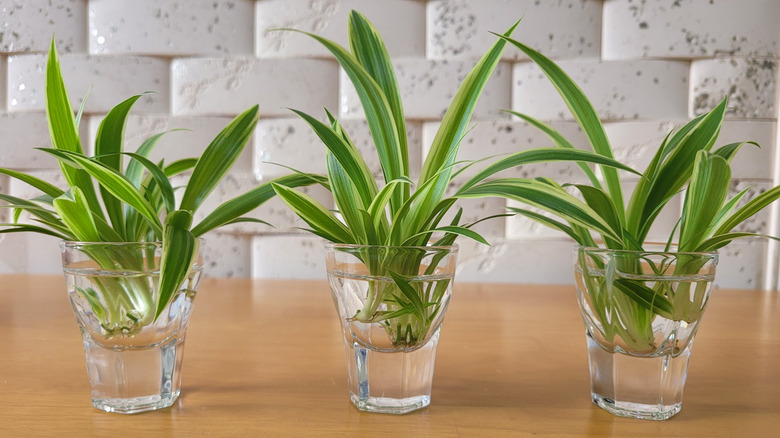
When you're ready to take cuttings from your existing spider plant and create additional, equally lush ones to further fill your home, the process is pretty simple. All you need to do is cut off the plantlets, or little spider offshoots, and place them in either a glass of water or soil. Trim the plantlet off the stolon, or horizontal stem, that hangs off the larger plant. If you choose to start your new spider plants in water, you'll want to transfer them into potting soil once their roots begin to grow (after about five days).
While you can start new plants from your plantlets any time, odds are you'll see an uptick in the number of "spiders" later in the year. Fall is when spider plants tend to see the highest number of offshoots. Those shorter fall days are key: Spider plants have light-dependent plantlets, which grow when the mother plant gets less than 12 hours of light per day for at least three weeks.
Once your trimmings get growing, it's important to remember how spider plants thrive so you can help them grow lush, statement-making leaves. This plant is pretty adaptable, but spider plants don't like full sunlight; they're better off with medium sunlight to shade. If you leave the plant in direct sunlight, you're likely to wind up with scorched leaves. Additionally, since this plant thrives so well and develops flourishing leaves so easily, it's important to remember your pots can get crowded pretty quickly, so they're likely to require repotting often.