

The Benefits And Drawbacks Of Using Homemade Weed Killers For Your Yard
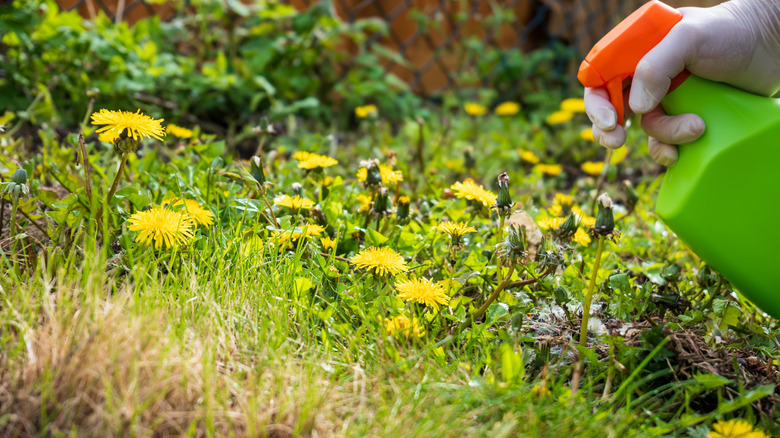
Making homemade weed killers will appeal to anyone looking to reduce the impact of harsh chemical herbicides on their yards and gardens. Studies from the NIH and UC Berkeley School of Public Health have linked chemical herbicides to metabolic disorders, liver inflammation, and a whole host of other negative effects. Homemade weed killers offer a more natural solution. However, while there are definitely benefits to using DIY weed killers, there are some significant drawbacks, such as skin irritation, environmental impact, and pest-killing efficacy, to take into consideration.
First, though, we need to go over the common formulas that those who make their own weed killers use. There are three common kitchen staples experts say you need to make a good DIY weed killer: vinegar, salt, and soap. These ingredients are by no means exclusive, and they don't necessarily need to be mixed together into one spray. For example, one great natural formula that will kill weeds is a mix of four parts horticultural vinegar to one part water.
Other common mixes include baking soda and vinegar, lemon juice, and just plain boiling water. Today, we'll be focusing on boiling water, vinegar-based sprays, and mixes that utilize salt. Each of these weed killers will definitely keep harsh chemicals out of your yard without breaking your wallet. However, they also have some big downsides that you should be aware of before using any of them.
Homemade weed killers are affordable and easy to make
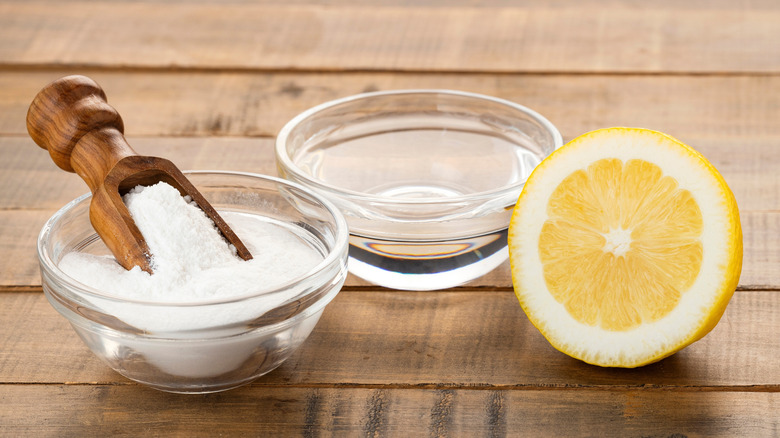
One of the chief benefits of making your own homemade weed killers is that they are incredibly affordable. As we already mentioned, they can be made out of kitchen ingredients – the simplest of which is boiling water. You can source this for free from your tap and pour it directly on the weeds growing up in cracks or between bricks in your patio or walkway.
Vinegar, however, is by far the most common ingredient you will find in homemade weed killers. The reason why is quite simple: acetic acid. Any vinegar with an acetic acid content of between 5% to 10% will kill young weeds within a few weeks. Older, more established weeds require an even higher acetic acid concentration to be removed. Another benefit is that acetic acid is biodegradable, so it won't build up in your soil. Grocery store vinegar hovers around 5% acetic acid, but you can make it a stronger weed killer by adding orange essential oil and dish soap.
Salt mixtures are another natural method for killing weeds. Salt naturally absorbs moisture and will act to dehydrate the leaves and roots of the weeds, effectively killing them. All you need is regular table salt or sea salt, both of which are readily available at grocery stores. Avoid using rock salts, as they are considered to be highly toxic.
Safety, effectiveness, and environmental drawbacks
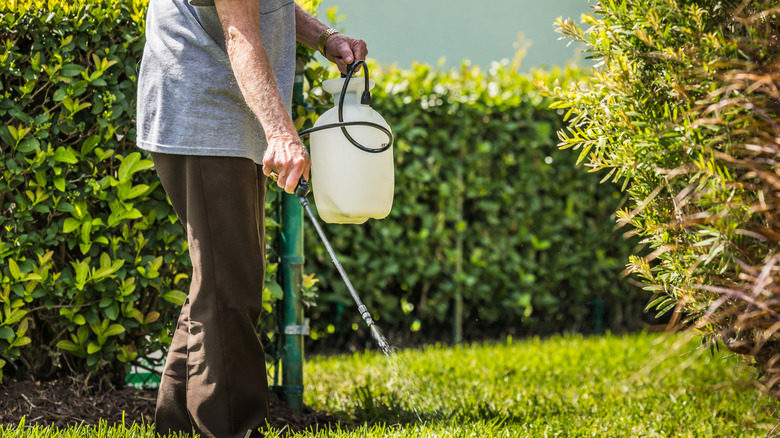
Despite homemade weed killers wearing the "all-natural" label, there are still some significant drawbacks you will want to consider. The first is safety. If you're using vinegar with over 11% acetic acid concentration, understand that it can burn skin and cause eye irritation. Boiling water can also cause severe burns if you're not careful. Therefore, proper precautions should be taken before either mixing solutions together or applying them to your yard.
Then there's the environmental question. Vinegar may be good at destroying weeds, but it's pretty indiscriminate in taking out other plants as well. Salt can also be problematic, owing to the fact that it takes a long time to degrade in the soil, can cause disruptions to growth cycles, burn other nearby plants, and potentially create toxicity in the soil that will kill important earthworms. Even boiling water can kill important microbes needed for a healthy environment.
Then there's the question of overall effectiveness. The reason one would want to buy commercial herbicides is that they have gone through enough testing to prove that they can do the job of removing weeds. Homemade remedies have not, so you could have varying levels of efficacy as opposed to certifiable results. As an example, if your homemade vinegar solution doesn't actually reach the roots of the weed, they will just grow back later on. Ultimately, it is up to you to make the final decision on what will and won't work for your yard.