

The 3 Common Kitchen Staples Experts Say You Need To Kill Weeds DIY-Style

Those pesky weeds sneaking up between your patio pavers or amongst your carefully cultivated flower garden are a definite pain, and getting on your hands and knees for hours of pulling may make you want to reach for that hardcore herbicide. But the trade-off for using an easy, deadly spray is that it isn't only lethal to weeds, but to beneficial insects that keep your garden going, and even your own health. Instead, you can concoct your own safe and natural alternative for weed control with some pantry staples you probably already have on hand, starting with that magical home and garden helper, vinegar.
Because of its high concentration of acetic acid, vinegar kills the cells of plants it touches. According to the University of Maryland Extension, vinegar by itself is effective in killing many types of weeds, even at the relatively low 5% concentration you have in your kitchen (tougher, older weeds need a higher concentration). The Northwest Center for Alternatives to Pesticides recommends adding a cup of plant-based castile soap to your gallon of 5% vinegar, and putting it in a garden sprayer so you can really get in there and coat your weeds. The soap acts as a sticky substance to adhere vinegar to the leaves and increase its effectiveness. Other expert gardeners boost their homemade vinegar weed killer by adding table salt to their soap and vinegar solution to dry out the weeds, but caution should be used. While table salt is also an effective weed killer, it will take out good bugs in your garden and could have long-term negative impacts on your soil health, so stick with this solution only for paved areas.
When to spray your weeds for maximum effect
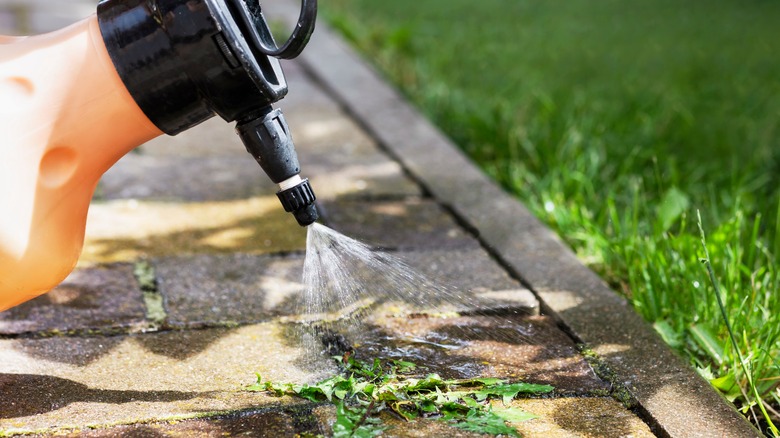
Hitting weeds as soon as they sprout their first leaves is the best time to ensure a kill shot with your DIY vinegar solution. Coat those leaves thoroughly so that the acid in the vinegar will "burn" them. Plants with broader leaves will be easiest to kill with your vinegar solution; narrow-leafed plants and grasses might be tougher to eliminate.
Note that while your vinegar solution may quickly result in a dead-looking plant, those roots may still be alive. Vinegar doesn't travel through the plant leaves down to the roots; it simply kills what it touches. You'll need to spray again at the first signs of any regrowth to ensure your DIY solution is lasting. You could consider adding lemon juice as a quick fix to kill weeds, since it ups the acid content of your solution even further. But if your homemade natural solution still isn't working on your toughest weeds, you can purchase herbicidal vinegar, which has a much higher concentration of acetic acid (20-30%), to get the job done. But be very careful with these higher acid solutions. You'll need eye and skin protection to keep this highly corrosive strength of vinegar from harming you, in addition to your weeds. And with any natural weed killer solution, know that vinegar and other ingredients don't discriminate against just weeds. Be careful where you spray, or you'll risk harming the plants you want to see growing in your garden as well as those annoying weeds.