

12 Fast-Growing Ground Covers That Bring Hummingbirds And Butterflies To Your Yard
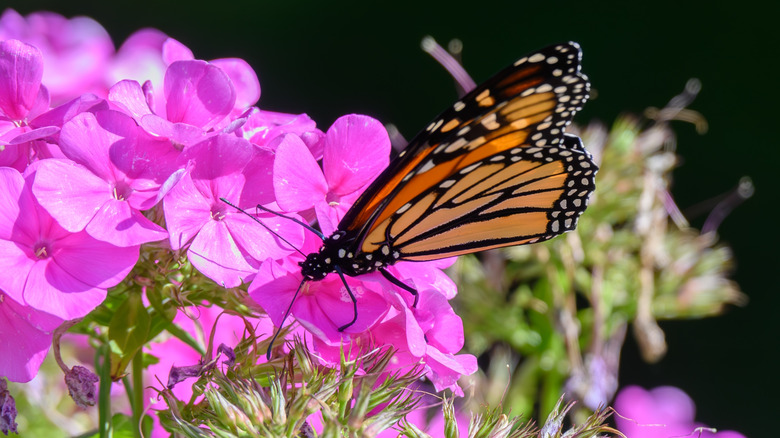
If you love seeing local butterfly species and hummingbirds visit your flowering plants or feeders, there's an easy way to make sure your garden is even more appealing to them. If you plant a mix of enticing flowers and native trees to attract pollinators to your yard, you'll increase the chances of hummingbirds and butterflies visiting. However, colorful, eye-catching ground covers can also entice these feathered and winged creatures.
Ground covers can be alternatives to grass around trees, but they can also fill in bare spaces quickly if they're fast growers, and attract butterflies and hummingbirds if you opt for plants with bright-colored, nectar-filled flowers. Ground cover is a term that refers to low-growing plants under 4 feet tall that create a dense cover over soil. Planting ground cover can prevent soil erosion, visually enhance your yard, reduce weed growth thanks to its dense nature and root systems, and even help minimize noise within your outdoor space. If you're interested in bringing local wildlife into your yard, since ground cover tends to cover a large area, it can also be a way to create a habitat for butterflies, hummingbirds, bees, and others.
As a whole, pollinators of all kinds — birds, butterflies, bees, moths, and other insects — look for colorful blooms that offer plenty of pollen and nectar. So, as you consider different fast-growing ground cover options, you can choose plants that lean into both of these attributes.
Asiatic jasmine
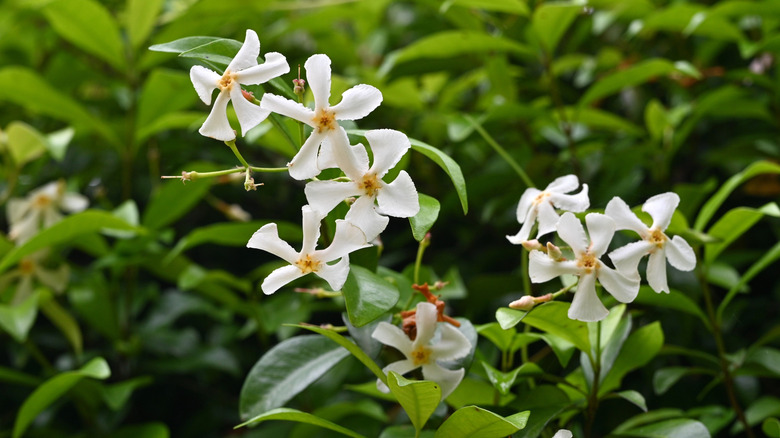
Fragrant, low-maintenance, and hardy enough to thrive in the face of drought, Trachelospermum asiaticum, aka Asiatic jasmine, is a ground cover plant that grows on a vine to spread across spaces within your yard. It can grow up to 2.5 feet tall and tends to spread out over 6 to 10 feet wide. When it blooms in late spring to early summer, its small white flowers offer nectar that will draw hummingbirds and pollinators toward it. While its vine-style branches take some time to fill in as densely as other types of ground cover, this flowering plant can grow fast in warm climates once it's established.
Bugleweed
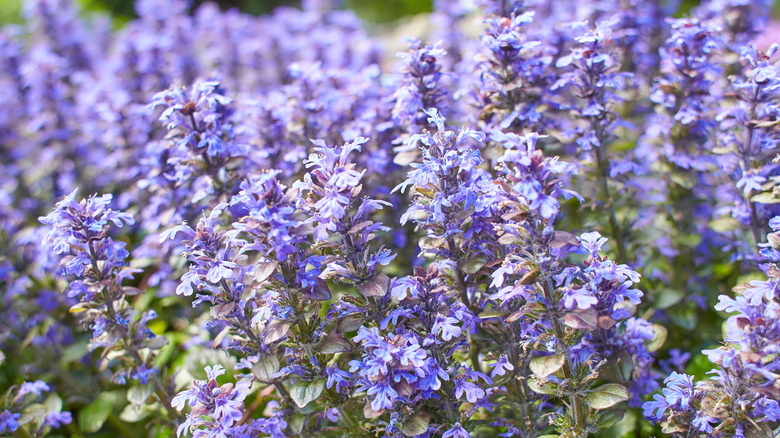
Ajuga reptans, aka bugleweed or Ajuga, is a flowery ground cover that can develop a range of eye-catching flower spikes in hues of blues and purples. Its blossoms will attract both butterflies and hummingbirds to your yard, along with other insects. When it's not flowering, this ground cover sits less than 6 inches tall, and can achieve full maturity in just two to three months. While your local pollinators will love bugleweed, you may want to be cautious about where you plant it; in some regions of the United States, it's considered an invasive plant, so you'll want to double-check that it's a safe choice for your yard.
Barren strawberry
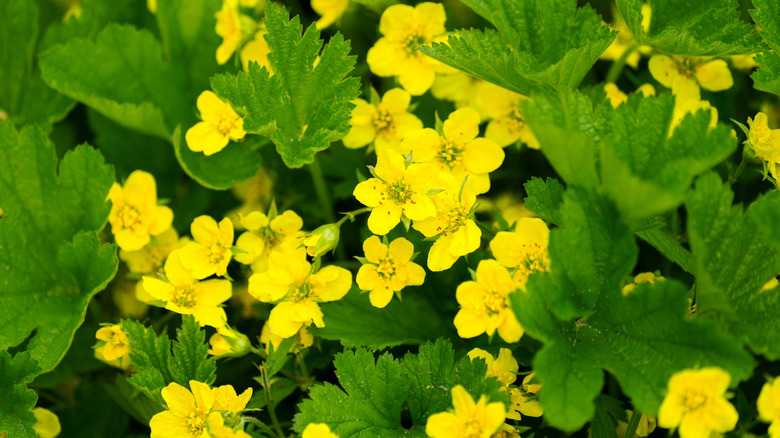
It might mimic the appearance of a typical strawberry plant, but Waldsteinia fragarioides, aka barren strawberry, is a bit different. Its blossoms don't actually turn into any kind of edible fruit; rather, the plant stays between 3 and 6 inches tall at its highest height and merely flowers. Despite its lack of true strawberries, this easy-to-grow ground cover plant blossoms with bright yellow flowers that are just the right color to draw hummingbirds into your yard — and those very same flowers offer nectar that butterflies will love, too. Once this fruitless ground cover takes hold in your garden, it'll get growing in no time.
Lesser calamint (or dwarf calamint)
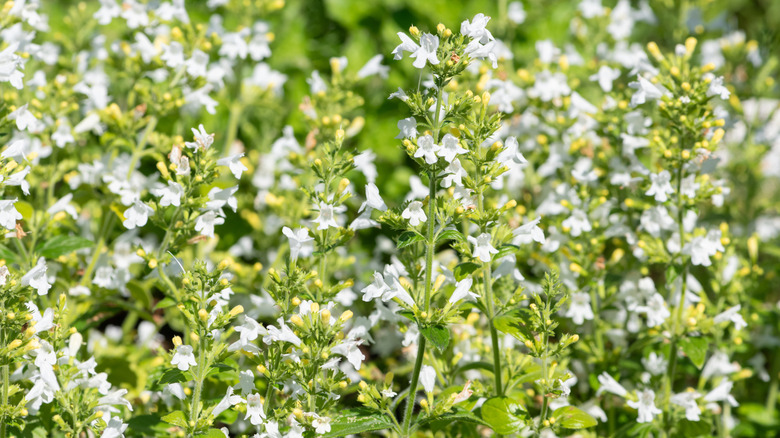
Don't let the delicate white and lilac flowers that appear on this plant fool you. Calamintha nepeta ssp. nepeta, aka lesser calamint, is one tough pollinator-friendly ground cover that self-seeds to cover bare spaces at a great pace. This ground cover plant can grow in slightly acidic or alkaline soil, tolerate some drought, and thrives in bright sunlight. But even more importantly, this fragrant mint relative attracts pollinators, including both hummingbirds and butterflies. Lesser calamint is a taller ground cover option, too, as it can reach up to 2 feet in height at its highest.
Blue daze
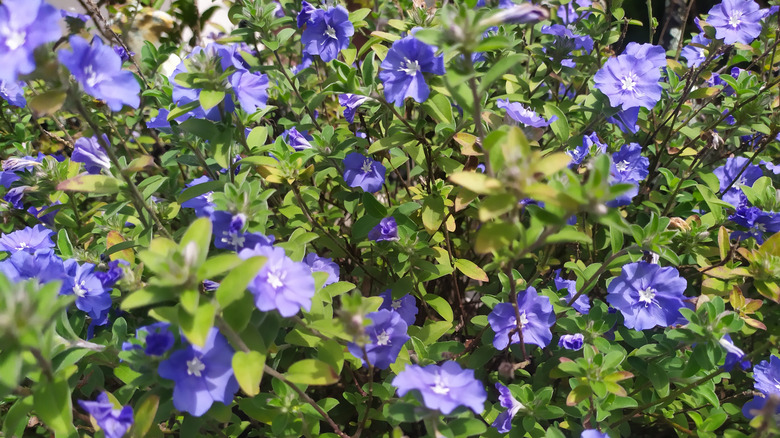
Evolvulus glomeratus, aka blue daze, is a plant that goes by a few different names, including dwarf morning-glory or even Hawaiian blue eyes. But no matter the name, this flowering ground cover has eye-catching blue flowers that open during the day to welcome pollinators and close up come sunset. Plant it in your garden, and it will grow between 9 and 18 inches tall as its trailing stems spread, which will happen fast, as this plant can hit full maturity in a matter of weeks. With its gorgeous color, blue daze makes an appealing addition to any pollinator garden.
Creeping thyme (or Breckland thyme)
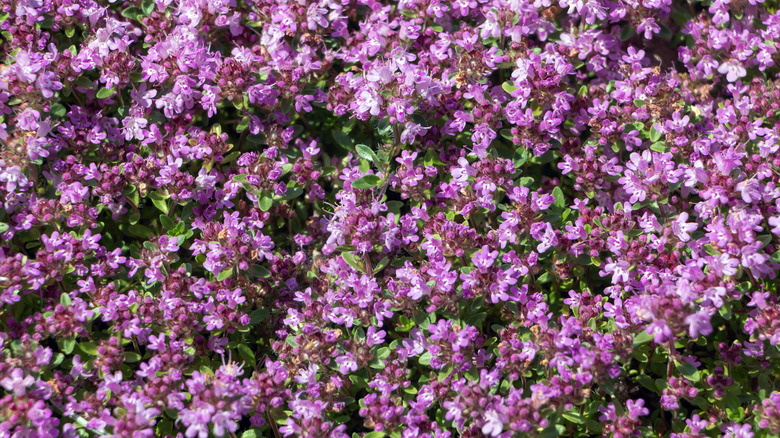
Highly fragrant and beautifully pink and purple when its flowers blossom, Thymus serpyllum, aka creeping thyme or Breckland thyme, is a creeping ground cover plant that can handle everything from poor soil to mild winters. But most importantly, if you're hoping to attract hummingbirds and butterflies, its tubular, bell-shaped flowers are exactly the kind of nectar-filled treat pollinators love. Plus, it's nicely low-maintenance so you won't have to worry about deer, rabbits, or pests striking this thyme out. In its first year, it's a bit of a slow to moderate grower, but once creeping thyme takes root, it'll pick up speed.
Coral bells
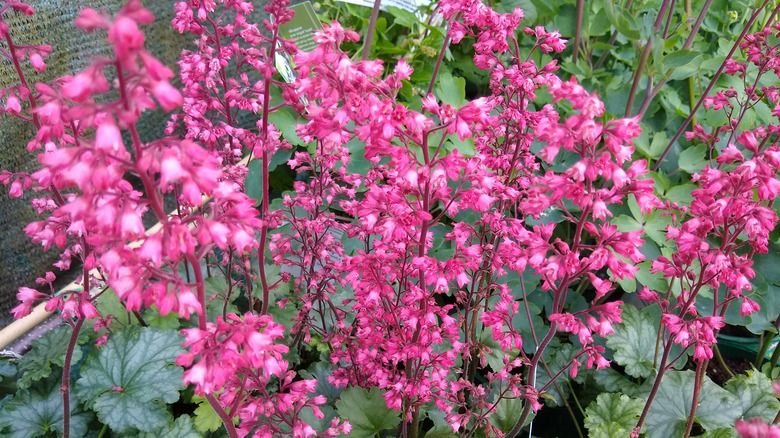
Heuchera sanguinea, aka coral bells, are another hummingbird- and butterfly-attracting ground cover option that'll brighten up your garden or yard with plenty of color. Part of the saxifrage family, this plant's flowers can thrive in warm climates (even when drought is a risk) like those of its native Arizona, New Mexico, and Mexico. While coral bells will catch butterflies' attention, hummingbirds in particular love the plant's fragrant, bell-shaped flowers in hues of red and pink that appear in late spring to early summer.
Prairie phlox
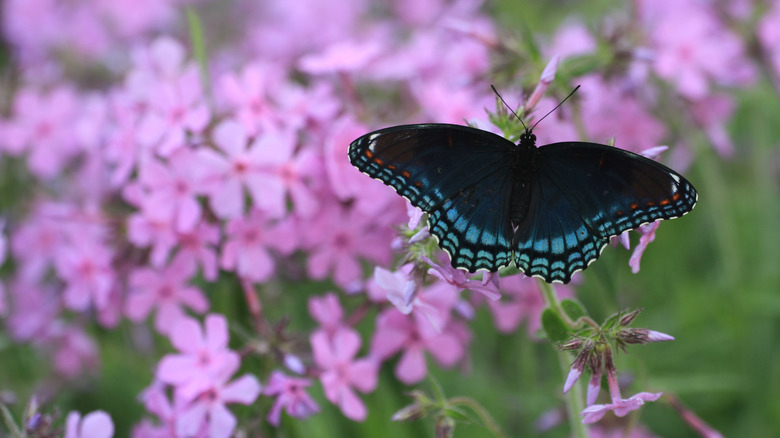
Phlox pilosa, aka prairie phlox, goes by many names, including downy phlox, Deam's phlox, and even hairy phlox. This flower is extremely appealing to butterflies, thanks to its fragrant pink-purple blossoms. Hummingbirds love those flowers, too, as they have the kind of tubular shape that's just right for their long, slim beaks. As this ground cover grows in your garden, it'll stay between 1 to 1.5 feet tall and spread out about the same width with blooms in late spring and early summer. You won't have to worry about its growth, either, thanks to its easy, low-maintenance nature.
Wedelia
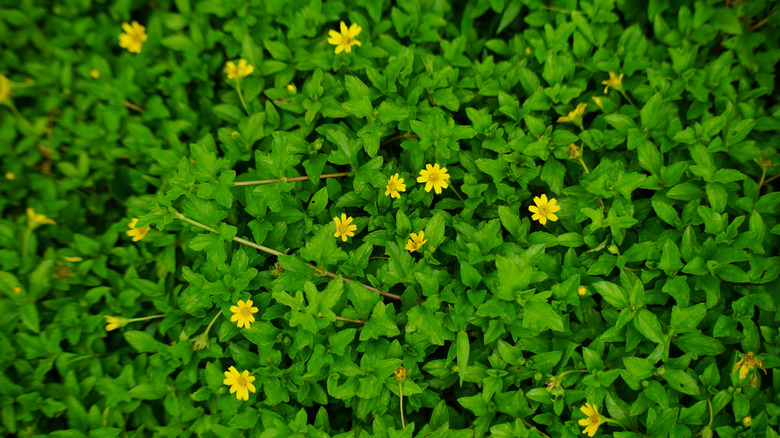
It might look similar to a daisy, but Wedelia acapulcensis var. hispida and Wedelia texana, aka Wedelia, blooms with little pollinator-friendly flowers in shades of yellow to orange. While butterflies are likely to flock to any kind of Wedelia ground cover you choose, hummingbirds may stop by Wedelia texana when it blooms in the summertime. Just be cautious about planting any variation, as this plant grows so quickly that in some U.S. states, different types of Wedelia are considered an invasive species, so you'll want to double-check whether it's the right fit for your garden.
Lungwort
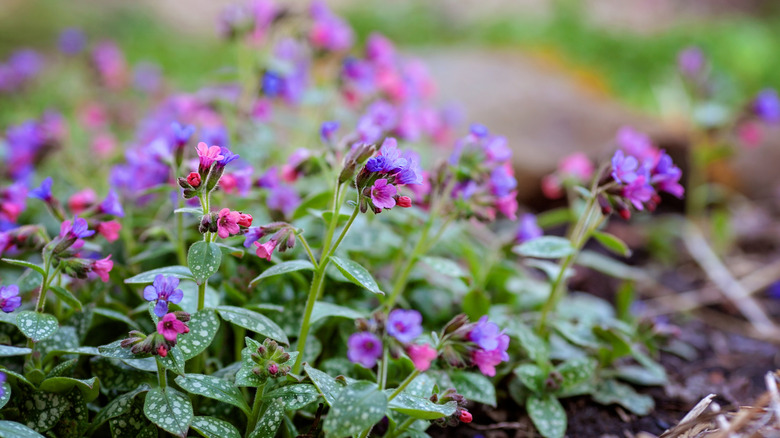
Pulmonaria, aka lungwort, comes in many different variations — there are 18 recognized species alone, plus many more hybrids — but this member of the Boraginaceae family grows low to the ground and pairs its fuzzy, white- and silver-spotted leaves with tiny flowers in deep purple, vibrant pink, and hues of blue. Furthermore, lungwort will bring both hummingbirds and butterflies to your yard thanks to its early-blooming timeframe. As one of the earliest perennials to flower, you can kick off the pollinator season before winter even ends with this plant. Plus, lungwort is a particularly good ground cover option to place where other plants may have struggled.
Rock soapwort
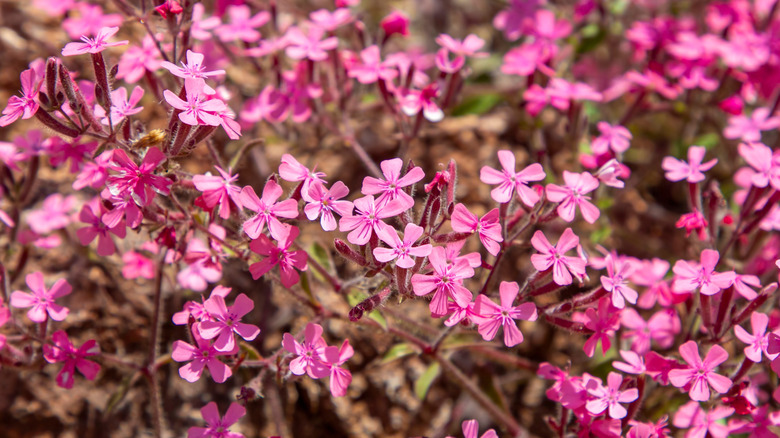
Saponaria ocymoides, aka rock soapwort, is a gorgeous ground cover that works well in rock gardens, its small pink flowers adding brightness when they bloom in late spring or summer. Over its growing period, it can spread up to 2 feet wide but stays around 9 inches tall at its highest height. Hummingbirds and butterflies will flock to its fragrant blooms. Just make sure you're choosing the right kind of soapwort — while rock soapwort is a great ground cover, soapwort (Saponaria officinalis) is not and will grow taller, though it's also a variety loved by butterflies and hummingbirds.
Wild petunia
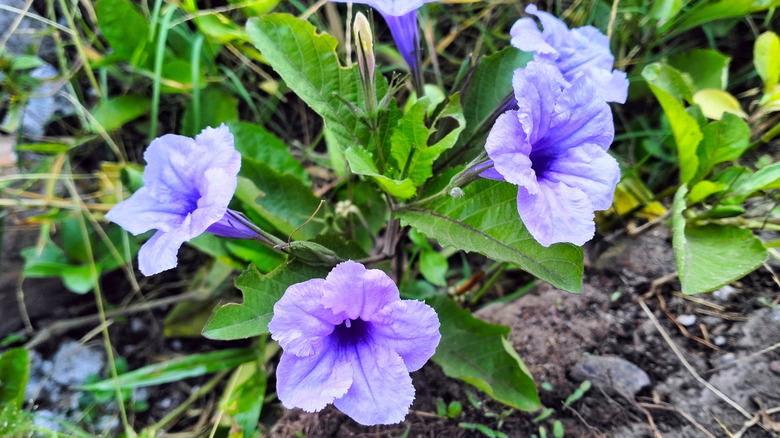
Its frilly-edged flowers might look delicate, but Ruellia humilis, aka wild petunia, is a ground cover that plays host to hummingbirds, butterflies, and even bees thanks to its nectar-rich trumpet-shaped flowers. Its long blooming season, which stretches from May to October, means it can grow and entice pollinators from spring through early fall (and it's pretty versatile when it comes to soil acidity and even possible drought conditions, too). And because wild petunia reseeds readily, it can cover ground in your garden quickly and sprawl across open spaces with its lavender flowers.