

Ditch The Basic Subway Tile Backsplash & Try These 19 Stunning Alternatives Instead
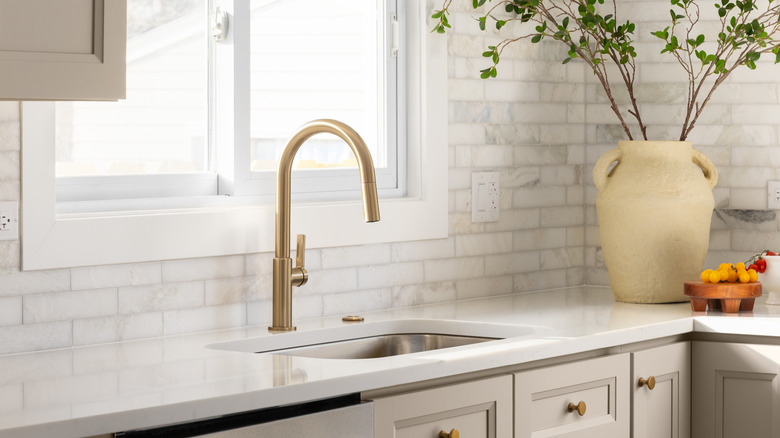
Your backsplash has a lot of things it needs to be. Whatever material it's made from has to be easy to clean, stain-resistant, and stylish. It has to match the rest of your kitchen or bathroom decor and express your preferences, all while protecting the wall from any rogue spaghetti sauce splatters or shower sprays. For roughly 100 years, subway tile has been used for backsplashes, and it's generally effective. However, some homeowners find the simple pattern of white rectangles outdated or bland. If you're feeling tired of your old subway tile backsplash, there are plenty of other fun and exciting options you can choose from.
No matter which of these options you choose, you should ensure your backsplash is properly sealed. This is particularly important if you're planning on using a material that's naturally absorbent, or vulnerable to damage from liquids or acidic substances. The last thing you want is for your fresh new backsplash to be ruined the first time a bit of lemon juice gets on it. Beyond that, your options are only limited by what's available and how much effort you're willing to put into installing it. You don't have to limit yourself to one material, either. One 2026 backsplash trend is mixing materials, so consider how you might combine your favorite options from this list for a unique and trendy look.
Slab
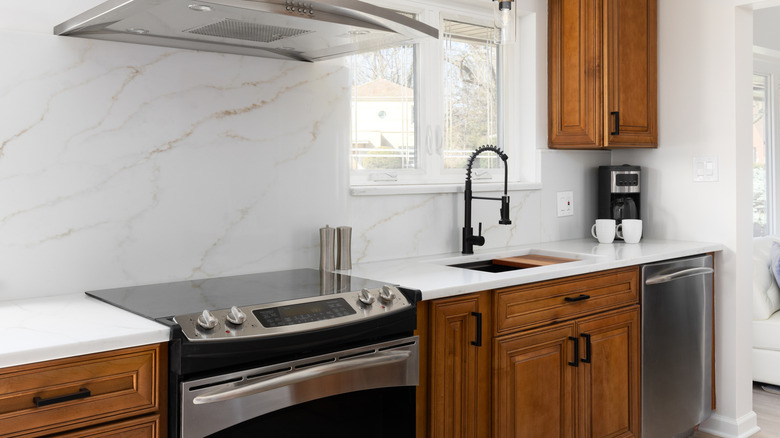
Slab backsplashes make great subway tile alternatives if you want a clean, elegant aesthetic. They're made from one large piece of stone, creating a smooth, uninterrupted backsplash. Common slab materials include marble and quartz, both of which add a luxurious feel. The lack of grout lines make them easier to clean, but being one solid piece does make them harder to install. Additionally, they can be quite expensive. You can opt for a smaller slab that only covers the lower half of the wall, or limit the amount of space it takes up width-wise, to save time and money.
Hexagonal tiles
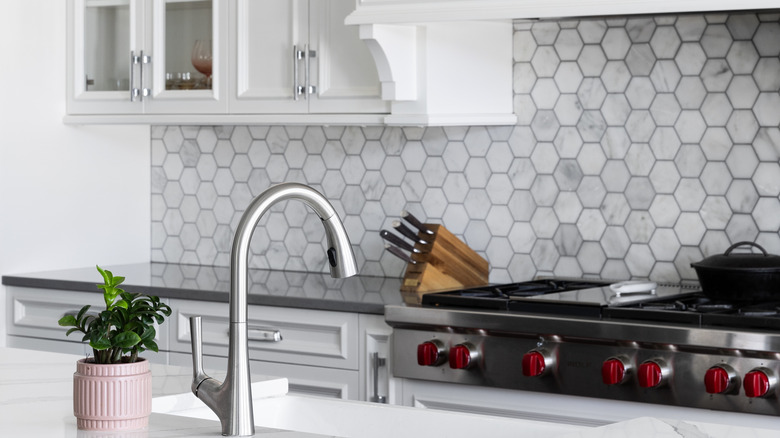
Hexagonal tiles are a fun, simple way to add a geometric pattern to your backsplash. They're easy to fit together and come in a wide range of colors and sizes, so you can pick the ones that best fit your style. Choose tiles that are all the same color for a cohesive and textured look, or create a simple pattern by mixing tiles of multiple colors. One downside is you need to cut some of your tiles in half for the edges (or find another way to fill the gaps) since they have tapered sides.
Zellige tiles
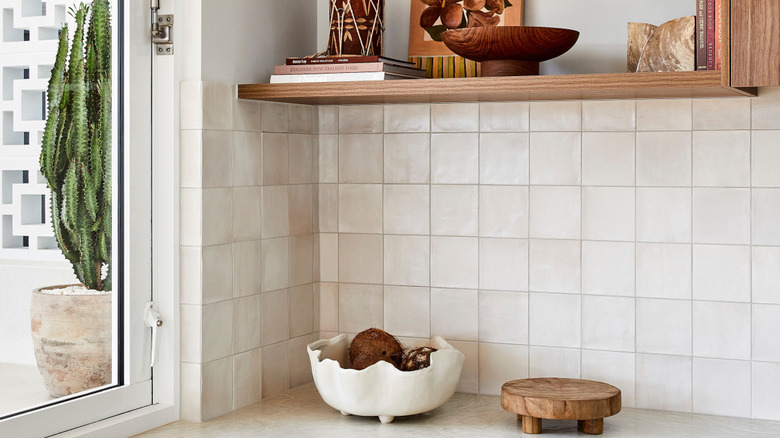
Zellige tiles are perfect if you love the natural variations that come with handmade items. These ceramic tiles are handmade in Morocco, and while each tile in a given batch is roughly the same size and shape, there are subtle differences. A zellige backsplash is a fantastic way to add charm and personality to your home. The downside here is cost. After all, they aren't made in a factory — you're paying for the time and effort of the artist, as well as the cost of importing them.
Picket tile
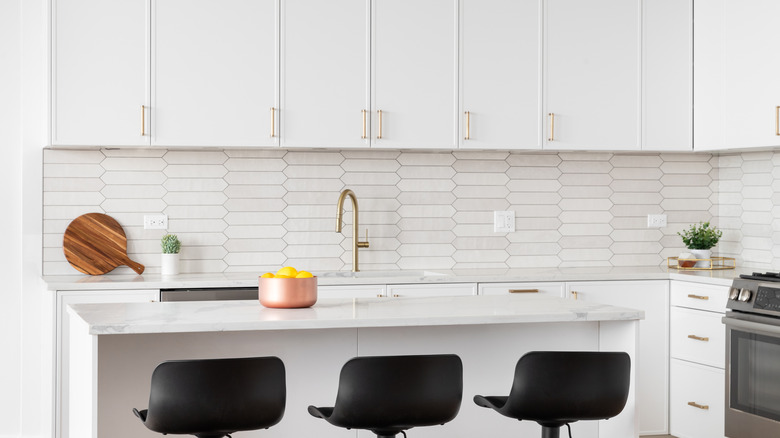
If you prefer something more uniform, but still want something more interesting than rectangular subway tiles, picket tiles are a good compromise. They're named for their resemblance to a picket fence, with two long straight sides and two tapered points. Picket tiles have a sleek look that fits in well with both traditional and modern aesthetics, and they can be positioned either horizontally or vertically for different looks. Picket tiles may not be a good fit if you want something more exciting, though. While they're more interesting than subway tiles, they're still a pretty safe choice overall.
Mosaic tiles
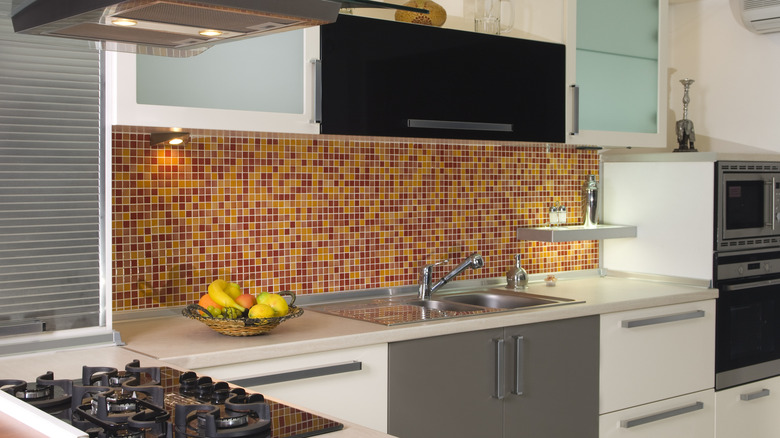
For a more textured and versatile look, try a mosaic tile backsplash. Their small size and wide range of materials and colors make them perfect for creating a custom look. Mosaic tiles are also more manageable for smaller or oddly shaped spaces, since you don't need to worry about cutting large tiles down to size. However, having to deal with so many tiny pieces, and all those grout lines, can make them more time consuming to install and maintain. Consider getting a professional to help with installation, and brush up on grout cleaning hacks to make things easier.
Chevron tiles
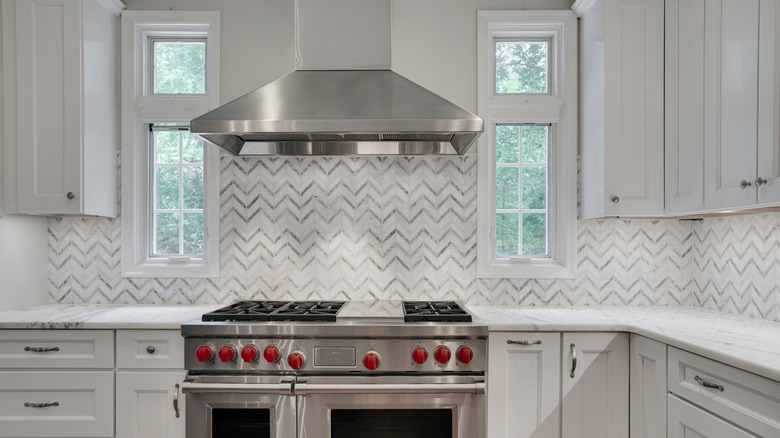
If you want something a little more modern than picket tiles, but not quite as busy as mosaic tiles, consider chevron tiles. The tiles themselves are typically a thin parallelogram shape, although there can be some variation. These tiles are then arranged into v shapes or zigzag patterns. Depending on the size, chevron tiles can have the same difficulties with installation and maintenance that mosaic tiles have. However, they're great at adding motion to your backsplash since your eyes naturally follow the pattern along the wall.
Fish scale tiles
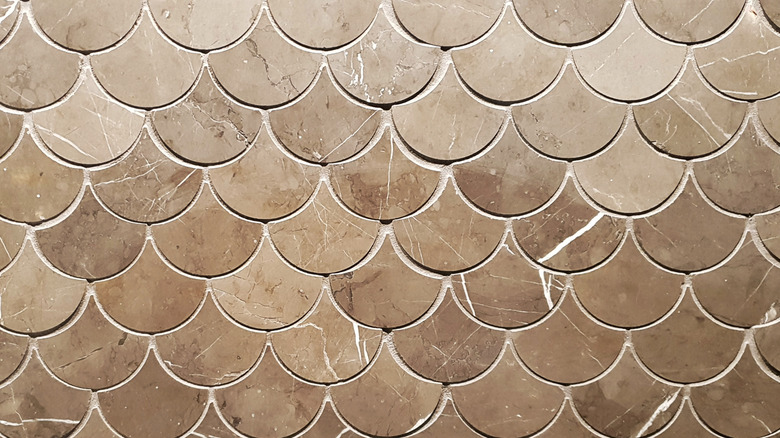
Fish scale tiles might be right at home in your beach-themed bathroom, but they can also add elegance to your kitchen. They taper to a point at one end and form a semi-circle at the other. When arranged together, they look just like fish scales, especially if you choose blue tiles. They're also called fan tiles since the shape is reminiscent of a hand fan. Classy gold or black tiles call to mind the Art Deco movement that popularized them, but be warned: Their unique shape can make lining them up and achieving smooth edges tricky.
Arabesque tiles
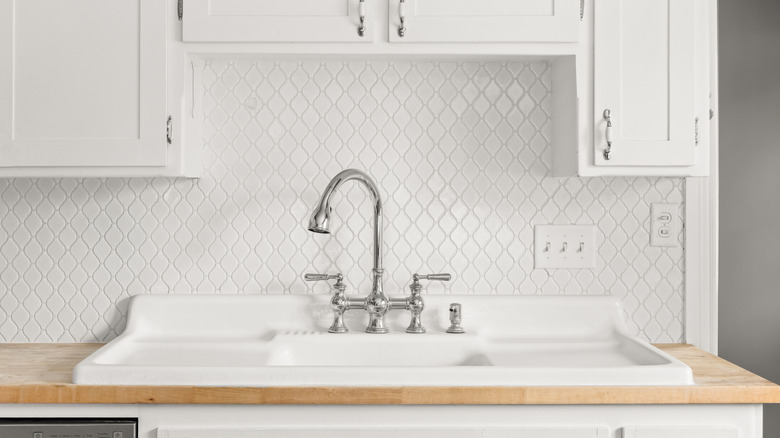
If fish scale tiles aren't fancy enough for your tastes, consider using elegant arabesque tiles for your backsplash. As the name implies, these tiles take their shapes from Arabic designs. They offer a more complex pattern than squares or rectangles, and while this can make them challenging to arrange, it also makes them gorgeous. Arabesque tiles are perfect if you want your backsplash to be a focal point rather than fade into the background. The exact shape can vary depending on the maker and style, so carefully consider which specific arabesque tile to get.
Penny tiles
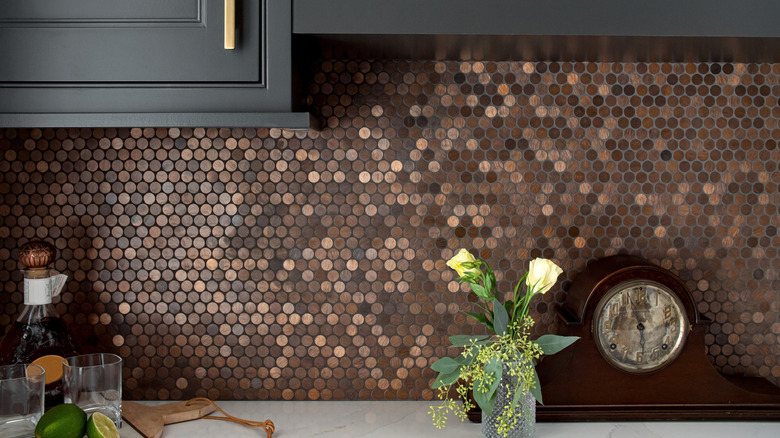
While you can use real pennies to make a unique backsplash, a simpler option is to use penny tiles. These small, round tiles are great for adding texture to your walls, and they come in a wide variety of colors and materials. While the most common penny tile material is porcelain, there are also penny tiles made of metal, glass, stone, and more. Similar to mosaic tiles, they're great if you want to craft your own design or fill an awkward space. However, installation and cleaning can be tricky.
Terrazzo tiles
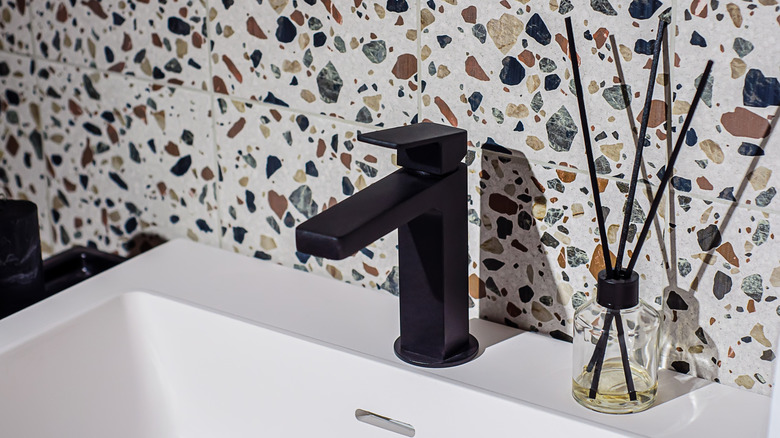
For a fun, low-maintenance backsplash, terrazzo is the way to go. Terrazzo consists of epoxy or cement embedded with shards of stone, colored glass, or shells. This creates a somewhat chaotic appearance without the stress of trying to install a ton of tiny tiles. Instead, you can choose a standard medium-sized square tile without sacrificing any excitement or texture. Since the embedded elements can be almost anything, there's a wide range of aesthetics you can capture with terrazzo. Depending on the style you chose, they can look busy or overwhelming, so weigh your options carefully.
Textured or relief tiles
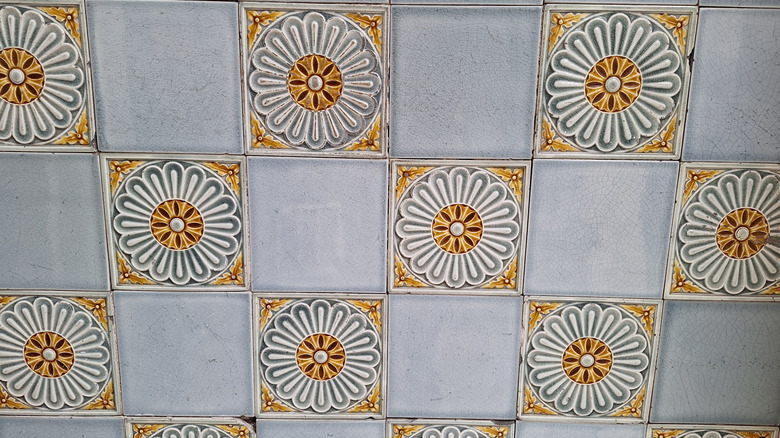
From simple wavy surfaces to full reliefs, textured tiles are a great way to add some pizazz to your backsplash, especially if you're overwhelmed by colors or patterns. Tiles with raised images make excellent accents when paired with smooth tiles, while simpler textures can be used throughout the backsplash to give the whole area extra interest. However, some textures, such as reliefs with lots of crevices, are harder to clean. Use these sparingly, or in areas where they aren't likely to get splattered with food, such as your bathroom.
Wood
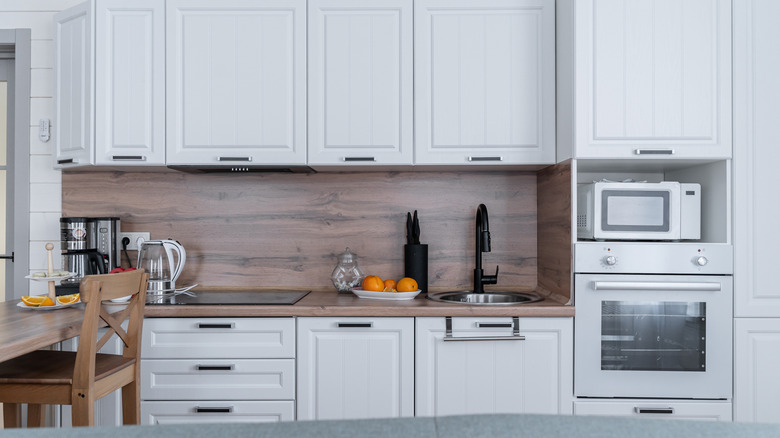
Wood panels or tiles can create a warm, inviting backsplash, turning your cold kitchen into a welcoming environment. It's also easy to customize through your choice of wood, stain, paint, or even a simple wood-burned design. Wood tends to be more affordable than stones, such as marble or quartz, especially if you're using a thin veneer rather than full planks. However, be careful when placing it: Wood that's been properly sealed against moisture is great to use above your counter or behind your sinks, but don't use it near your stove since wood is quite flammable.
Mirror
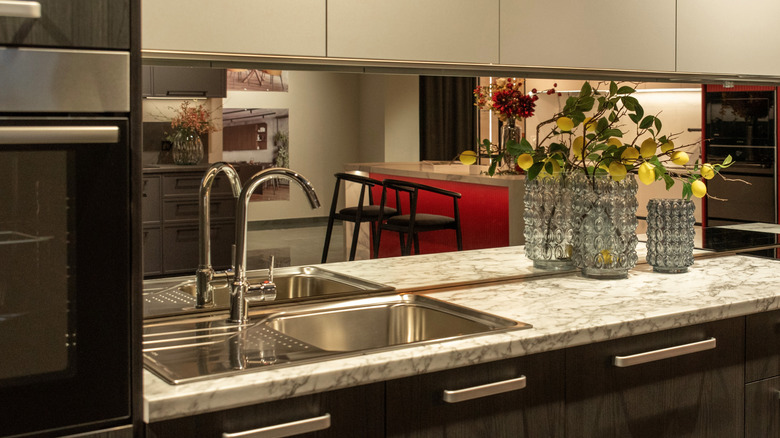
You can skip tile altogether and opt for a mirrored backsplash instead. It can be useful if you host a lot of dinner parties and want to see your guests while you cook, but there are additional benefits. Mirror backsplashes can make a small kitchen seem larger by reflecting the space, and they can bounce light around to make it seem brighter. This can be both positive and negative since you may also find yourself catching glare from a particularly bright light. Additionally, mirrors aren't great at hiding smudges, so you need to stay on top of cleaning.
Painted tiles
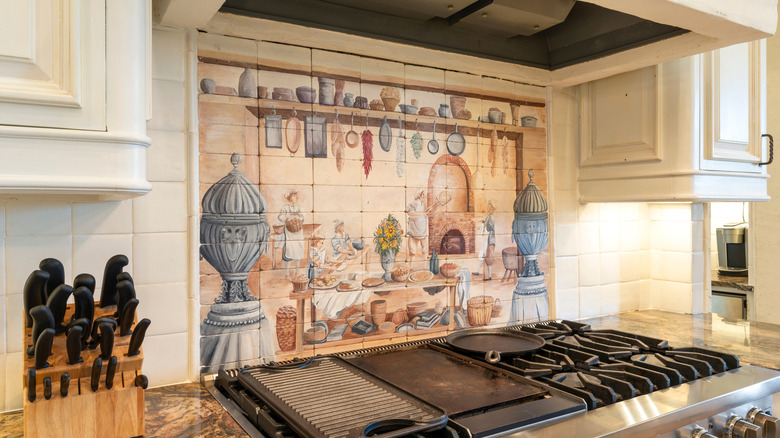
If the design you have in mind is too complex for mosaic tiles, or you just don't want the hassle of cleaning them, painted tiles may be a better fit. You can paint them yourself or buy professionally painted tiles if you aren't feeling crafty. Individually painted tiles can feature beautiful designs. You can also paint one scene across all of them. It takes careful planning to ensure they line up correctly when installed, but, if done right, your backsplash becomes a work of art. Just remember to seal them so the paint doesn't warp or peel.
Metal
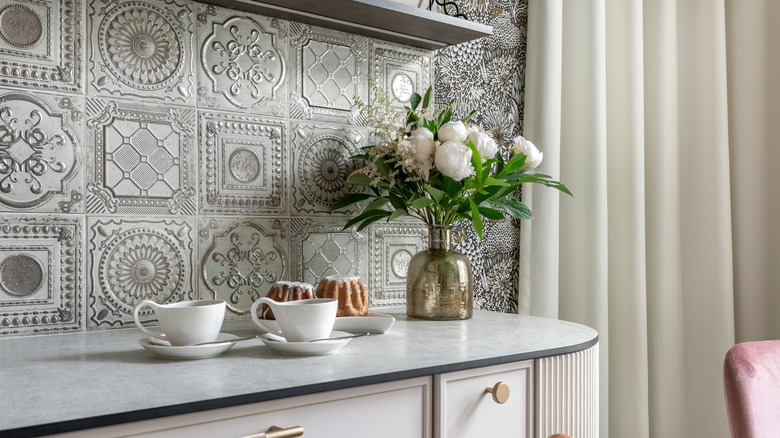
Decorative tin tiles are designed for use on your ceiling, but you can also use them for your backsplash. These squares of thin metal are molded to form a variety of designs, creating a look that blends the modern aesthetic of metal with the more traditional design of tiles. The bright metal and fun patterns create an attention-grabbing backsplash that's perfect if your kitchen needs a little something extra. Metal is also non-flammable, so it's a better option for backsplashes near your stove. However, the metal can dent or corrode over time if not handled with care.
Bricks
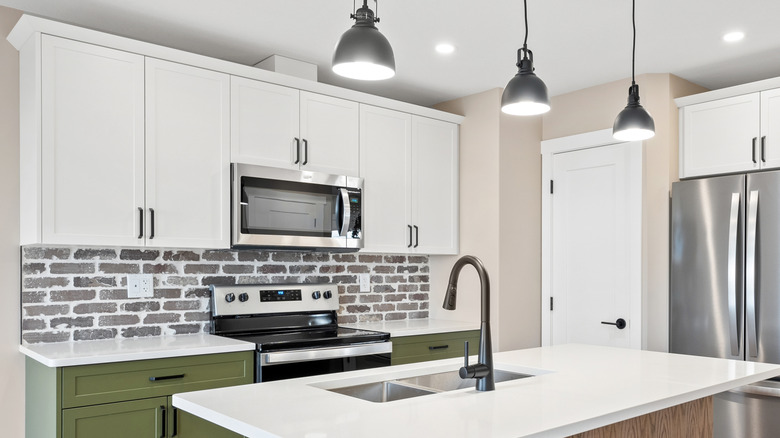
If you want the classic look of subway tile but with a little more texture, brick is a great option. The simple rectangular shape makes them easy to install and arrange, and they aren't too large of a deviation from subway tiles. Bricks add texture and rustic charm to a kitchen, giving your space just a bit more warmth and personality. You can opt for classic red, or pick a different color. You can even paint over them. The downside to bricks is their rough surface can be difficult to clean, and they can be aborbsent if not sealed properly.
Wallpaper
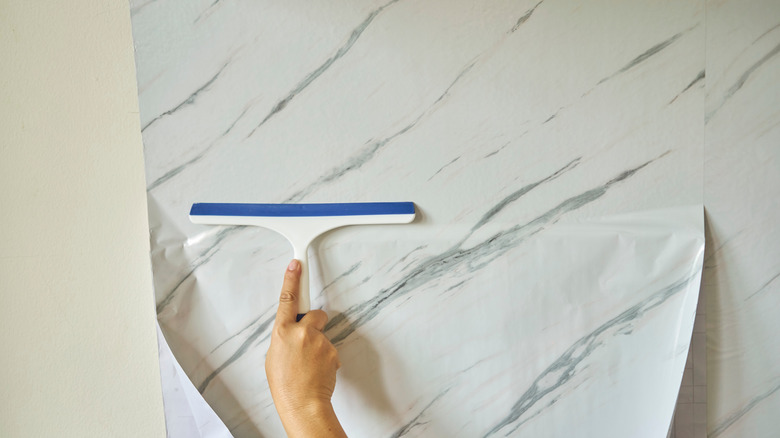
Wallpaper is an exciting way to refresh your backsplash temporarily. It's a great choice for renters who can't make permanent alterations, but still want it to feel like theirs. Peel-and-stick wallpaper is particularly popular since it's affordable and easier to remove than traditional wallpaper. Since it can be cut to size, wallpaper is also great for awkwardly shaped backsplashes and tight spaces. However, if you want it to last, you need to seal it to prevent moisture and stains from damaging it. Additionally, if your current backsplash is uneven, you may have trouble getting your wallpaper to adhere correctly.
Fabric
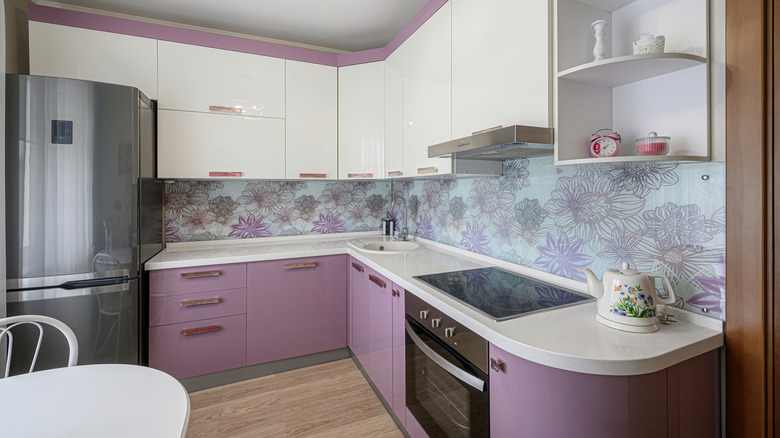
Similar to wallpaper, fabric can be an easy way to add complex patterns to your backsplash. However, it is also quite flammable, so it needs to be used carefully. To be safe, don't use a fabric backsplash near your stove. You can adhere it directly to the wall and add a layer of glass over it to keep it clean, or swap the glass for starch to keep the fabric stiff. You could also create a corkboard backsplash and pin your fabric to it, letting you pin recipes to it or remove it for washing.
Chalkboard
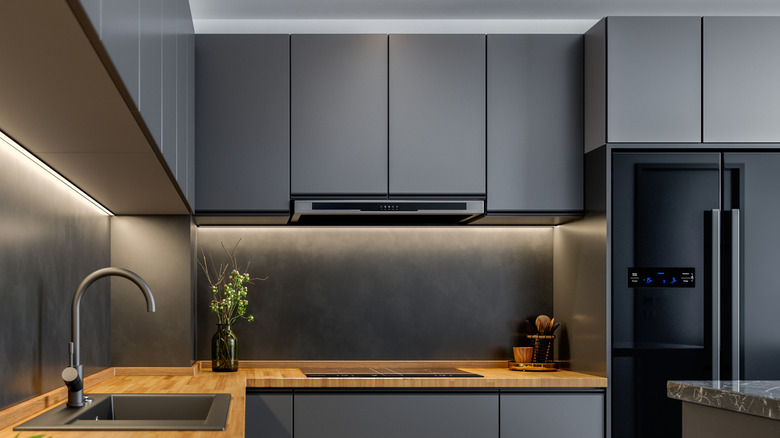
Chalkboards are a fun option if you have children, roommates, or just enjoy leaving yourself little notes or doodles. All you need is chalkboard paint and chalk, making installation beginner-friendly and affordable. While it may not be the most sophisticated option, a chalkboard backsplash is perfect for homeowners who find subway tiles boring and want a little more whimsy in their lives. The downside is cleanliness. You need to keep the chalkboard clean and dry in order to write on it, and you may end up with chalk dust on your counter.