

This Is The Room-Painting Order HGTV's Mike Holmes Swears By Every Time

Refreshing your rooms with a coat of paint can change its look without breaking the bank. You've probably put a lot of thought into choosing the right color, whether that means following the 2026 interior paint color trends or striking out on your own. However, you should also be putting thought into the order you paint your rooms in. There's actually a professionally recommended order for it: clean and prep, paint baseboards and trim, paint ceiling, then walls.
On Make It Right, HGTV's Mike Holmes says the first step is to clean the room thoroughly. "Start by running a damp cloth over the baseboards to get rid of any dust that's gathered," Holmes suggests, adding, "Create a divider using your painting tape, so you don't drip and paint where you don't want it to be. Don't forget to tape over your outlet covers." Use a clean cloth or try this Swiffer hack that makes prepping your walls for paint a breeze. The goal here is to help the paint adhere and prevent you from trapping anything textured in the paint. If anything has built up on the walls, such as grease, tar from cigarette smoke, or stickiness from kids' hands, use soap and water to clean it off.
When it comes to painting, Holmes recommends starting with the trim and baseboards first. Then, you can move on to your ceilings and finish off with the walls. For both ceilings and walls, he suggests starting at the edges, since they'll take the most time and attention to detail. Don't forget to paint around any light switches or outlets, too! Then you can use rollers to take care of the open middle sections, with less worry about accidentally painting over your trim.
Why does this order work?
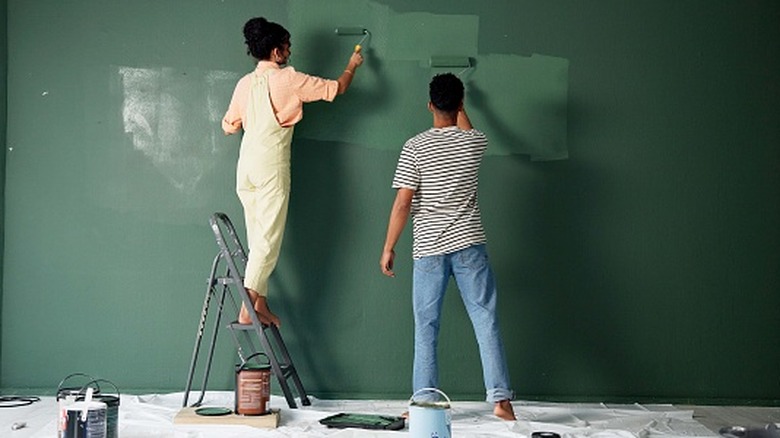
There's no rule saying you have to paint your rooms in this order, but there is a reason professionals tend to recommend it. Covering your trim and baseboards with painters tape to protect them is simpler than trying to paint them after you've painted the walls, since you can't cover your entire wall. If you paint your ceiling or walls first, you can add a line of tape to keep the edges of your trim neat, but it doesn't eliminate the risk of accidents entirely. Paint could potentially drip over and past the tape, or you could accidentally splatter some paint while climbing the ladder to get to your trim.
Due to this, painting the trim first is more efficient in the long run. You can worry less about doing touch ups, and you can spend less time cleaning up and more time focusing on getting sharper, cleaner edges. You can use painters tape or this time-saving Vaseline hack to protect your trim, then simply paint over any stray drips or splatters that got on your walls. Since the trim and baseboards are smaller, it also takes less time to fix them if some paint sneaks past your tape while painting your walls or ceiling.
Focusing on the smaller areas that need more attention, such as your trim and around your light switches or outlets, will also save time and energy in the long run. Take care of the fiddly, time-consuming parts first and finish with the simpler job of rolling paint onto your walls. If you're trying to finish the room quickly and don't want to leave parts of it for the next day, you certainly won't want to be rushing to finish the more detailed work at the end.