

Transform An Ordinary Orange Into A Cute Bird Feeder Birds Will Love
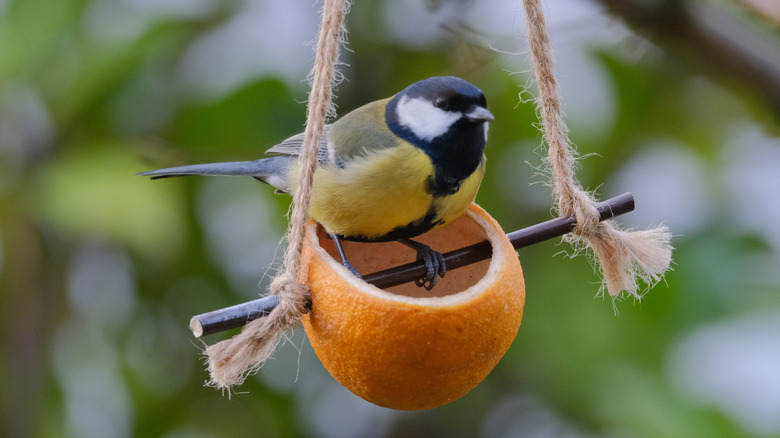
Anyone with a bird feeder knows that attracting birds to your yard brings a lot of joy. Science even backs this up: A 2023 study published in Urban Ecosystems linked backyard bird interactions with improved mental health and reduced anxiety. To reap the benefits of putting a bird feeder in your yard, you can choose from hundreds of styles on the market, from simple wooden platforms to expensive metal creations that look like outdoor art. For those who are on a budget (or who are just feeling creative), there are at least as many inexpensive craft designs that repurpose household items or foods, like this DIY pumpkin bird feeder. One you may not have considered is a fun and simple creation using an orange.
The bright orange color of this citrus catches the eye of many birds, and the vitamin C-packed flesh is itself a nutritious snack. Many birds love oranges, especially orioles and other fruit-eaters like mockingbirds, tanagers, and grosbeaks. For these birds, you can simply cut an orange in half and skewer it to a sturdy tree branch outside your window. But for seed-eaters, a craftier solution is to turn your orange rind into a bowl and fill it with their favorite foods.
Ways to make bird feeders from your oranges
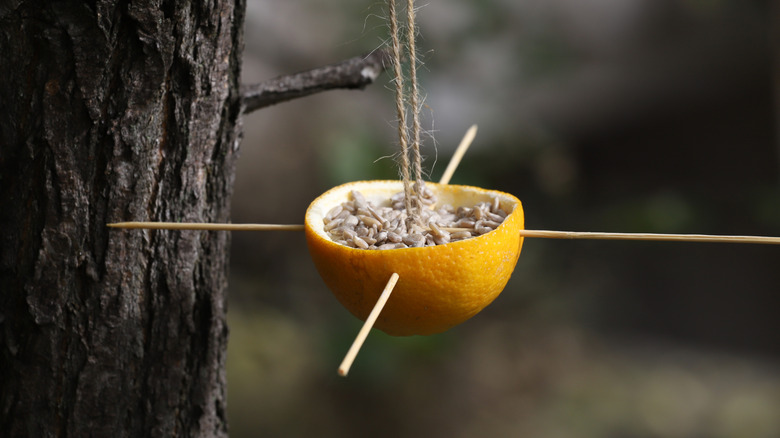
The easiest way to turn an orange into a birdseed feeder is to wash it in a baking soda bath (as this removes any harmful pesticides), cut it in half, scoop out the insides, and fill the empty rind with the seed mix of your choice. Then, it's simply a matter of hanging it outside on a nearby tree branch or post. TikTok creator @myheavenlyrecipes demonstrates how to cut small holes in two sides of the hollowed-out orange rind and run twine through them for easy hanging. YouTube creator TuRiNu Crafts and Creations takes this design a step further, adding two wooden skewers to the orange bowl that cross in the middle and stick out from the sides to form perches for the birds. You can tie your twine to the four places where the skewers puncture the rind, or in the middle where they cross.
By using an orange as your feeder, you won't need to clean and maintain it like you do other feeders made of wood, plastic, or metal. Oranges can last several days outside in cool weather, depending on the rind's thickness. Keep an eye on your orange, though — as soon as it shows signs of decay, it's time to replace it.
Don't let your orange feeder just fall to the ground where it can attract other wildlife you may not want hanging around your feeding station, like raccoons. For most wildlife, like deer, oranges aren't a natural food and may cause stomach upset. This fruit is also toxic to cats. Instead, compost your orange feeder for a no-waste solution, then hang up a fresh bowl for your next round of feathered guests.