

Easily Repurpose A Pumpkin Into The Perfect DIY Bird Feeder This Fall

Fall doesn't end with trick-or-treating, so decorating your yard with pumpkins doesn't have to stop at Halloween. Reusing your jack-o'-lantern after Halloween keeps the autumnal vibes going a bit longer and shows Mother Nature you're grateful that she makes such gorgeous gourds. Though tossing your carved pumpkins into the compost pile is an eco-friendly way to dispose of them, consider giving them one more job before you return them to the earth. With a little creativity and a few scoops of seeds, you can turn pumpkins into no-waste bird feeders. Many birds will peck at the rinds, especially if they also offer birdseed.
When cutting pumpkin sections, make sure they are safe for wildlife to eat. This means removing glitter, paint, and other decorations, as well as spots showing signs of rot. A feeder made of bowl-shaped pumpkin sections is ideal for serving birdseed and other treats to your feathered friends. Before you perfect the menu, be sure your pumpkin pieces can hold what you're offering. When creating the bowls, you'll need to work around any holes you've carved into your pumpkin. If the usable parts of your pumpkin aren't bowl-shaped, look for flat sections of rind you can cut into hangable serving plates.
No carved pumpkins on hand? You can still make a pumpkin feeder for your backyard birds. Find a whole pumpkin, cut it in half, and then remove the stringy, seedy material in the middle, as you would when making a jack-o'-lantern. Once the interior of each rind bowl is relatively smooth, you're ready to assemble your festive fall feeder.
Helping your pumpkin bowls attract birds and deter pests
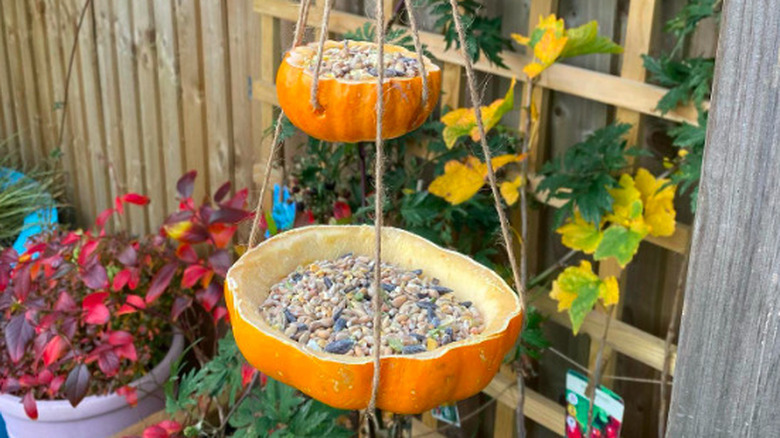
Some bird feeders are designed to sit on tabletops, pedestals, or lawns, but don't put your pumpkin feeder in these spots. The nutritious rind is likely to attract four-legged scavengers, like squirrels and raccoons, when it's easy to access from the ground. Hanging your birdseed-filled pumpkin bowls is a good first step for minimizing this problem. You can create a simple setup by drilling four holes in the rinds, guiding twine through them, and tying the ends with a sturdy knot, such as a double running bowline, like you'd do to hang a swing from a tree limb. Or, show off your crafting skills with a macrame plant hanger that doubles as a pumpkin suspension system. If you need more pest protection, try reusing plastic nursery pots to keep squirrels out of your feeder. These low-cost baffles might prevent other ground-dwelling scavengers from feasting on the birdseed, too.
Once you've taken some measures to keep other animals at bay, decide what to serve your avian visitors. Bits of suet are a good choice for late fall in cooler climates, where birds need to increase their fat consumption as temperatures drop. Or, consider black-oil sunflower seeds. In addition to being a favorite of many species, including cardinals and nuthatches, they're an important fuel source for migration.