

Planting This Popular Herb Could Help Keep Wasps Away This Spring
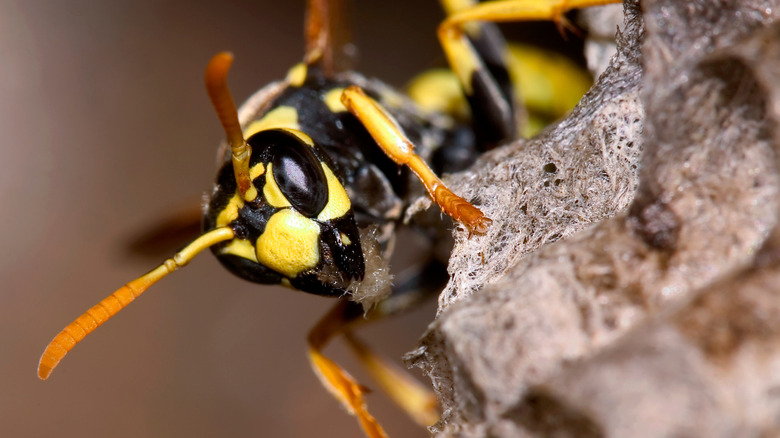
Depending on how you feel about them, you will either want to attract or repel wasps from your garden. For certain, anyone who is allergic to wasp stings will want to keep them as far away from the garden as possible. Others, however, view wasps as a great allies, as they are predators who devour common garden pests like aphids and do excellent work at pollinating plants. Still, their painful stings are reason enough to want to keep wasps away. Thankfully, there is one popular herb you can plant in your garden that could actually help keep wasps out of the garden this spring: rosemary (Salvia rosmarinus).
Rosemary is just one of a handful of gorgeous plants that potentially double as wasp repellents. A member of the mint family, rosemary is an evergreen perennial shrub that is prized in cooking for its strong, woody scent and flavor. Indeed, it is a common kitchen herb used to purify indoor air. However, for the purposes of wasp repellent, rosemary is better suited to use in the garden.
You can plant and keep rosemary outside in the garden all year round if you live in USDA climate zones 7-10. Any lower and you will need to keep it in pots during the summer, and bring the plants indoors during the winter. Outside, however, is where it is going to be most effective.
Ways rosemary can help keep wasps away

Now, it would seem as though planting rosemary in your garden would be enough to ward off wasps. After all, other fragrant perennials like Roman chamomile, lavender, and mint, are also strong enough to repel wasps. However, there is no clear evidence to prove that merely planting rosemary is going to have the intended effect. Certainly, many gardeners swear by this practice. Therefore the only way to see if it works for your garden is to give planting it a try.
Where there is research and evidence that rosemary is worthwhile for wasp repellent is in the use of its essential oils. The essential oil of rosemary is highly concentrated, meaning that the scent is all the more pungent. As a result, mixing it into a repellent spray, along with other oils such as peppermint and thyme, will work incredibly well, as it will be strong enough to discourage the wasps from making their nests in your garden.
The reason a more concentrated rosemary spray could be more effective is owing to the wasps' very nature. They have highly sophisticated senses of smell, meaning they can detect things like prey or repellents from very far off. As such, the stronger the repellent, the more likely they are to be overwhelmed by the scent and stay clear. As with all homeopathic and herbal remedies, it is always worth a try to see if it works for you.