

The Mistake You Should Never Make When Cleaning Your Hummingbird Feeder
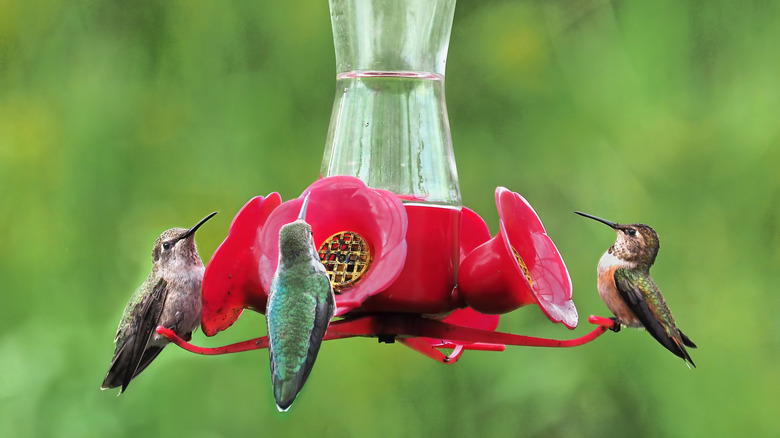
Standard bird feeders need regularly scheduled cleaning – about once every two weeks or so — if they offer seeds to your yard's feathered guests. Hummingbird feeders, however, require more frequent maintenance and greater attention to detail. Just as it's important to make DIY hummingbird nectar with the right ingredients, choosing the correct products to fight mold, grime, and germs is essential for safeguarding the health of these charming little birds. The same goes for using those products correctly. For instance, if you're using bleach, a common mistake to avoid is failing to thoroughly rinse the feeder afterward.
But wait, you might be wondering, isn't bleach bad for birds? Not if you do it right. Many organizations, like the University of California Agriculture and Natural Resources, actually recommend using a weak bleach solution to sanitize feeders. It kills bacteria, wards off mold and yeast, and overall, prevents scary diseases, like aspergillosis and salmonella. But of course, none of this matters if you don't rinse well, since leftover bleach residue can be just as harmful to your dainty visitors if ingested. To disinfect your hummingbird feeder safely and effectively, you'll need a few basic supplies. These include cleaning gloves, bleach, antibacterial dish soap, a scrubbing tool, a bucket large enough to fit your feeder, and warm water. If you can't stand the smell of traditional bleach, non-chlorine bleach works too.
How to safely remove germs and grime from your feeder with bleach
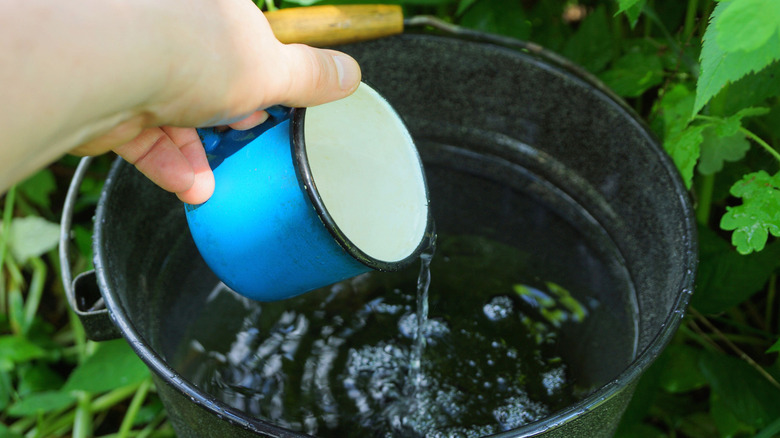
First things first, disassemble your hummingbird feeder. Remove the tray, bottle, and any perches (skip this step if you're working with a wooden feeder that's permanently fixed together). Next, slide your gloves on and give the feeder parts a good scrub in soapy water to remove grime and dirt. You'll want to make sure the feeder is as clean as possible before submerging it in the bleach solution. Note: Bird poop, leaves, feathers, and other organic materials can make this disinfecting technique ineffective. Once that's done, mix one part bleach with nine parts warm water in your bucket, and let your feeder soak for 10 minutes.
After the time is up, rinse as many times as needed until you can't smell the bleach anymore — this might mean three, four, or even five (plus) thorough rinses. Better yet, consider rinsing it under a running faucet — or use your garden hose — for 10 minutes. Just remember, it's all for the well-being of those little hummers. Finally, let it air dry before replenishing with fresh nectar. Not cleaning your hummingbird feeder can be deadly for the birds you love, so in addition to regular cleaning every few days, you'll want to disinfect it with this bleach solution once or twice a month.