

Keep Your Spider Plant Thriving Through Every Season With A Simple Watering Tip
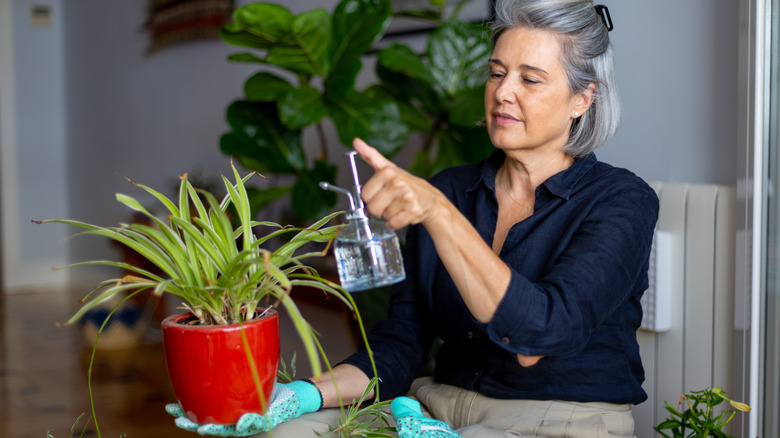
Spider plants (Chlorophytum comosum), which are also referred to as airplane plants, are popular houseplants because they're generally easy to maintain. With its long, creased leaves, this plant makes a gorgeous addition to any space, but you'll need to make sure you're properly caring for your spider plant and giving it the right amount to drink. Letting the soil of your spider plant to dry out a bit after each watering is crucial and will help to prevent you from accidentally overwatering.
Though spider plants are rather drought-resistant, giving them too much water leads to rotting roots and issues with pests like spider mites. Before watering your spider plant, feel the soil to ensure that the top inch is dry. Generally, your spider plant should be watered about once a week, but if the top inch of soil is still extremely damp, you should wait.
During different seasons, your spider plant's watering needs will change. Houseplants typically need more water during times when they're actively growing, like summer, but to help your spider plant stay lush and healthy all winter you should cut back your watering routine. Since plants are receiving less light and not growing during winter, they won't need as much water. This is why it's important to check the soil no matter the season to know if your spider plant is thirsty or not.
Watering tips to keep your spider plant thriving throughout the year
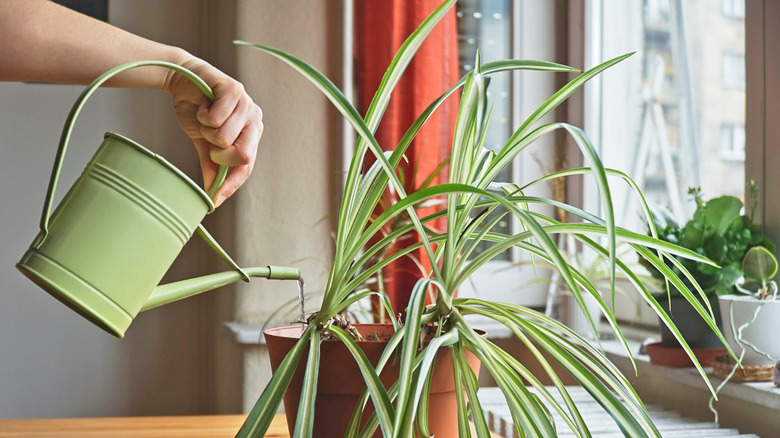
Due to the spider plant's rhizomes and large roots, it's able to store some water and tolerate drier conditions. This contributes to why the spider plant needs to dry out in between waterings. While spider plants will put up with missed waterings, giving your plant too little to drink is also a common issue. If you're not watering your spider plant enough, the nutrients won't be able to reach the ends of the plant's long leaves.
Luckily, you can stop brown tips on spider plant leaves by watering it regularly once the soil has begun to dry. When you give your spider plant a drink, water until the liquid comes out of the pot's drainage holes. Make sure that the plant isn't sitting in the drained water, as this can also lead to excessive watering issues. In the summer, it can be helpful to mist your plant's leaves.
Even if you're providing the right amount of water for your spider plant, you'll also want to consider the type of water you're using if your houseplant is still struggling. Tap water often contains chemicals like chlorine or fluoride, which spider plants are particularly sensitive to. This water with additives will also contribute to the tips of the plant's leaves turning brown. Substituting your tap water for distilled or rainwater can prevent chemicals from building up in the soil and hurting your spider plant.