

13 Gorgeous Flower Bed Ideas That Will Wow Your Neighbors This Spring
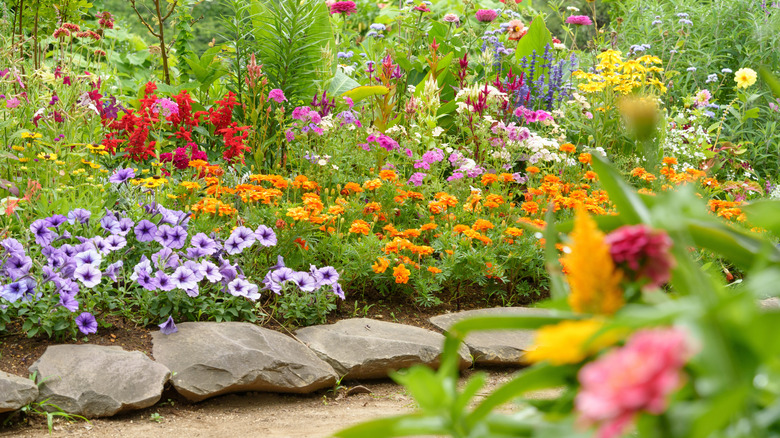
Gardening is a popular way to relax, enjoy nature, and improve your home's curb appeal. It can also be a fun way to express yourself and even engage in some playful, healthy rivalry with your neighbors. Axiom's 2026 Gardening Outlook Survey (via Greenhouse Grower) reports that gardening is on the rise, too, so it's likely that at least one of your neighbors is also putting their green thumb to work. And if you're both trying to outdo each other's flower gardens, you'll want some fresh ideas to start the new year off strong.
If you want to be on top of the trends, you could grow the plant of the year for 2026, 'Iron Butterfly,' a lovely, drought-tolerant flower that butterflies enjoy. Of course, you don't have to stop there, as there are plenty of fun and interesting ways to make your entire flower garden pop! If you want to be the talk of the town and impress your neighbors, consider trying one of these flower bed ideas.
Start soft
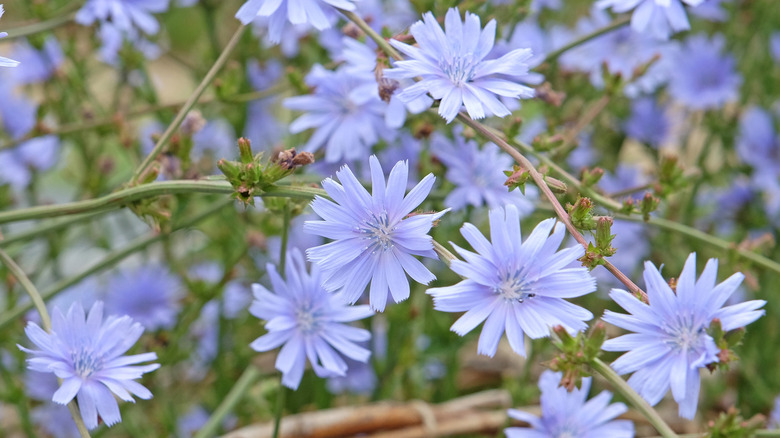
One garden trend of 2026 is calming colors, but calm doesn't have to mean boring. Enhance the relaxing feel of your garden with soft blues, pinks, creamy whites, and light purples. Add plants like lilac, phlox, and chicory for gentle colors in a variety of sizes and shapes. Lilac shrubs come in a wide range of heights, and they can be grown in USDA zones 3 through 7. Chicory and phlox are much smaller, but they have slightly wider ranges than lilacs. Phlox can be grown in zones 3 through 9, and chicory is hardy in zones 3 through 8.
Get a bit messy
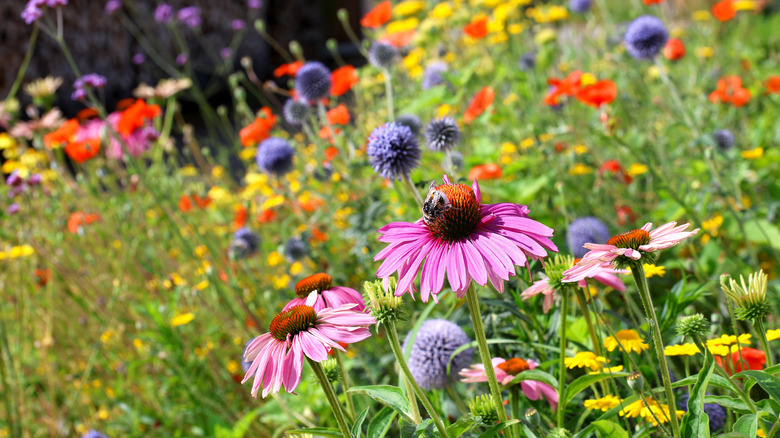
Lean into the chaos of nature by trading neat garden rows for a messier approach. Not all plants thrive in this type of environment, but native wildflowers do particularly well. Instead of planting seeds individually, simply scatter them over the whole area. If that's a little too much chaos for your tastes, however, you can create a sort of organized mess by planting your flowers individually, making sure not to leave them in neat rows. You can even combine methods by planting a few cultivated flowers individually and scattering wildflowers in between.
Incorporate textures
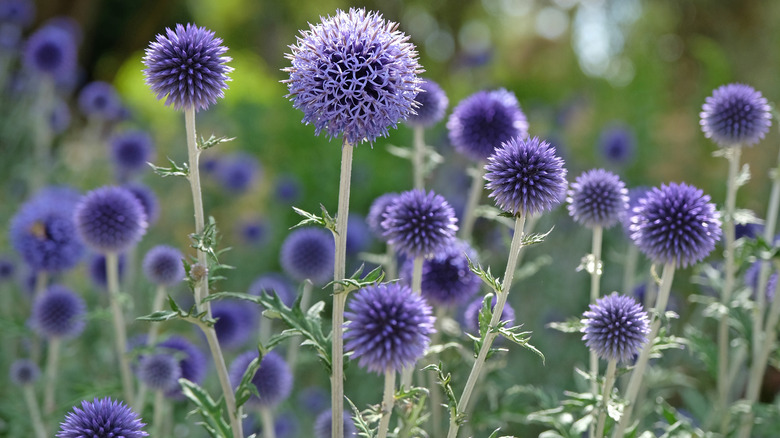
Vary the textures in your garden to create a flower bed that's more than just colorful. Globe thistle is a great choice for this, as it's hardy in USDA zones 2 through 8 and is gorgeous both fresh and dried. Statice flowers are short lived and have a narrower range, only hardy in zones 8 through 10, but the unique shape of their flower clusters and soft leaves make them an interesting choice nonetheless. Accent them with some ornamental grasses for a texture-rich flower bed your neighbors will envy.
Plant brown flowers
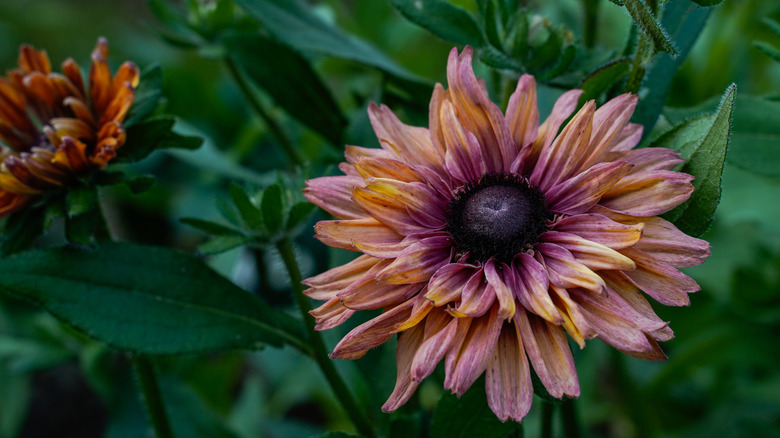
Warm brown is a trending color for bedrooms, but why stop there? Brown flowers are uncommon and unusual, meaning they can help make your flower beds stand out. Add a few brown flowers to accent other colors, or go all out with a solid brown bed! Plant 'Milk Chocolate' foxgloves in USDA zones 5 through 9 for warm, orangey-brown flowers, or opt for 'Sahara' rudbeckias for a broader range of shades in the same zones. For foliage, accent with any brown cultivar of heuchera in zones 3 through 9.
Grow edible flowers
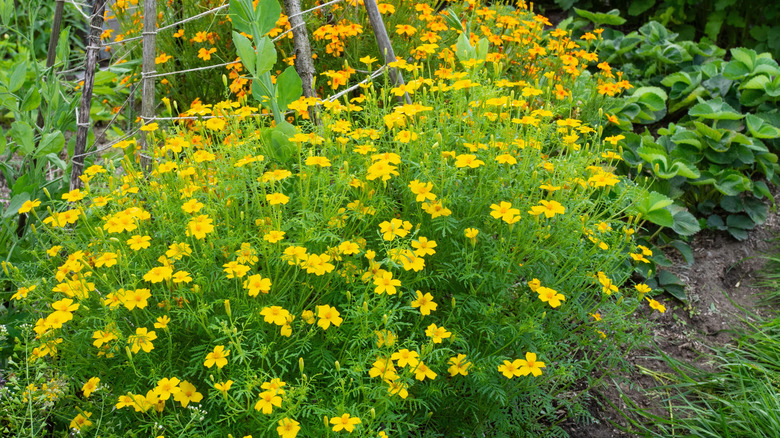
There are plenty of edible flowers you can grow, whether you use them as decorations on baked goods or add them to salads. Just be sure the flowers are actually edible, or you might end up with a different kind of reputation in the neighborhood! A few safe options are lavender in USDA zones 5 through 11, signet marigolds in zones 2 through 11, and sweet violets in zones 4 through 9. If you're looking for inspiration, check out these easy, but artistic, ways to use edible flowers.
Focus on scent
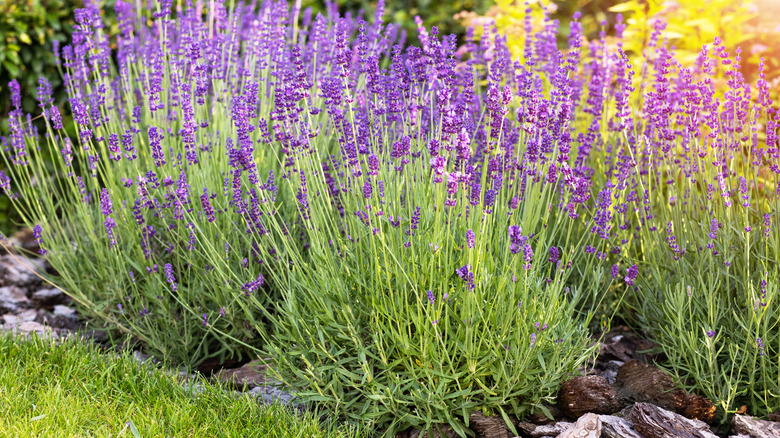
Create a sensory experience in your garden by designing your flower beds around scent. Plant strong-smelling flowers like lavender, geraniums, roses, hyacinths, and snowdrops near your seating area or along a pathway. Roses are hardy in USDA zones 4 through 11, depending on the variety, while geraniums have a narrower range of 9 through 12. Hyacinth plants are commonly hardy in zones 4 through 8, and some snowdrop varieties can be grown as far north as zone 2!
Make your borders pop
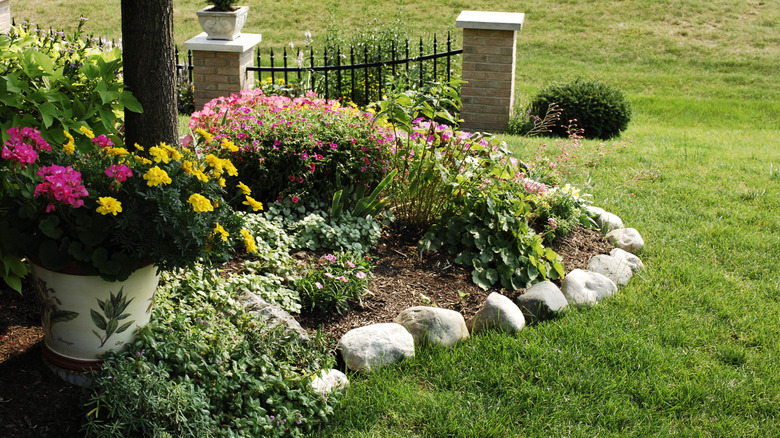
No matter how you fill the insides of your flower beds, you can highlight them more effectively by making the border pop. A well-crafted border can tie the entire bed together and emphasize the vibe you're going for. A naturalistic garden may benefit from a loose border of stones, while a more regimented garden will look better with a small fence or a line of bricks. You can even use additional plants as your border. Smaller plants work better for this, since you don't want anything that will block your view of the other flowers — or, worse, spread out of control.
Pick a fun theme
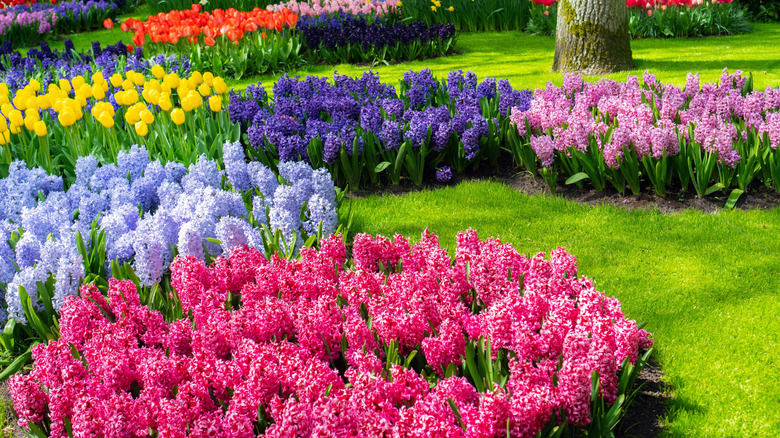
Create a wholly unique flower bed by sticking to a theme. This could be as obvious as planting flowers that are all the same color, or as subtle and strange as choosing plants that all start with the same letter of the alphabet! Some other fun options include flowers that appear in your favorite movies or types that are mentioned in songs you enjoy. Not only are themed beds fun to create, but they come with an interesting story to tell your neighbors.
Garden in multiple dimensions
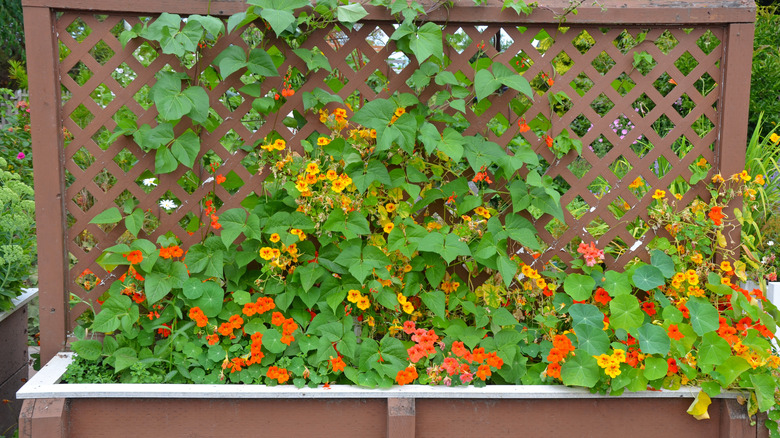
Consider adding more height and depth to your flower beds by playing with height. Adding a trellis and climbing plants to your flower bed is an easy way to make your flat flower bed more dynamic, but there are other options as well. You could strategically use raised garden beds to create a terrace effect, or break out the shovel and turn your bed into a slope or mound. Just keep in mind that water will drain down the slope, so any flowers located at the bottom will need to be slightly more tolerant of wet soil.
Take inspiration from artwork
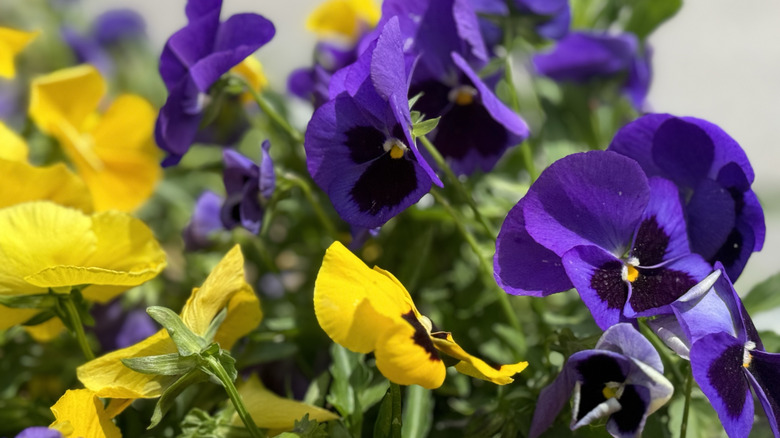
If you want your flower beds to have a theme but prefer elegance over whimsy, take inspiration from your favorite artworks. You don't need to recreate the entire painting — unless you're feeling particularly ambitious — but look at what colors were used and try to find flowers that match. Use deep blues and bright yellows for a flower bed reminiscent of Van Gogh's "Starry Night," for example, or plant scattered pink flowers surrounded by dark blue and green foliage to mimic Monet's "Water Lilies." This idea is particularly helpful if you're worried about clashing colors in your flower bed, since you'll already know they match.
Create an oasis
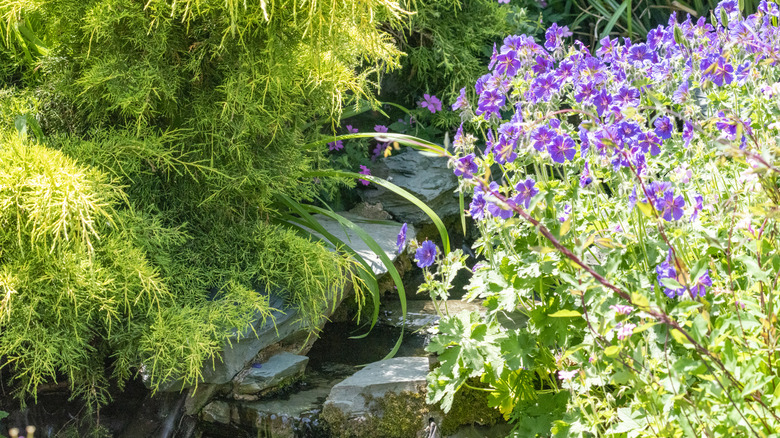
Your flower beds don't need to be visible to be impressive. Create a hidden oasis for your guests to marvel at by planting a ring of taller plants with a small path leading into the center. This can then be filled with chairs, smaller shade-loving plants, or even a water feature. American giant sunflowers are annuals that can grow up to 16 feet tall in USDA zones 4 to 9, making them a good choice for a temporary glade. Alternatively, choose a perennial shrub like rhododendrons in zones 4 through 8.
Focus on wildlife
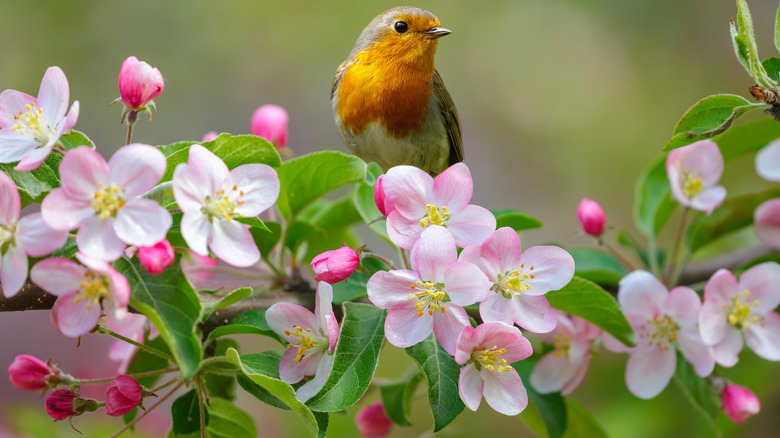
According to the National Wildlife Foundation, gardens that focus on wildlife and the local environment trend every year. Embrace this by filling your flower beds with native flowers that appeal to animals and pollinators. Native wildflowers like rudbeckias, purple coneflowers, and sunflowers provide seeds for birds and pollen for bees and butterflies. Nectar-producing flowers will also draw in pollinators, including hummingbirds. Popular options include columbine and wild bergamot. Coneflowers and columbine are both hardy in USDA zones 3 through 8, while wild bergamot can be grown in zones 4 through 8.
Play with scale
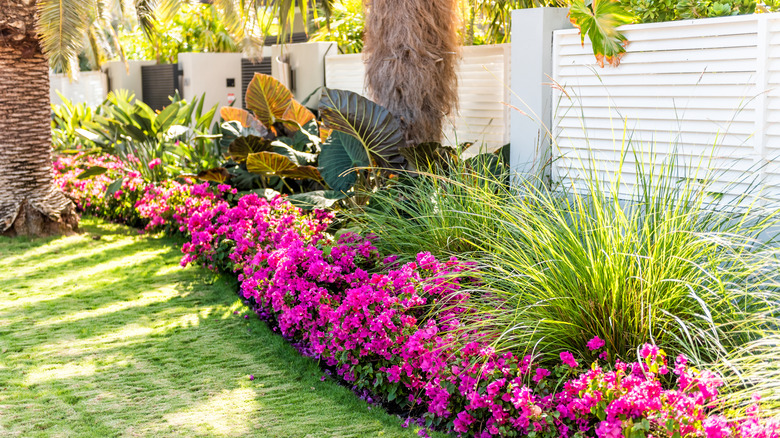
Make your flower beds stand out by varying the size of the beds and flowers. Mix tiny flowers like snowdrops and violets with taller ornamental grasses, shrubs, and trees. You can grow both dwarf and standard varieties of the same plant for a dramatic look — or create fun optical illusions by planting giant versions of smaller plants alongside smaller versions of large plants. For example, plant American giant sunflowers around a dwarf hydrangea, such as the 'Ivincibelle Wee White,' which can be grown in USDA zones 3 through 8.