

Stop! These Types Of Firewood Should Never Touch Your Fireplace
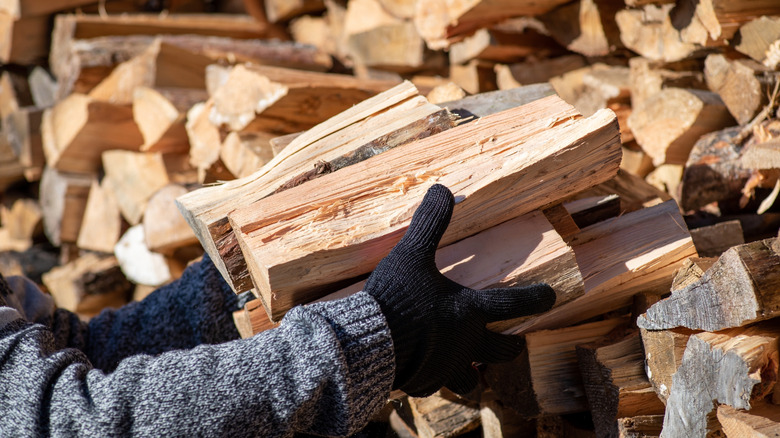
Sitting back while watching a fire burn brightly in a modern fireplace is a peaceful, relaxing experience. The flames can be mesmerizing, lowering stress and creating a sense of satisfaction. Unless you choose to burn types of wood that should never touch your fireplace. In that case, it can be a smokey, stinky and even dangerous situation — and one you should avoid.
The most important category of wood to avoid burning is freshly cut logs. Freshly cut wood (known as "green" wood) contains an amazing amount of water. As such, it is hard to light on fire and generates vast quantities of smoke, not much heat, and builds up creosote in your chimney very quickly. Too much creosote can lead to dangerous chimney fires. Once a log has been "seasoned" — meaning properly dried — it will burn hotter, and create better coals for longer lasting heat with less smoke and creosote.
The next category of wood you must never burn is treated lumber, painted wood, and man-made material, such as plywood and MDF. All of these products have dangerous chemicals that will produce toxic fumes and smoke.
Never burn these species
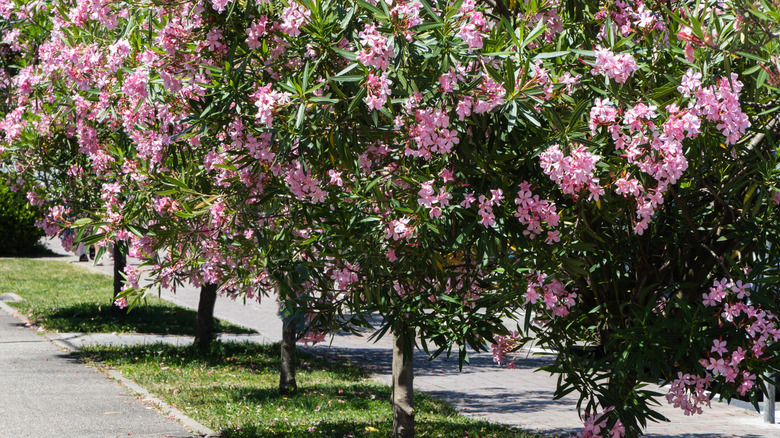
In addition to manufactured wood products containing dangerous chemicals, there are trees and bushes that make hazardous smoke when they burn. Oleander is one of them, as it contains the toxin, cardenolide glycosides. Yew, another coniferous wood, contains taxines that can create dangerous fumes when burned. All of the plants (although they are not trees) with "poison" in their names — poison sumac, poison oak, poison ivy — should never be burned. Curiously, driftwood is often listed among the types of wood not to burn. The danger appears to be in the salts or other chemicals it can absorb as it drifts to its resting place.
A couple of tertiary concerns: don't transport firewood long distances, as you can inadvertently contribute to the spread of invasive pests. While technically not wood, it's also best to avoid burning paper products — especially paper with printing and colored ink on them — in your indoor fireplace. Again, it is the presence of industrial chemicals that make them likely to produce hazardous fumes, so it's best to avoid the potential danger.
Proper wood to burn in your fireplace
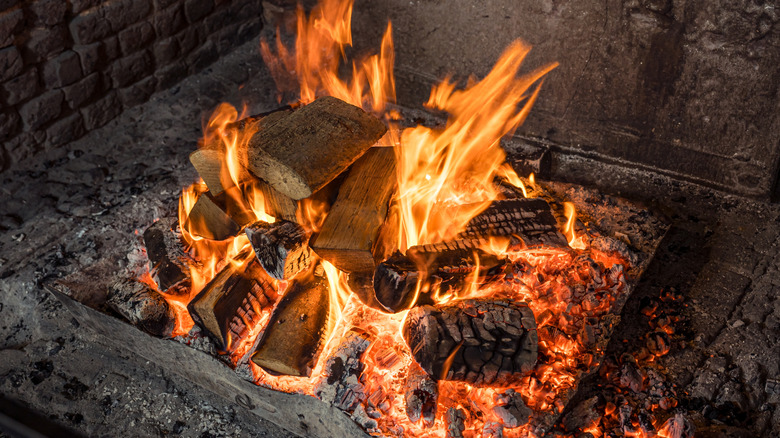
Dense hardwoods like oak, elm, hickory, birch, maple, Osage orange, hackberry, ash, black locust, and beech are some of the best types of firewood once they are seasoned. They burn clean, produce great coals and more heat per stick than other hardwoods. The rule of thumb is that the denser and heavier a wood is, the more heat or BTUs (British Thermal Units) a piece of wood will produce per pound. Softer (less dense), less heavy hardwoods like aspen, willow, and basswood produce less heat, meaning they are less desirable to burn. If well-seasoned, they are safe to burn, but not ideal for these reasons.
Softwoods like pine, cedar, spruce, fir and other coniferous trees are similar to the less dense hardwoods and produce less heat per pound of wood. They also contain pitch, which can pop (like a very tiny explosion) sending sparks flying — this can be dangerous in a fireplace situation. If they are properly seasoned, however, they can be usable firewood, so long as heating is not a primary consideration.