

Before You Throw Out Wood Ashes, Try This Icy Driveway Trick
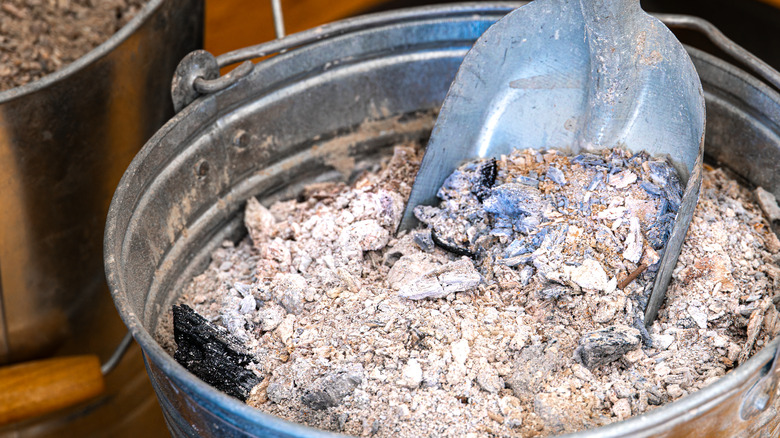
If you heat your home with a wood-burning stove or fireplace, don't just throw away your ashes! There are numerous ways you can reuse the wood ash. And if you live in a colder climate — which, if you're heating with wood, you probably do — you need to try this old-school de-icing technique.
Using wood ash as a natural de-icer is not only effective but far more environmentally friendly than using something like rock salt, which you should think twice about using due to its corrosive nature. By comparison, wood ash provides excellent traction when sprinkled liberally over packed ice or snow. It sticks like glue to the ice and snow, creating that necessary layer that will help keep you from tripping or slipping as you go about your business.
The one main downside to using wood ash as a method of de-icing is that you need to produce a good amount to use it effectively. Of course, if you are using a wood-burning stove to heat your home and generating a lot of wood ash, this isn't a problem. However, if you're only using your wood stove as a supplement to your primary heating source, or just using a fireplace occasionally throughout the season, you are not going to generate enough ash to make this worthwhile. One user on a Hearth.com forum commented that he needed 30 gallons of ash to cover 50 feet of driveway, so you need a lot to make this viable.
How wood ash melts ice and snow
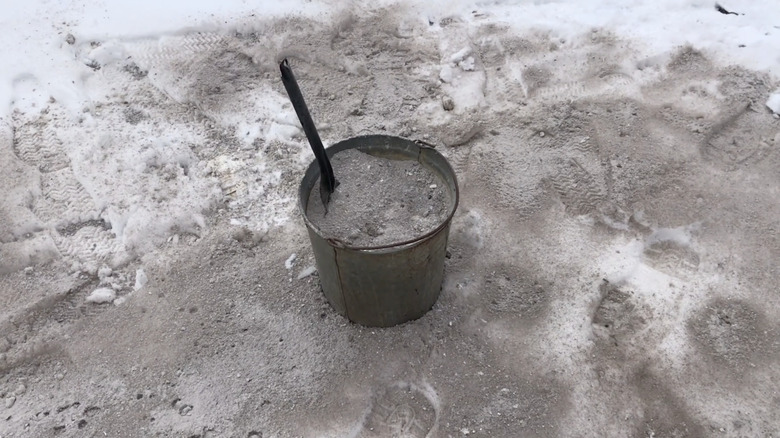
What makes wood ash such a good material for melting ice and snow is exactly what makes it so good for certain plants in your garden. Wood ash (provided that it is from virgin wood and not pressure-treated lumber) is loaded with beneficial minerals like calcium, phosphorus, magnesium, and — most importantly for de-icing purposes — potassium. The ions present in the potassium attract water molecules and help lower the freezing point of the ice, effectively melting it into water. It's for this reason that potassium chloride is also an enormously effective de-icing material.
Another chief benefit provided by wood ash comes from its naturally dark color. When spread over snow, the dark wood ashes will absorb more heat from the sun overhead. That heat absorption, when combined with the ice-fighting power of potassium, can melt away snow and ice incredibly well.
Yet another plus of using wood ash for ice melt its effects on your lawn or the surrounding environment will not be as adverse as salts might be. Being a natural material, the wood ash will eventually melt back into the earth along with the snow — just another reason why you should save your ashes instead of throwing them away. However, avoid using wood ash near any plants that require an acidic pH environment or near new seedlings, as the basic wood ash may negatively impact their growth.