

The Truth About How Often You Should Clean Your Bird Feeder (Really)
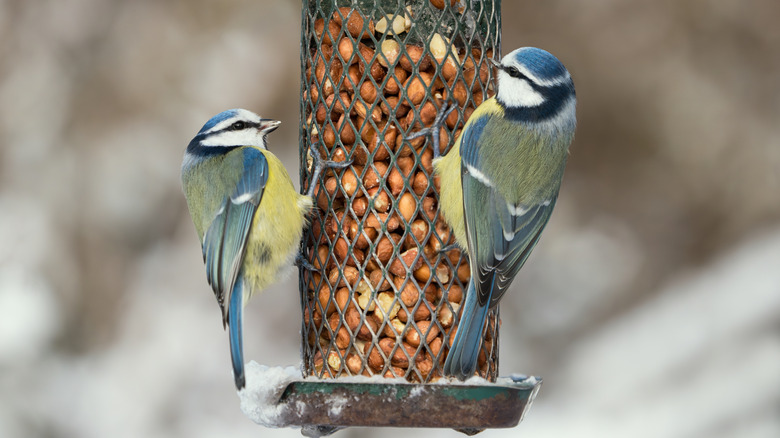
Whether you've got just one bird feeder or a bunch of chic feeders doubling as outdoor decor, cleaning these items regularly should be high up on your list of yard maintenance tasks. Dirty bird feeders can become a hub for bacteria, mold, and parasites that may have been left from bird droppings. The seed you use might also get spoiled from exposure to weather. Neglected feeders can easily become dangerous as a result, so it's best to keep a regular cleaning schedule. The question is, how often should you clean them?
You should be emptying and cleaning your bird feeders about once every two weeks. This will help prevent any bacteria, like salmonella, from forming in the seed. It's also important that you clean any seed hulls, dropped seed, or bird poop from underneath your feeders, as mold and bacteria can spread just as easily on the ground as it can on the feeder. Increase your cleaning frequency if your feeders are seeing above-average use, if there's been a lot of rain, or if you notice any sickly birds in your yard.
Hummingbird feeders need to be cleaned more often, owing to the higher sugar content in their liquid feed. High heat especially can encourage the sugar water to ferment, which can be deadly for hummingbirds. Cleaning the feeder every few days and changing out the sugar water accordingly is going to help prevent any mold or bacteria from harming the hummingbirds in your yard.
How to clean your bird feeders
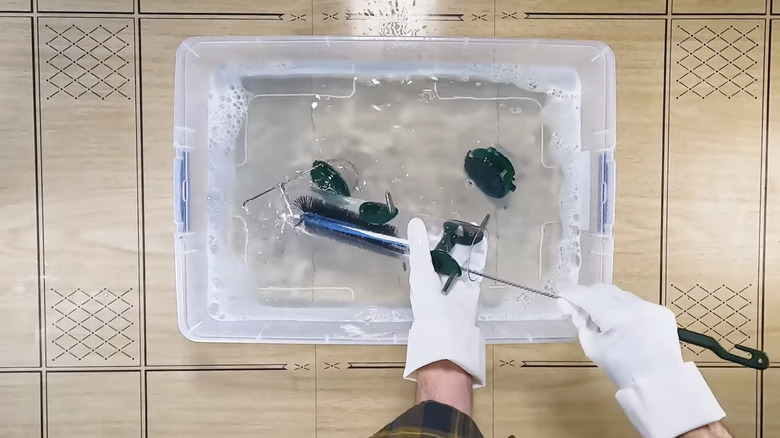
Unless you've made yourself an egg carton bird feeder, which can easily be disposed of after use, you're going to need to get into those bi-weekly cleaning patterns. This pertains to all types of bird feeders, even ones made out of wood. If you do have a wooden bird feeder, you should soak it with a hot water and vinegar solution, rinse it with hot water, then dry it completely under the sun.
If you have a tube feeder or metal basin, you can use your dishwasher on the hottest setting. That said, you may be better off soaking these types of feeders in a dilute bleach solution for 10 minutes. This will help lift off any stuck on grime or seeds, as well as kill any bacteria that has potentially stored up inside. Rinse thoroughly and allow the feeders to dry completely before refilling with seed.
If you have a copper bird feeder, you can use the aforementioned method to clean it, but you will need to take some extra steps after drying in order for it to maintain its luster. To keep your copper feeder from discoloring, buff it out with copper cleaner, then seal it with a clear lacquer. With luck, your copper feeder should maintain its shine for many years — and bird-feeding seasons — to come.