

The Safest Deicer To Use On Your Driveway During Freezing Winters

Anyone who lives anywhere that sees snow and ice on a regular basis understands the importance of utilizing ice melts. Rock salt tends to be the most commonly used, partly due to its affordability, but also because it is one of the most effective types of ice-melting salts. The unfortunate downside to rock salt is that it is not really safe to use. It can cause severe skin irritation and can have a negative environmental impact. This begs the question: What is the safest deicer to use on your driveway this winter?
Consider using calcium magnesium acetate (CMA) instead. Calcium magnesium acetate is a chemical compound composed of measured parts calcium, magnesium, hydrogen, and oxygen. It is sold as pellets, granulated crystals, or fine powder. In use, CMA is similar to its chemical cousin, liquid magnesium chloride, in that it works best as a pretreatment on your driveway. This means that if you apply CMA to your driveway before a winter storm hits, it will work to keep the ice from sticking to the pavement.
However, the biggest pro of using CMA is that it is environmentally friendly. This is thanks to the absence of harsh chemicals like sodium and chloride, both of which have been shown in studies to cause potentially irreparable damage to plant life and harm local watersheds. CMA is totally biodegradable, meaning that it has little to no negative impact on your landscaping or the surrounding environment.
Calcium magnesium acetate is a safe deicer with limitations
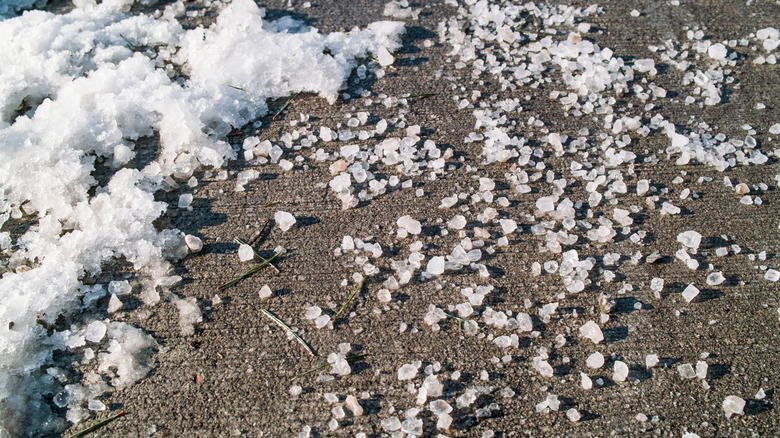
Another major plus to using calcium magnesium acetate (CMA) is that it is safe to use if you have pets and greatly reduces the potential skin irritation pets can experience when they walk on areas covered with rock salt. This lack of harshness also makes CMA an excellent option for driveways made of more fragile types of concrete, which can be corroded by calcium chloride.
All this said, there are some serious limitations to using CMA. For starters, it is not fast-acting. Unlike harsher ice melts, CMA does not dissolve thick or compacted ice quickly. If you need speed melting, look into purchasing calcium chloride, which is highly corrosive but will get the job done in a jiffy.
Another con of CMA is that it is not effective in temperatures below 20 degrees Fahrenheit. This makes it an excellent option for areas that see milder winters, but less so for places that experience long spells of very low temperatures. Then there is the cost to consider. A 44-pound bag of CMA is going to cost around $150. This is because it is more expensive to produce than rock salt or calcium chloride. While this could put some customers off, the environmental benefits and the ability to plan ahead to prevent ice buildup are enough to justify the cost for others.