

Your Spider Plants Will Thrive With The Help Of An Unexpected Kitchen Liquid
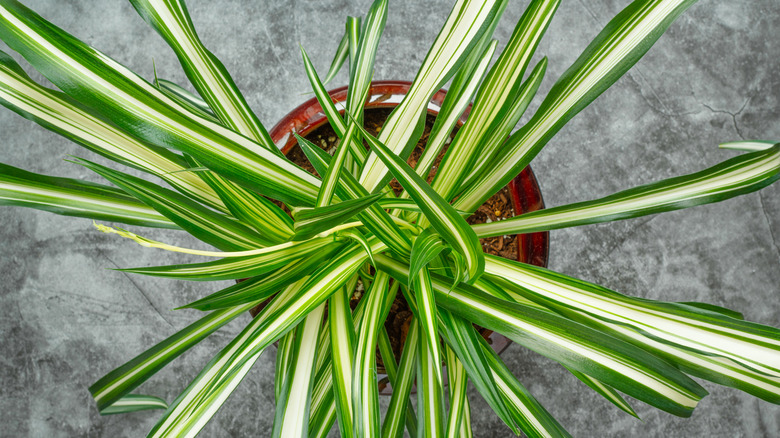
Despite being one of those easy-to-care-for house plants that actually thrives on neglect, you still need to put in some effort into making sure your spider plants (Chlorophytum comosum) grow at their best. With its tall, light green foliage, spider plants bring their own character, vibrancy, and brightness into any space. And while its watering requirements are minimal, there is an unexpected kitchen liquid you can use to make sure that your spider plants remain healthy long term: rice water.
As it sounds, rice water is the byproduct of soaking, cooking, or fermenting rice. It contains high amounts of starch, nutrients, and microbes that spider plants absolutely love. The starch is stored in the plant's roots to build up lasting energy stores, while the all-important nitrogen, potassium, and phosphorus helps inoculate the soil with the necessary nutrients for optimal growth. It's worth noting that it's nor just spider plants that benefit from rice water. Several other houseplants also love it, including succulents and orchids.
It's important to know that rice water needs to be applied marginally. If you use too much rice water on a plant, it can encourage mold growth, lead to soil hardening, and attract insects looking to feed on the natural sugars and starches. Once-a-month watering is sufficient to provide your spider plant with the rice water's nutritional benefits. You can draw this out to once every other month during the winter when spider plants need less watering.
Types of rice water for spider plant care
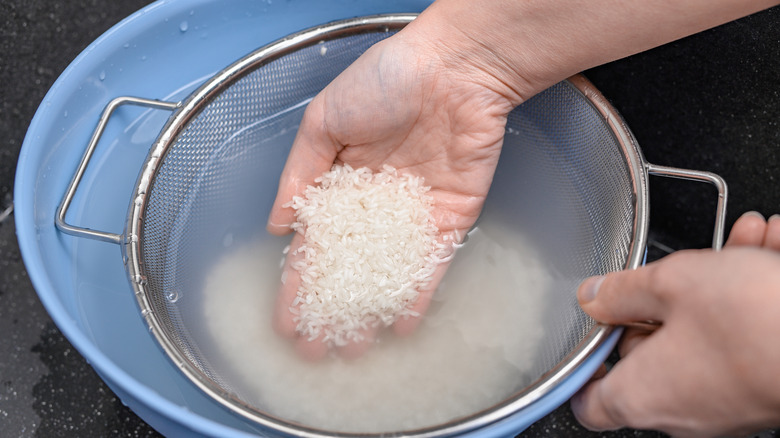
Making rice water for your houseplants is not difficult. All you need is rice and water, and you can achieve the end product through cooking, soaking, or fermenting. To use the cooking method, add a half cup of rice to two cups of boiling water. Cook until the water becomes cloudy, which is the sign that the starches and nutrients have been taken out of the rice. Allow the water to cool, then sieve through a fine mesh strainer into a clear container.
The soaking method requires a three to one ratio of water to rice and for the grains to soak for a half an hour or longer. While soaking, the rice can leach up to 70% of its water-soluble nutrients, supercharging what may otherwise have become waste water. Mix the rice with your hands every few minutes to activate the starches and get the water cloudy.
The fermentation method is a little more involved, but is the best in terms of getting the most microbes and beneficial nutrients out of the water. Take a scoop or two of cooked rice, cover it with water, and allow it to ferment for up to two weeks. Once the fermentation is complete, separate the rice from the water and store it in a clear container or spray bottle. This method will yield a heavily concentrated rice water, which will need to be diluted with regular filtered water before application to your spider plants.