

Always Keep Your Rice Water: Here Are The Plants That Love It
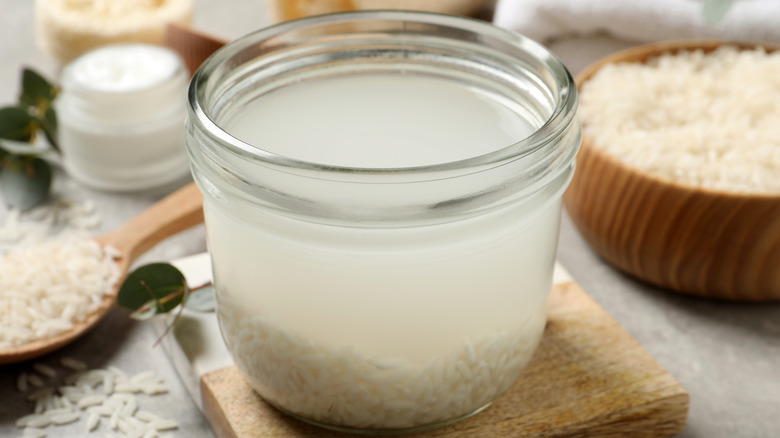
Humble leftovers can save the day, and not just when you're too busy to cook dinner. Water left over from boiling, washing, or fermenting rice can nourish both your houseplant collection and your vegetable garden. Some gardeners even use this liquid as a germination-promoting seed soak. You can either put rice water in a watering can and shower it on your plants' soil, or pour it into a spray bottle and spritz it on their leaves. Whichever method you select, don't use it more than once a month, as starch can accumulate, making the soil crusty and attractive to bugs.
Boiling rice tends to give the leftover liquid the highest starch content. This type of rice water makes a great fertilizer for orchids and other carbohydrate-craving flowers, but you may want to reserve some for the rest of your plants. Fermented rice water is ideal for your vegetable garden since it encourages the growth of bacteria that can raise the soil's nitrogen levels. This is beneficial for tomatoes, eggplants, cabbages, and other vegetable plants that extract substantial amounts of nutrients from the soil. These microbes also make potassium and other nutrients more soluble. When this happens, these nutrients become easier for your garden's plants to use.
Your indoor plants will also appreciate the mild nutrient boost that any form of rice water provides. Succulents and spider plants are particularly fond of rice water, as are ferns grown as houseplants. If you're growing an indoor herb garden, make sure to save a bit of rice water for its plants, too. Potted basil, mint, and parsley are bound to thrive when given this liquid fertilizer.
Making probiotic rice water for your plants
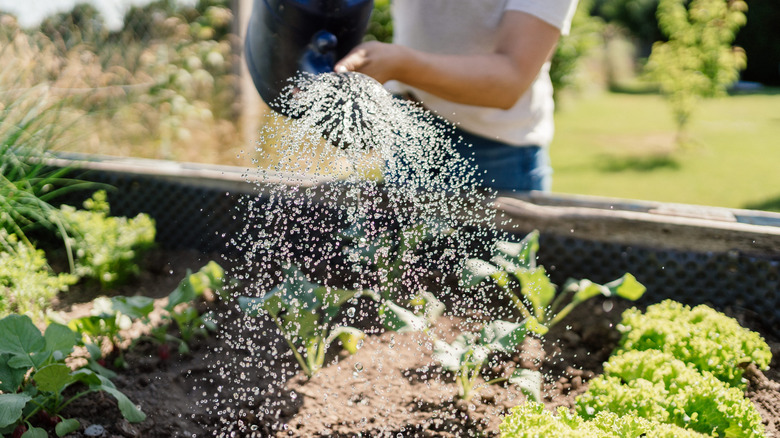
While the liquid from just-cooked rice can be helpful to your plants, fermented rice water may be even better, especially if you're growing leafy green brassicas, such as choy sum (Brassica chinensis var. parachinensis). Like watering plants with whey, applying this liquid can increase the soil's nutrient content naturally. As an added bonus, fermented rice water provides microbes that bolster soil health in other ways.
Though rice water isn't a heavily studied substance, a few research teams have investigated its effects on plants. A 2022 study in the journal Agronomy showed that rice water fermented for 3 days boosted the size and yields of choy sum plants in a lab. The researchers noticed that fermented rice water led to larger populations of bacteria believed to promote plant growth, as well as nutrient content improvements similar to those provided by a conventional nitrogen-phosphorus-potassium (NPK) fertilizer. They concluded that fermented rice water holds great promise for supporting the health of an array of vegetable plants.
Try making a similar fermented fertilizer by boiling or soaking rice in water for 30 minutes, then letting it sit for at least a few days. The more days your rice water ferments, the more helpful microorganisms it's likely to have. For optimal fermentation, fill ¾ of a container with regular rice water, add 4 tablespoons of milk and 1 teaspoon of sugar, and give the mixture's microbes 3 days to multiply. Strain the liquid before feeding it to your veggies, herbs, and flowers.