

Ditch Your Snow Blowing Technique: Here's The Better Way To Clear Driveway Snow
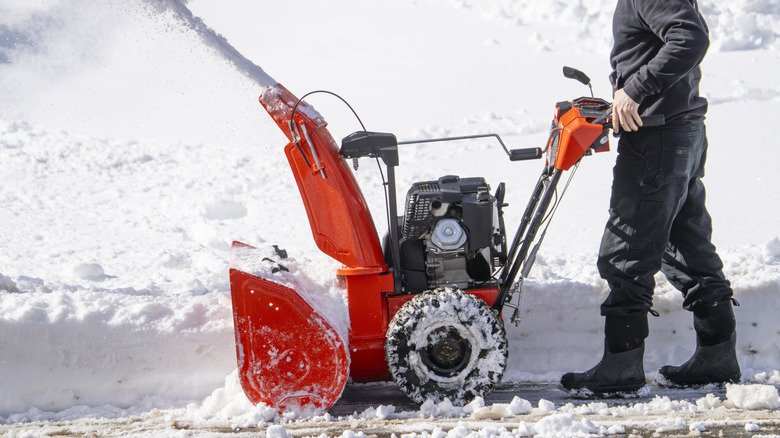
In New England, especially here in New Hampshire, everyone is a snow removal expert. As a result, everyone has opinions on the "right" way to do things. You'll hear people say: "A metal shovel is better than a plastic shovel" or "Just put a tarp down, it'll be easier to get the snow up." I take these suggestions with a grain of salt, because every driveway is different. One method I do ascribe by, and will often recommend to those who ask, is this: don't wait until the snow has stopped to snow blow your driveway.
Waiting the storm out is a common snow blowing technique I see practiced all the time. Once the snow stops they fire up their snowblowers and start sending snow flying. It's easy to understand why people like this method. Why go out multiple times when you only need to go out once? Well, that one time could mean that your snowblower is tackling more snow than it was meant to handle.
While there are some enormous snowblowers out there, most were not designed to take on large drifts. When you're facing down a ton of snow, you put more stress on the machine, your snow won't fly as far, it'll be harder to push through, and you could easily overheat the engine or cause the machine to jam. Instead, you should snow blow as the snow is falling in order to get maximum performance out of your machine.
Clear your driveway every 6 inches of snow
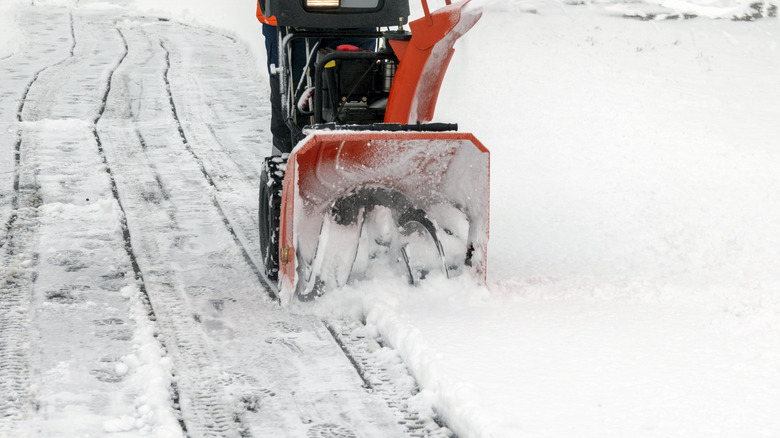
The snowblower I currently have is a smaller model with a 5.5 horsepower engine. It's seen its share of heavy snowstorms, and has been a trooper through them all. However, it tends to get upset when the snow accumulation gets to be above 6 inches. This is because, like many other types of snowblowers, mine was built to deal with accumulation, not established snow drifts. Whenever I've made the mistake of waiting until the snow has stopped to clear my driveway, my snowblower works far harder for a lesser result.
While I understand the frustration of making multiple passes of your driveway, doing so is going to be a lot better for you and the machine. You can simply allow the machine to do the work of throwing the smaller quantities of snow instead of you both struggling to get the bigger piles completed. Nearly all snowblowers can easily take care of 6 inches of accumulation. Only the truly larger snowblowers with beefier engines can take on the bulkier, heavier stuff.
What this often means is that you need to go out before the snow stops falling, which means you will have to go out again before the storm is finished. Especially for those just beginning to use a snowblower, it is far better to make several, easier passes than trying to fight with a huge pile of snow that could potentially cause irreversible damage to your machine.