

Shoveling Snow From Gravel Driveways? Too Messy - Here's A Better Solution
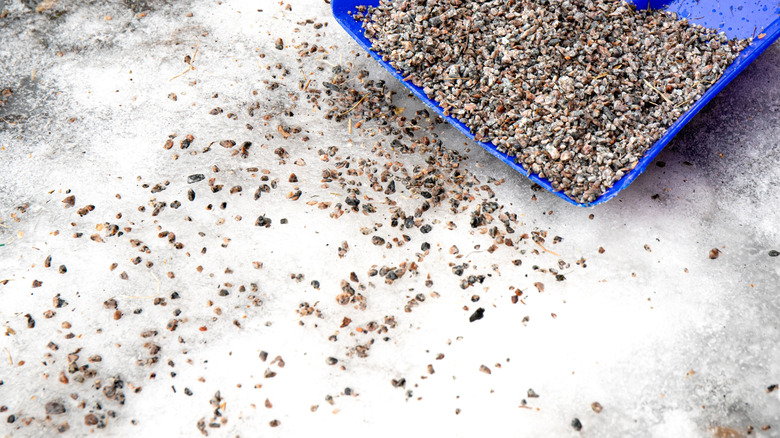
If you live in a rural area, you've likely driven by your fair share of gravel driveways — and you may have wondered how exactly those homeowners keep them clear in the winter without making an absolute mess. While there are methods of stabilizing loose gravel driveways, the fact is that shoveling or plowing snow away from these kinds of looser surfaces results in a fair amount of debris. It's also possible to have your driveway converted into paved asphalt, but that's not going to help you immediately during the winter time, and brand new asphalt driveways can cost anywhere between $1,500 to $13,000 depending on size. Luckily, if these ideas don't work for you, there is one more solution you could try.
If you're a gravel driveway owner who detests the mess that winter brings — and you can't splash out on asphalt — you may want to consider purchasing the same kind of high-tech heating mats that you use to melt the snow off of your stairs. A HeatTrack 2-by-10 driveway mat will cost around $1,000: While not cheap, this is significantly more affordable than the paving option, and it will effectively remove snow and ice without you needing to get frustrated by shoveling.
Are driveway heating mats right for you?
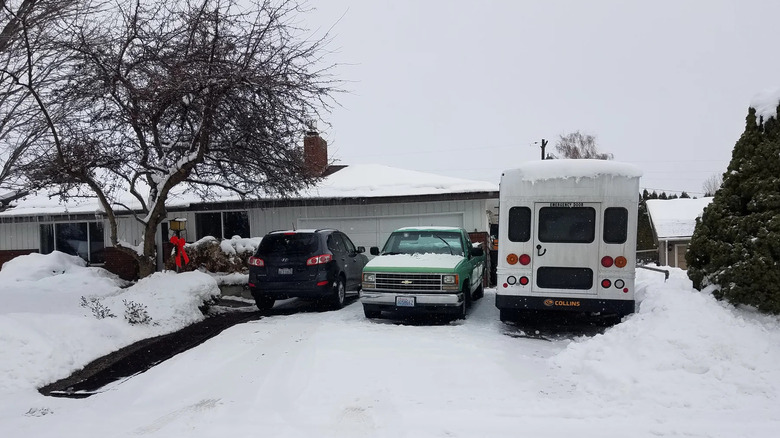
Heating mats are electric-powered thermoplastics that sit right on top of your gravel driveway. When it snows or freezes over, the heated coils inside the sturdy shell will melt all of the snow and ice away from your gravel. Depending on how thick the snowfall is, your driveway should be clean in a few hours at most.
As convenient as this sounds, there are a few things to consider before buying heated mats for your gravel driveway. In many areas, for example, unpaved gravel driveways are quite long and can run at steep grades. A standard heating mat isn't going to do you much good if your driveway has some length to it, unless you want to spend a lot of extra money lining your driveway with them. You'll also need to make sure the mats are placed properly to account for your car tires, and it's important to roll them out before it snows. You might also see a spike in your electricity bill if you use the mats regularly.
If that's not an issue for you, however, and if you've got a shorter driveway that's within easy reach of an outlet, then these mats may just do the trick. Yes, you could just get away with laying a tarp over your driveway for lighter storms, but you might be glad you made the extra investment when the heavier weather comes around.