

Say Goodbye To Rakes: This Neat Tool Makes Cleaning Up Leaves Faster And Easier
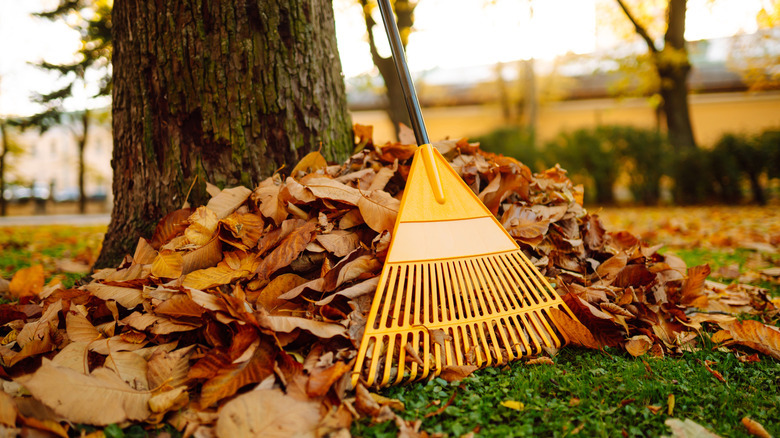
Though raking fallen leaves may start as an enjoyable yardwork task, it can quickly become overwhelming — especially if you're dealing with loads of mature trees, limited mobility, or an overstuffed schedule. Fortunately, there are several rake-free ways to clean up leaves, freeing up time for the autumn activities you enjoy most. Mowing your leaves instead of raking them adds soil-nourishing mulch to your lawn, but it's not for everyone. For instance, you may want to save dried leaves if you have a compost pile that needs a reliable source of carbon-rich materials during the winter. So, if you're amassing a large leaf reserve or crave the tidy look of leaf-free grass, consider buying a lawn sweeper. This easy-to-use tool can also pick up scattered sticks, grass clippings, and other materials you'd normally have to rake up.
You're likely to find two main styles of lawn sweepers at the home improvement store. In a nutshell, some are meant to be pushed and some are meant to be pulled. Often called tow-behinds, the lawn sweepers you pull are typically larger than those you push. Tow-behinds also attach to riding mowers, which drastically reduces the physical labor of leaf cleanup. Pulling one of these across your grass causes a set of brushes between the wheels to spin. The spinning brushes then grab fallen leaves and toss them into a hopper attached to the sweeper. In other words, a tow-behind sweeper operates a bit like a vacuum with a brush roller. A push sweeper works in a similar way, but the spinning results from the user moving the contraption forward from behind. Lots of people find push mowers simpler to steer.
How to choose the right lawn sweeper for your yard
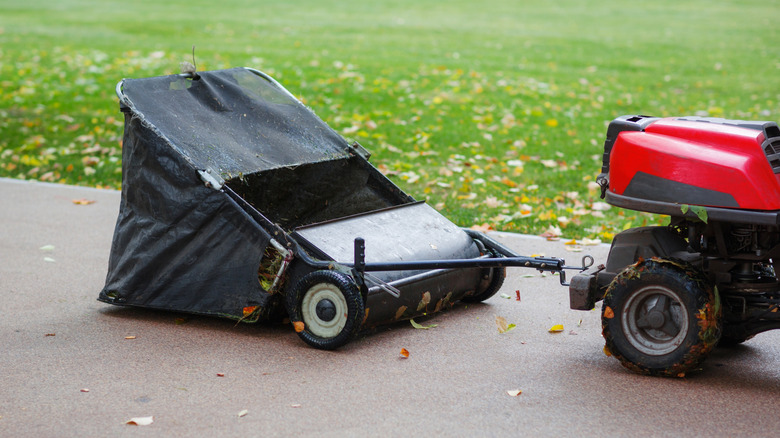
There are a few factors to consider when shopping for a lawn sweeper, including the size of your yard and the volume of leaves it receives in the fall. In general, look for a sweeper with brushes that will touch the lawn numerous times with every rotation of the wheels — this is known as a high brush-to-wheel ratio. Also, be sure that the capacity of the bags in the sweeper's hopper is a good match for the size of your property and the number of trees in your yard. If your yard is relatively small, smaller bags should be fine. If it's on the larger side, or you have tons of large trees, go with larger bags, which will help you finish leaf cleanup as quickly as possible.
A lawn sweeper with adjustable brushes can also simplify leaf collection and other lawn cleanup tasks. Moving the brushes into a higher position is useful for picking up leaves that have dried out, while shifting them into a lower position can help them grab damp grass clippings more efficiently. Some sweepers can even handle pine cones, acorns, and other items that would wear down the blades of your lawn mower. Whether you settle on a modestly sized push model, a tow-behind behemoth, or something in between, make sure to choose a sweeper you're confident you can assemble and have plenty of room to store. If you haven't got enough space for a lawn sweeper in your garage, it may be time to consider building a simple storage shed in the backyard.