

Ditch The Rakes: 5 Smarter, Easier Ways To Clean Up Fallen Leaves In Your Yard
We may receive a commission on purchases made from links.
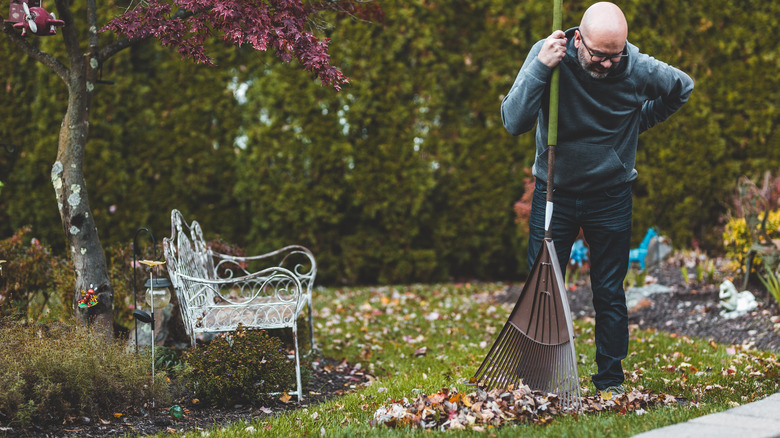
The annual (eternal?) task of collecting and disposing of leaves is one that meets mixed reviews. Some folks just love the task, spending time outside, beautifying their lawns, and enjoying fresh air. For others, it is an advancing apocalypse, inspiring dread as fall approaches. Not to mention, due to its environmental impact, there's controversy behind raking your leaves. When it comes to this autumnal ritual, there is little middle ground.
Rakes have long been the go-to tool for collecting autumn deciduous detritus. But what if you could avoid rakes altogether? Even though our modern versions are well-designed and extremely effective at moving leaves across your lawn into a big pile, they are still the same tool we have been using for generations. And they still leave us with a big pile of leaves that we need to do something with, and often an aching back. Certainly, there must be modern, possibly better, options than a rake. In fact, there are! Here are some of the best updated leaf removal tools, including leaf vacuums, lawn sweepers, and mulching mowers.
Gone with the wind: leaf blowers
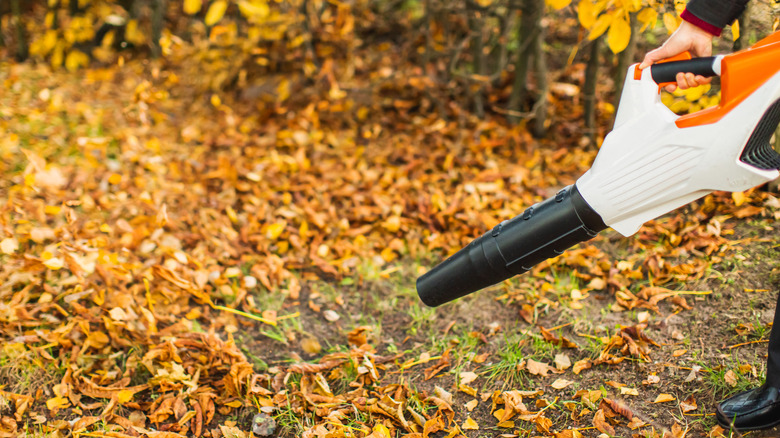
The roar of leaf blowers bugles the announcement that the leaf-gathering season has begun across the neighborhood. These machines replace rakes by using high-velocity air, over 100 mph, blown through a long tube, allowing you to direct the leaves where you want them. Early models were primarily used by lawn professionals and were powered by internal combustion engines worn on their backs. While quite effective, they were generally very loud and expensive. Now, there are scores of homeowner-appropriate versions available — some with gas-powered backpacks, others electric-powered by an extension cord, or cordless battery-powered models. Priced from under $100 to several hundred dollars, you can find them online and at hardware and big box stores.
Depending on your model, you may need to wear hearing protection, but when using any leaf blower, eye protection is important. Blowing leaves and detritus around can easily throw harmful particles into your eyes. Protective masks may also be required if the lawn is very dry and producing dust. As a downside, you will still have a pile of leaves to deal with after a day of blowing them around.
Blower-vacuum combos
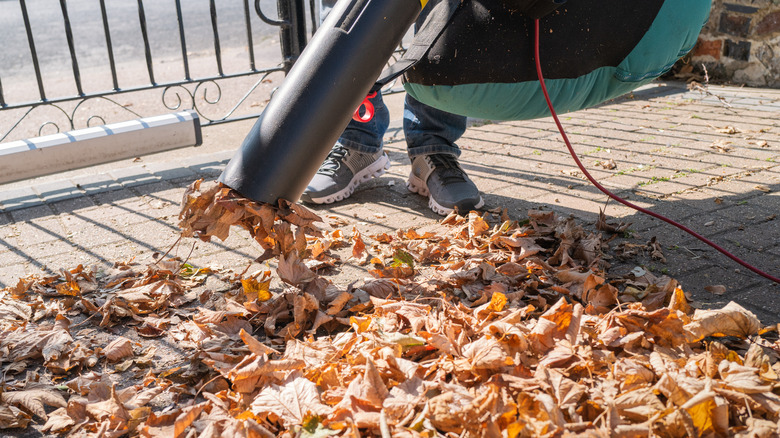
There is a subset of leaf blowers that do more than just make a mighty wind. They do indeed perform as a typical leaf blower in one of their configurations, but they have another trick up their sleeve. They can be converted to a leaf vacuum. This is exactly what it sounds like — they vacuum up fallen leaves in the same manner that your vacuum cleaner collects dust and dirt inside your home. These products can also be used as an outdoor vacuum for pine needles. These leaf vacuums generally suck up the leaves and send them to a bag that is often worn on your back. When the bag fills up, you need to empty it somewhere, whether that's into yard waste bags, garbage bins, or a mulch pile.
One big advantage they provide, in addition to removing the leaves from your yard, is that they chop up the leaves into small pieces. The turbine that creates both the blower air and the vacuum action has an impeller that mulches the leaves as they pass through. This reduces the volume of the leaf waste considerably, which can be a big advantage. One downside is that the bags can fill up quickly, requiring regular emptying. Another is that twigs and other non-leaf lawn waste can clog the vacuum or get caught in the impeller.
Lawn vacuums
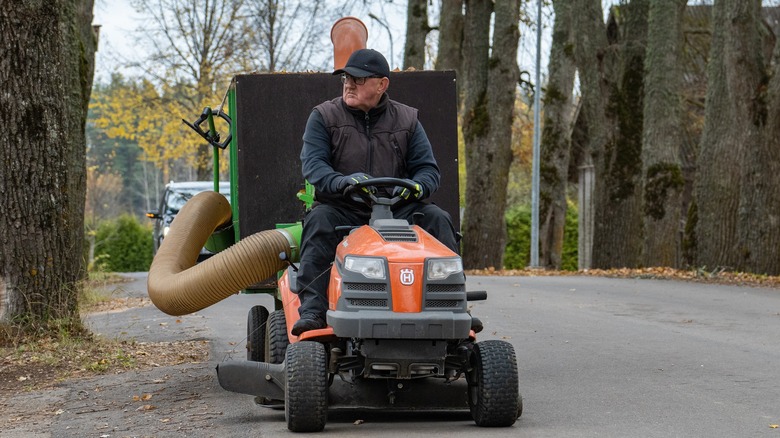
Lawn vacuums are specially designed machines that remove leaves from your lawn. Unlike blowers and vaccuums, these machines are more substantial and much more powerful. As such, they are less likely to clog or have any challenges in that way. There are walk-behind versions, which look similar to a traditional lawnmower, and versions designed to be pulled behind lawn tractors.
These are serious machines, and their price tags reflect that fact. Ranging from several hundred dollars up to more than two thousand dollars and super-sized, they are impractical for smaller yards but phenomenal for large ones with a major leaf problem. They collect the leaves into a receptacle as the driver rides. The only problem is that, just like when you're using a rake, leaf blower, or any of the vacuum systems, you will need to figure out what to do with the leaves afterwards, which can be fussy and labor-intensive.
Lawn sweepers are like an automated broom for the lawn
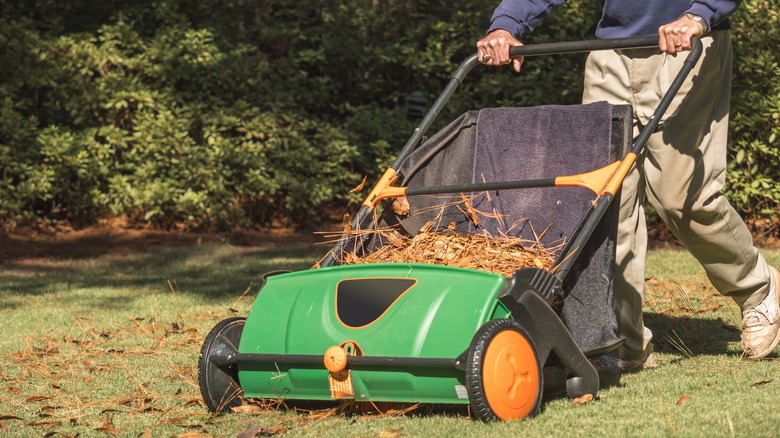
Once again, the name of this product gives away how it works. Lawn sweepers use a rotating brush to sweep up leaves and all manner of yard debris into a waiting bag or compartment. One advantage of these sweepers is that they are more effective in sweeping up yard stuff other than just leaves. Sticks, walnuts, and other items that could frustrate a blower/vac are no problem for a lawn sweeper. Like many of these leaf-collecting products, sweepers work best in dry weather with dry leaves.
Lawn sweepers come in a few types. Some are stand-alone push models, which can be either powered or manual (using the motion of the wheels to spin the brushes, like an old-fashioned reel mower). Others are tow-behind models that attach to a lawn tractor. Prices vary widely, from about $100 to more than $500, depending on size and features.
Mulching lawn mower
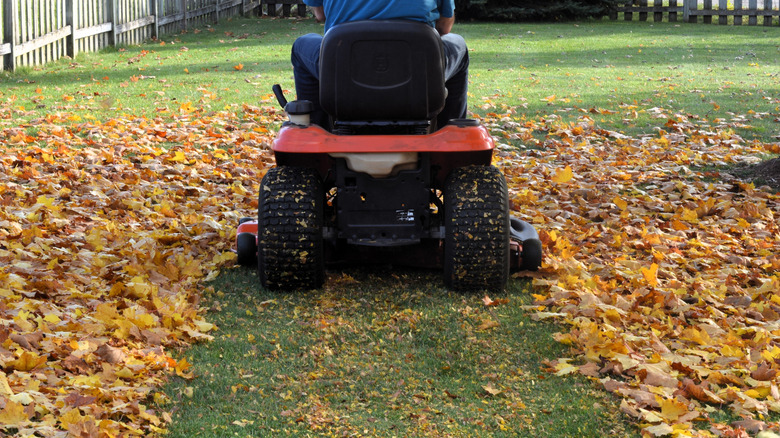
Lawn mowers specially designed to mulch lawn waste, whether it's mulching grass or leaves, are innovative machines that solve a couple of problems beyond leaf removal, such as disposing of leaves and fertilizing your lawn. They are outfitted with specially-shaped blades that chop the grass or leaves into very small pieces as you mow. Those small bits are left on the lawn to become an enriching organic mulch. That mulch will enrich your lawn's soil and even save you money, as you will be able to skip at least one fertilizer application a year because it will be replaced by the nutrients in the mulch. In addition, it will feed microorganisms and help the soil retain moisture.
Mowers specifically designed for mulching are not cheap, costing several hundred dollars depending on the brand. Thankfully, you can turn your regular lawn mower into a mulching mower. Simply set the mower to the highest cutting depth and make several passes over the leaves. It will likely not be as effective as a mower designed to create mulch, but it will certainly do the job.