

The Popular Plant You Won't Want In Your Yard If You Want To Keep Ticks Away
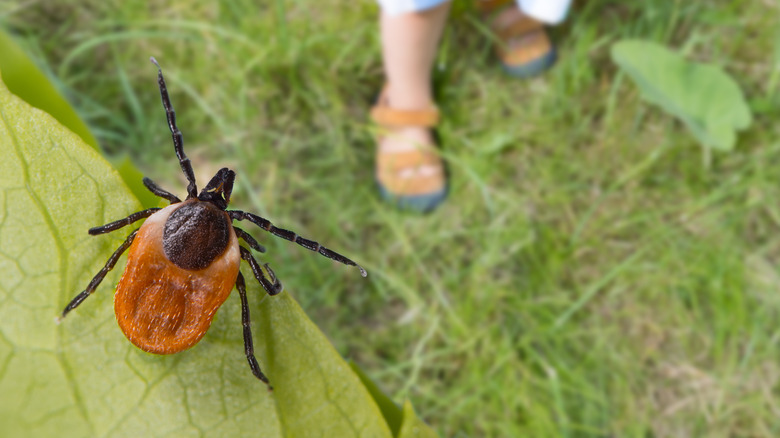
If there is one creature absolutely no one wants to see crawling up their leg, it's the tick. These small, blood-sucking critters are responsible for spreading a number of different diseases, including, but not limited to, Lyme disease, babesiosis, Bourbon virus, Heartland virus, and anaplasmosis. Nearly all of these diseases can affect people for a lifetime. Some even cause death. And while you can make any number of DIY tick repellents, you might want to look at the plants you have in your yard first, like the Japanese barberry (Berberis thunbergii).
Japanese barberry is an invasive plant that was first introduced into the United States in 1875. It has since spread across the eastern and midwestern states as an ornamental plant. A shrub that doesn't tend to exceed 4 feet in height, Japanese barberry is known for its clusters of creamy spring blooms and bright red summer fruit. Owing to the fact that it grows in tight clumps, the Japanese barberry creates a perfect sheltering environment for numerous different types of animals. This includes small mammals like birds and field mice, but also harmful insects like ticks. So, you'll need to be careful if you have a Japanese barberry plant in your yard, as you could easily end up with a tick attached to you.
How Japanese barberry can spread Lyme disease
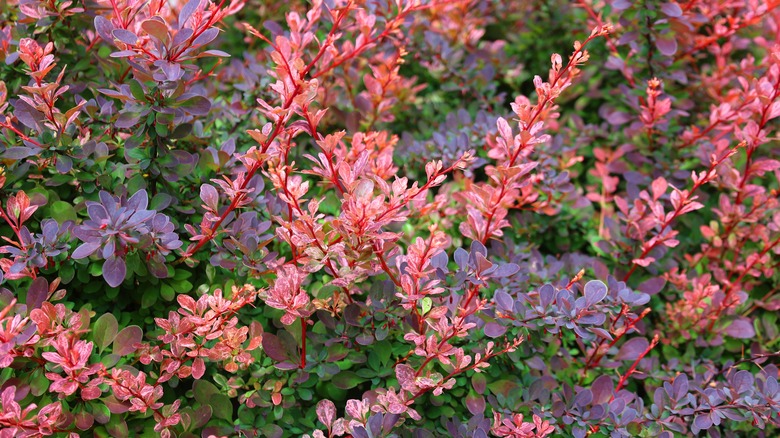
But what are the other factors that contribute to Japanese barberry being a potentially dangerous plant to have in your yard? Well, apart from merely providing ticks with shelter, the tight groupings that are formed by the shrub's branches create an understory that is dark and incredibly humid. This creates an environment that is ideal for tick reproduction, which is directly correlated to the increased potential of Lyme disease spread.
It's the black-legged (Ixodes scapularis) tick that tends to prefer living in the Japanese barberry. This tick is a known spreader of Lyme disease, and it lives in the perfect place to spread it. The tick will latch itself onto a mouse or other mammal living in the shrub brush. If that animal has the Lyme bacteria in its bloodstream, the tick will pick it up while getting its ration of blood. Once it gets its fill, the tick detaches and awaits another chance to latch onto another mammal to feast on, and that mammal could easily be you.
It's important to note that Japanese barberry does not itself cause Lyme disease. Yet, it does create a perfect environment from which it can spread. As such, the presence of Japanese barberry is linked to increases in Lyme disease cases, per the Wisconsin DNR Forestry News.
Removing and replacing Japanese barberry
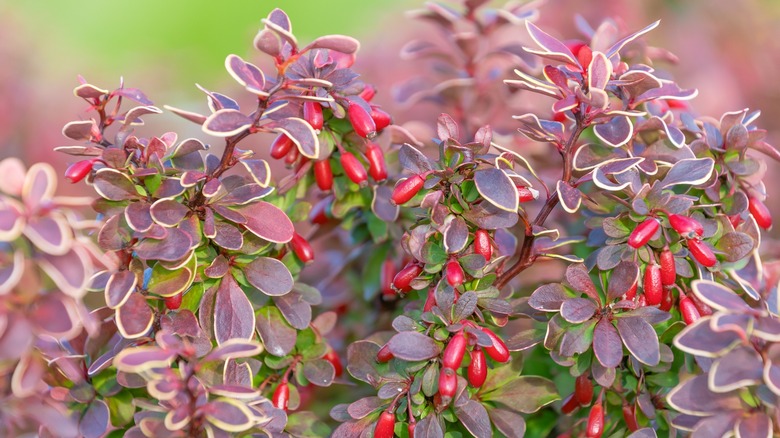
Owing to the fact that Japanese barberry is an invasive species that can pop up where you don't want it, you might have ended up with it in your yard by accident. It can be identified by its smooth margined leaves that can often be two-toned in green and purple. The flowers are a yellow-cream color, and the summer berries are bright red. If you catch one as a small sapling, you can easily remove it physically. More established ones also need to be physically removed, and then treated with herbicides to prevent their regrowth.
During removal, it is very important to wear protective gear against ticks and the plant itself. Wear long pants and shirts, with your shirt tucked into your belt line and long socks. This will help keep them from attaching to your skin. In terms of the plant, you will need to wear thick gloves to protect against the sharp, tough thorns that can easily break and get under your skin if you're not careful.
If you like the look of Japanese barberry and need a new ornamental as a replacement, try lookalike shrubs such as ninebark (Physocarpus opulifolius) or fragrant sumac (Rhus aromatica). You can also plant flowers like butterflyweed (Asclepias tuberosa) and Joe-pye weed (Eutrochium maculatum), or lavender (Lavandula), which can help repel ticks from your yard.