

Fall Is The Best Time To Control These Stubborn weeds—Here's How
Weeds are the worst, plain and simple. Not only are they unappealing to look at, but they are also bad for your lawn and garden. They compete with the grass and other plants in your yard for key resources, such as light, water, and important nutrients your plants need to thrive. And when they compete, they usually win, weakening your plants and sometimes even killing them. Your plants become more susceptible to pests and diseases, and in certain cases, can make entire areas of your yard or garden infertile. To best control even the most stubborn of weeds, fall is the optimal time to implement several weed-proofing methods.
Fall is the best time to control perennial weeds, such as dandelions (Taraxacum officinale) and clovers (Trifolium repens), as they will be more vulnerable to different weed control methods because they are trying to store energy for the winter instead of trying to grow. It's also the best time to control annual weeds, such as annual bluegrass (Poa annua) and crabgrass (Digitaria sanguinalis), as they will be germinating and sprouting in the early fall. When they are young, they are easier to uproot or kill before they even have a chance to grow much larger.
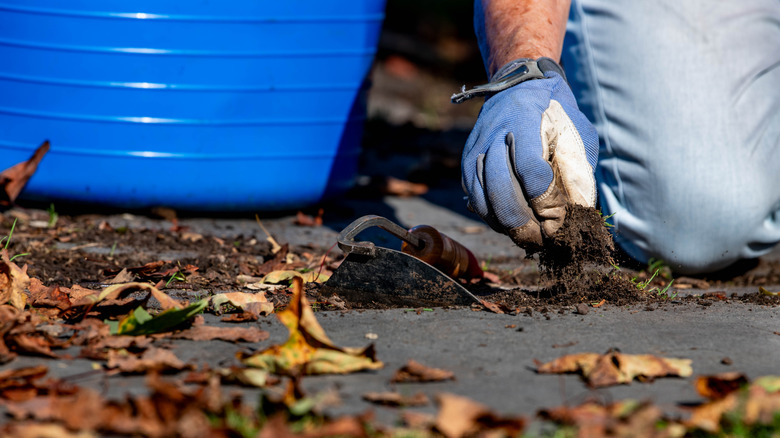
To get rid of weeds without killing other plants, the easiest way is to simply remove the weeds manually, using either your hands, a hoe, or a rake. Fall is the best time for this, as the weeds are just beginning to grow and they are easy to pull completely out. Be sure to remove the entire plant and damage it as little as possible, as you don't want to release more seeds.
Best weed control methods for the fall
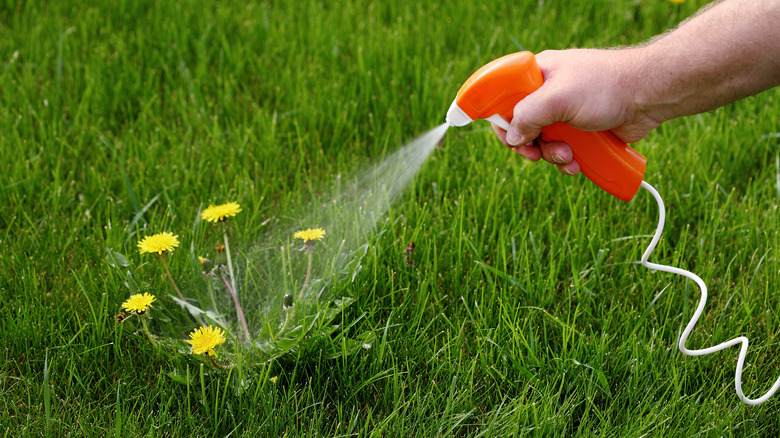
One of the most common and effective methods of weed control in the fall is the application of herbicides, both pre-emergence and post-emergence herbicides for annual and perennial weeds respectively. For perennial weeds, use a pre-emergence herbicide before you expect the weeds to begin growing. For annual weeds, directly apply post-emergence herbicide to visible weeds. If you use a selective post-emergence herbicide, ensure you only apply the solution to weeds, as it can damage other plants in your yard and garden. Only use a nonselective post-emergence herbicide if a selective didn't work, and use very little to avoid causing damage to nearby plants. You can use organic herbicides to avoid chemicals; however, these require frequent application, and have limited effects.
For your lawn, there are several options you can utilize to control weeds. Primarily, mow your lawn to prevent the spread of weeds by cutting your grass to the optimal height of 3.5-4 inches tall. This is effective because it reduces access to light for emerging weeds. Additionally, you should aerate your soil so that any lawn-safe herbicides you apply can reach deeper into the soil, making them more effective. If you are still having issues, you can utilize a different way to get rid of weeds growing all over your yard by using cardboard as an alternative to landscaping fabric. This cover is a biodegradable solution that deprives weeds of nutrients and sunlight, and can be used in tandem with other weed-prevention techniques.