

The Fastest Fix For A Slow-Draining Sink Is Already In Your Kitchen Cabinet
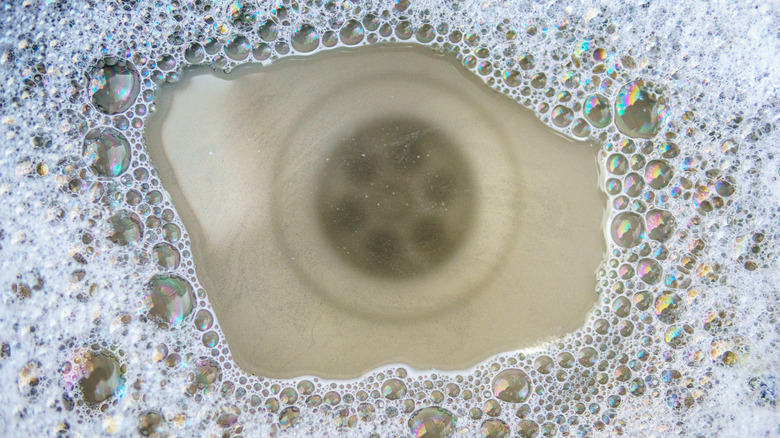
Why do they seem to always happen at a tremendously inconvenient time? When people are over or on the weekend when plumbers are not working. We're talking, of course, about clogged or slow-draining sinks. Kitchen sinks are especially likely to get clogged as they are used where grease and other drain-dangerous stuff are commonplace. That's the bad news. The good news is that you may already have the solution to your clogged drain or slow sink already in your kitchen, baking soda and vinegar. Used singularly and in combination, they can be the key to how to unclog a drain.
The most common clogging components in drains are fats and grease. This is true in bathroom drains as well, with the sources being body oils and the components of soaps, shampoos and conditioners. (In those drains hair is often an unwanted addition. Ew.) These fats and grease are insoluble in water, which is why they build up. They are also generally pH neutral, usually sitting around 7 on the PH scale. That is the key to why baking soda or vinegar will fix the problem obstructions.
Opposites attack (in their own way)
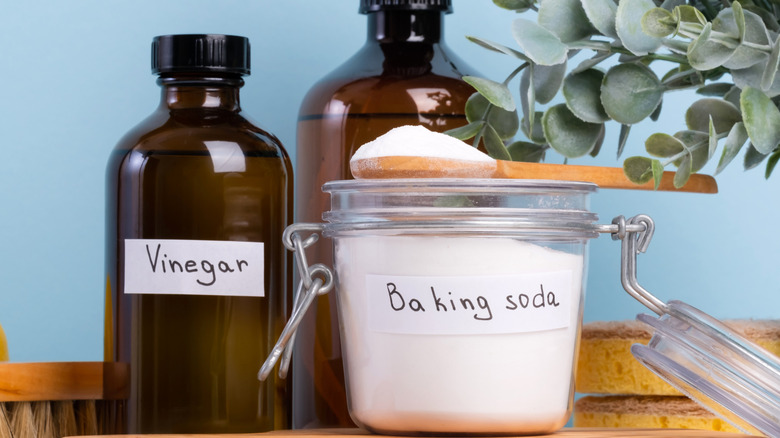
The most effective way to use the two chemicals is by combining them. If you do that, you'll need to do a bit of preparation to get ready. Get as much water out of the sink and drain as possible. Find a drain plug or a thick cloth large enough to cover the drain. Then, pour a cup of baking soda into the drain, followed by a cup of white vinegar. Put the drain plug in place and hold it firmly. The sodium bicarbonate and the acidic acid will create a chemical reaction, producing carbon dioxide. It works like Alka-Seltzer to unclog the drain. The expansion of the carbon gas against the drain plug will create pressure, hopefully breaking the clog loose. If it does not work, repeat the process. Once the drain is clear, use baking soda once a week to prevent another clog from building up.
If you only have one or the other handy, you can also use them individually to resolve a clog. Baking soda (a pantry item with dozens of cleaning benefits), also known as sodium bicarbonate, and vinegar, which contains acetic acid, live on opposite ends of the pH scale. Baking soda is alkaline or base, vinegar acidic. With a slow drain, giving both products a chance to break down the obstruction, on their own, is a great way to start. Pour about ½ cup baking soda down the drain, let it sit for 30 minutes, then flush with boiling water. This will allow its alkaline nature to attack the greasy clog at a molecular level. Or, pour about 1 cup of vinegar down the drain and let it do its own kind of damage to the clog, sitting for about 15 to 30 minutes. Using them in this sequential one/two punch can be very effective.