

Common Lawn Mowing Mistakes To Avoid At All Costs If You Want A Lush Green Yard
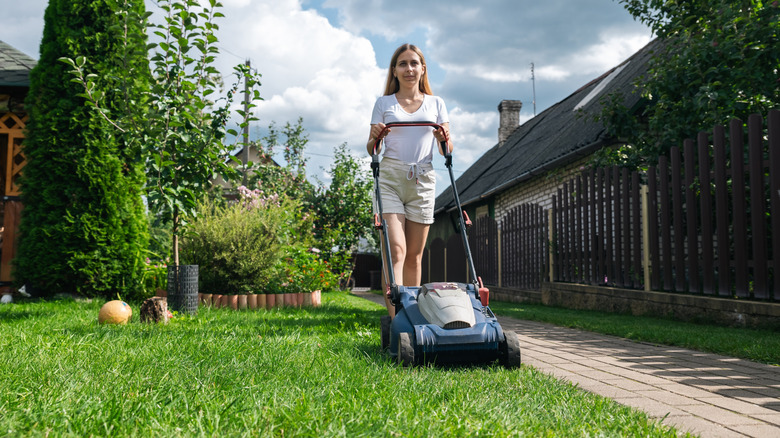
Creating a lush green yard can be a labor of love for many homeowners. For others it is simply labor. Regardless of where you land on that continuum, mowing your grass properly to get it looking its best is your goal. Like any other task, there are ways to mow your lawn well and ways to mess it up. Here are five lawn mowing mistakes to avoid. Avoiding them will help your lawn look better and make mowing easier.
Mowing with a dull blade is probably the most common mistake made by mowers by far. A dull blade tears or rips the blades of grass rather than slicing or cutting. A dull blade will exacerbate other mowing errors, such as cutting your grass too short and moving too quickly. A good practice is to have two blades for your mower, exchanging them often and sharpening the blade you've replaced right away. A sharp blade is just part of keeping your mower in good condition. Gas-powered mowers should be serviced occasionally (carburetors, fuel filters, spark plugs, etc.) by a mechanic, and you should always use fresh gasoline. Battery-powered mowers come with their own pros and cons, but both of these types of mowers absolutely need a sharp blade.
Too short! It's not a putting green
Many folks cut their grass too short. Very short putting green-like grass can look great, but it's detrimental to your lawn in several ways. The ideal grass length for most lawns is about 3 to 3½ inches. Grass this long will put down deeper roots, making it more resilient to changing moisture conditions. It can even help prevent weeds from sprouting and becoming established. This is an approximate measurement, so you needn't break out your tape measure — as a rule of thumb, just don't go below 2 inches. A thick lawn at a healthy length promotes nutrient-rich soil by protecting it from harsh exposure to the sun and limiting moisture evaporation. Healthy soil is a complex mixture of dirt, microorganisms, and various types of organic matter. Generally speaking, the better your soil's health, the better your lawn will grow. So, longer grass will actually help your lawn to be happier.
Using the wrong cutting patterns

Mowing in a repeating pattern every time can harm your lawn. Human beings like routine and are quick to determine and follow patterns, so it is natural for us to use the same pattern repeatedly when mowing. The problem with this is that it can lead to repetitive scalping (cutting grass too short) in certain areas and ruts with soil compaction from repeated wheel pressure in the same locations. If possible, cut your lawn in rows at 90 degrees from the last time you mowed. If your lawn does not lend itself to straight rows that can be alternated at 90 degrees, use a bit of creativity to come up with two or three differing patterns. Variety is the key. One more point: whatever your pattern, don't mow too quickly. Racing through the yard will get the job done faster, but it leads to an uneven lawn and it is hard on your lawnmower. Listen to how hard your mower is laboring and adjust your speed to suit the situation.
Mowing wet grass
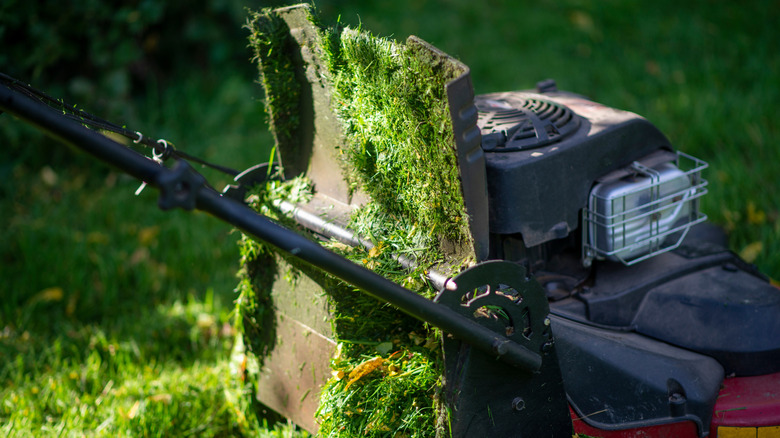
Cutting wet grass is a bad idea for a couple of reasons. Firstly, it is harmful to the grass. Even a sharp lawnmower blade has a hard time effectively cutting through a wet lawn. The grass is as likely to be torn as cut, causing stress on the roots and the plant generally. Wet grass clippings also build up under the cutting deck of the mower, causing clogs and obstructions. Clearing the built-up grass clippings from under the mower deck leaves unsightly piles of clippings on your lawn that you will have to deal with later. Cutting wet grass requires much more power than cutting dry grass, and for that reason will use up batteries on electric lawn mowers much more quickly and cause unnecessary wear and tear on all types of lawn mowers.
Additionally, mowing a wet and slippery yard is dangerous. It is much easier to slip and fall on wet grass. According to the American Journal of Emergency Medicine, over 80,000 Americans need medical attention from lawnmower accidents each year. So, don't mow wet grass.
Mowing on a fixed schedule
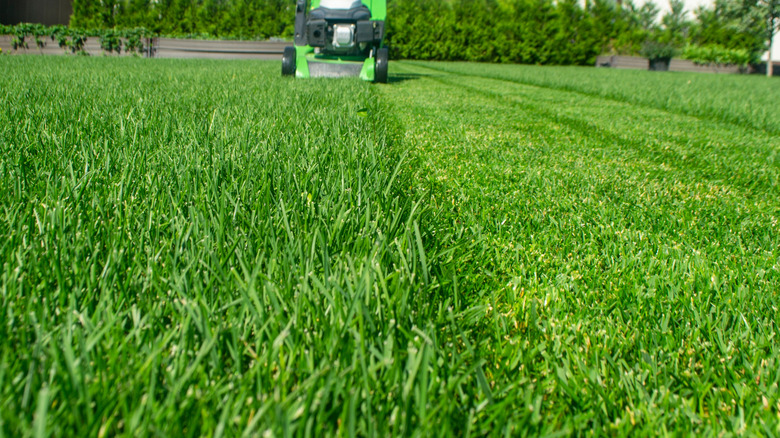
With the goal of keeping your lawn at its optimal height of approximately 3 inches, you should be mowing when it's needed, not because it's Monday. You don't want to cut away more than ⅓ of the length of your grass when you don't need to. Grass will grow faster after it has rained consistently for a period of time, so you may find that sometimes you need a weekly trim, whereas other times every other week will do.
It's also generally believed to be better to mow in the afternoon and evenings after the morning dew has dried for the reasons mentioned above. Logically, it would be a good idea to keep an eye on the weather to plan when to cut your lawn. When you are cutting your lawn when it's most optimal length, there is another benefit. You can simply leave the grass clippings in place as you mow. They will break down, providing nutrients and organic compounds to enrich your soil. Leaving your clippings behind will allow you to fertilize less, saving you money.